AI Models in Production Training for the Healthcare & Pharmaceuticals Sector
Modern hospitals use AI for early detection of certain conditions, ED triage, length-of-stay prediction, and personalized therapy. Clinical risk is high: a wrong model can affect patient safety. Healthcare MLOps pipelines must go through staged clinical validation, drift monitoring observed by clinicians, and strict governance (UU PDP specific personal data, KARS readiness, decision transparency).
- 4.9/5 · 287 reviews
- 300+ clients nationwide
- 2,000+ trainers
- 1 to hundreds of participants
- Standard · Premium · Private 1-on-1
- format
- In-house / online / hybrid
- duration
- 5 intensive days per cohort
- participants
- 10–20 per cohort
- language
- Indonesian / English
2,000+ trainers and experts
Our group's teaching network, matched to what your team needs.
See class documentationYou see your trainer first
The trainer's profile, track record and field come with the proposal, before you decide.
4.9 out of 5
287 participant reviews.
300+ clients nationwide and 180,000+ private training sessions completed. Among them: MPR RI, Akademi Militer Magelang, DPRD Provinsi Jawa Timur.
One person to hundreds
Private coaching for one participant, a class for one team, or several cohorts at once.
Three budget levels
- Standard: core class, material fitted to the participants’ work
- Premium: senior trainer, deeper material design
- Private 1-on-1: one participant, one trainer, schedule set by the participant
Why Taking AI Models into Everyday Use is different in Healthcare & Pharmaceuticals
Modern hospitals use AI for early detection of certain conditions, ED triage, length-of-stay prediction, and personalized therapy. Clinical risk is high: a wrong model can affect patient safety. Healthcare MLOps pipelines must go through staged clinical validation, drift monitoring observed by clinicians, and strict governance (UU PDP specific personal data, KARS readiness, decision transparency).
- Clinical model coverage with complete model cardsNearly all production models
- Pre-production staged clinical validation coverageAll new clinical models must pass silent→shadow→assistive
- Clinical incidents tied to AI modelsZero in the next period
- UU No. 17/2023 Health Law
- UU PDP No. 27/2022 — health data = specific personal data
- KARS Hospital Accreditation Standards — information & clinical governance
- NIST AI RMF 1.0
- ISO/IEC 42001:2023
- PMK on electronic medical records & telemedicine
- Medical Director / Director of Medical Support
- Quality & Patient Safety Committee
- Head of AI / Clinical Data Unit
- Head of SIMRS / Hospital IT
- MLOps Engineer
- Hospital Data Protection Officer
- Clinical model pipelines pass staged validation (silent → shadow → assistive)
- Drift monitoring & ground-truth performance observed by clinicians alongside technical teams
- Model cards & data sheets ready for medical committee & KARS accreditation
- Patient data subject rights integrated into model lifecycle (UU PDP)
- AI governance presented to board & quality committee
Quick Answer
MLOps & Production AI Engineering training is an in-house program equipping data, engineering, and AI teams to ship ML models to production reliably & accountably (feature store, model registry, drift monitoring, governance), mapped to the Google MLOps Practitioners Guide, Microsoft MLOps maturity, NIST AI RMF 1.0, and ISO/IEC 42001:2023.
Guided by industry-recognized MLOps frameworks
The material follows the Google Practitioners Guide to MLOps, Microsoft MLOps maturity model (levels 0–4), ML Test Score (Eric Breck & Google Research, 28 tests), NIST AI RMF 1.0 (4 functions Govern/Map/Measure/Manage), and ISO/IEC 42001:2023 (the first AI Management System standard). No ad-hoc frameworks.
Most corporate AI models never reach production
Without MLOps discipline, models that look great in notebooks often never reach production or reach it without monitoring. Industry research consistently shows many AI projects stall at proof-of-concept. Reproducible pipelines + model registry + drift monitoring are required so AI investment delivers sustained value.
Healthy adoption: 1 use case end-to-end > 5 half-done
Teams maturing MLOps typically pick 1 high-priority use case and run it end-to-end (data → training → registry → deploy → monitor → governance) as the internal paved-road, then copy the pattern to subsequent use cases. The module guides this pattern explicitly.
Clients & Documentation
Some of the institutions we have trained
Photos from sessions we have delivered, each one named after the institution it belongs to.
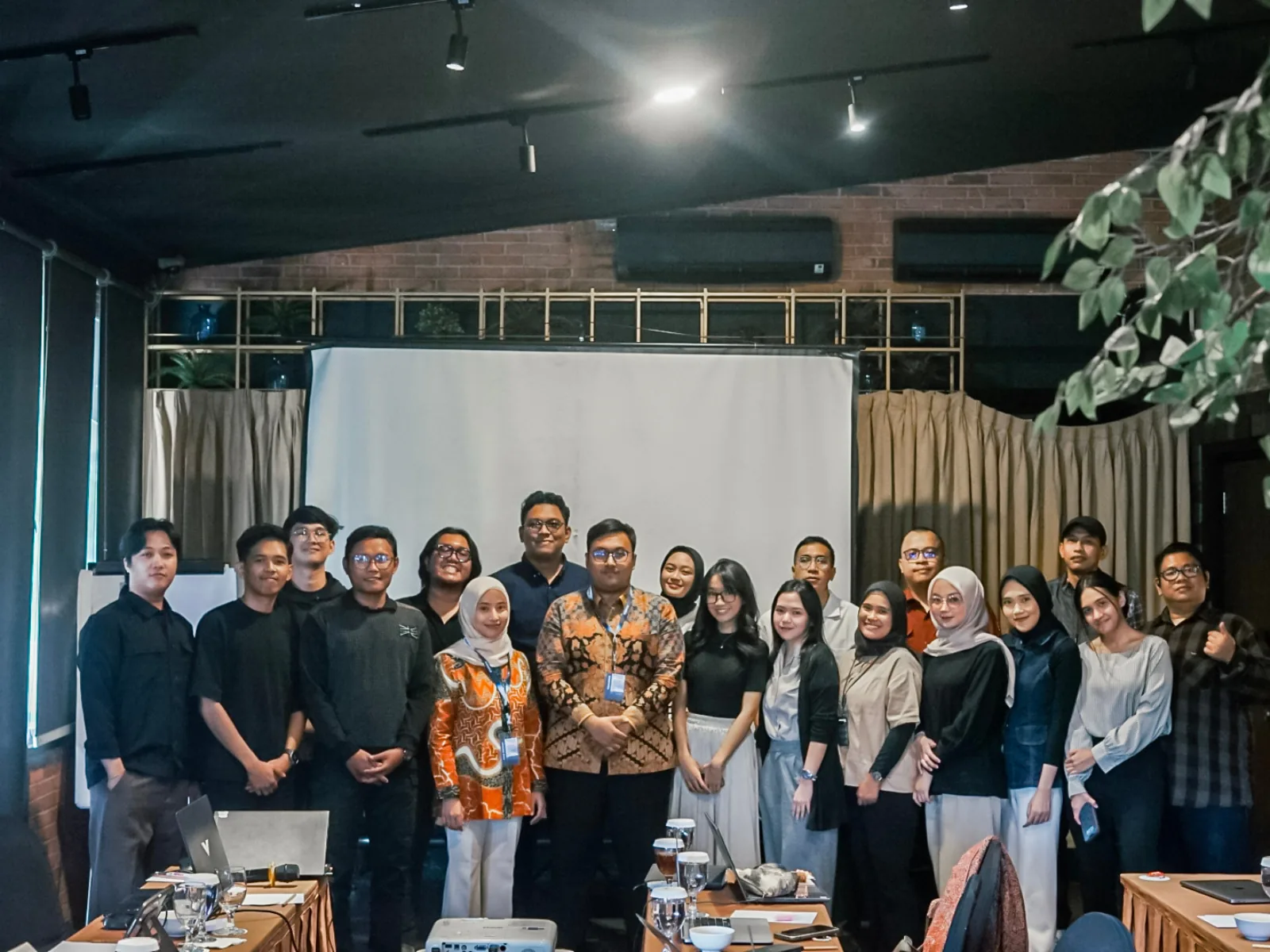
MPR RI

Akademi Militer Magelang
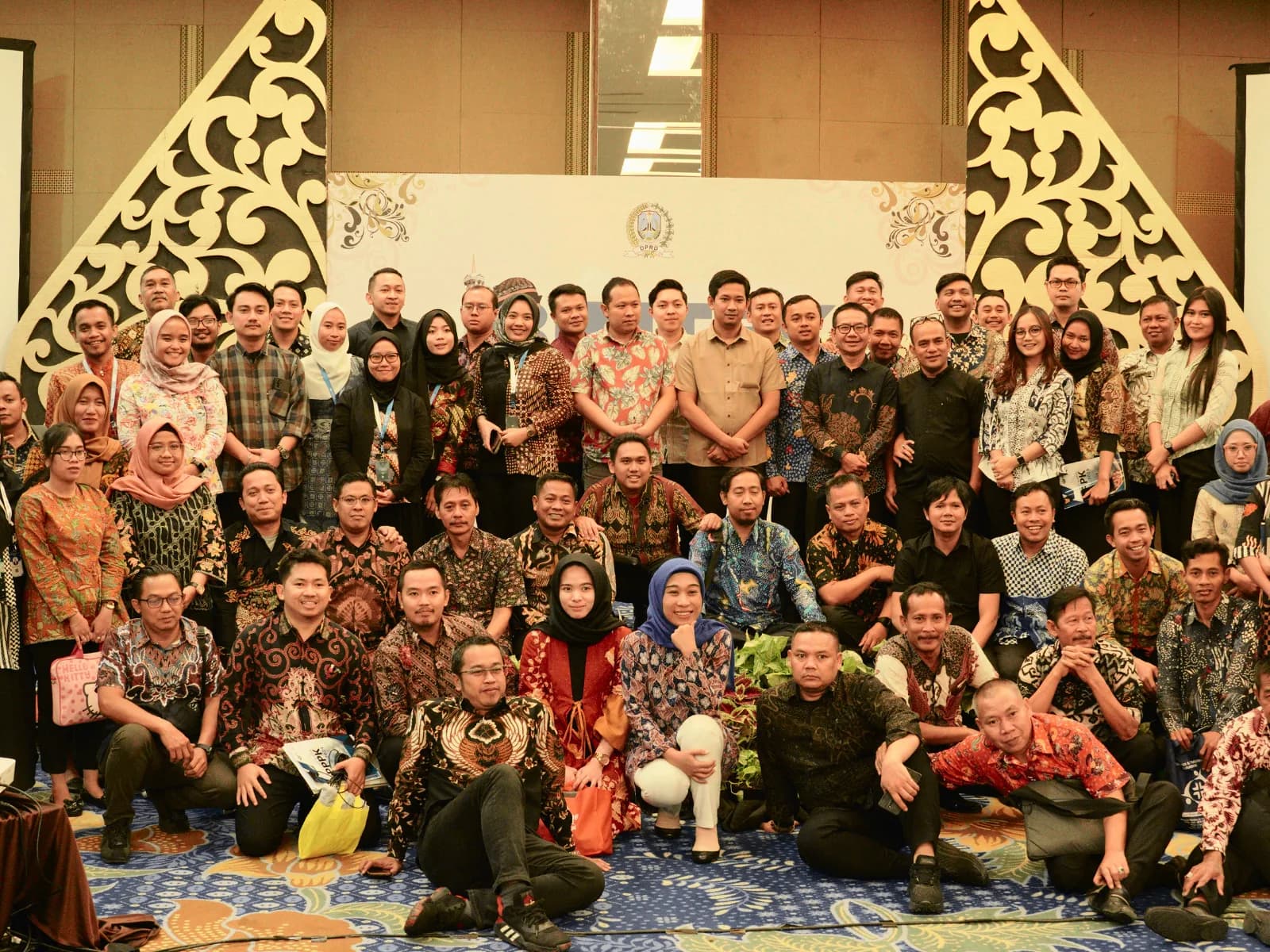
DPRD Provinsi Jawa Timur

DPMPTSP Pemprov Maluku Utara
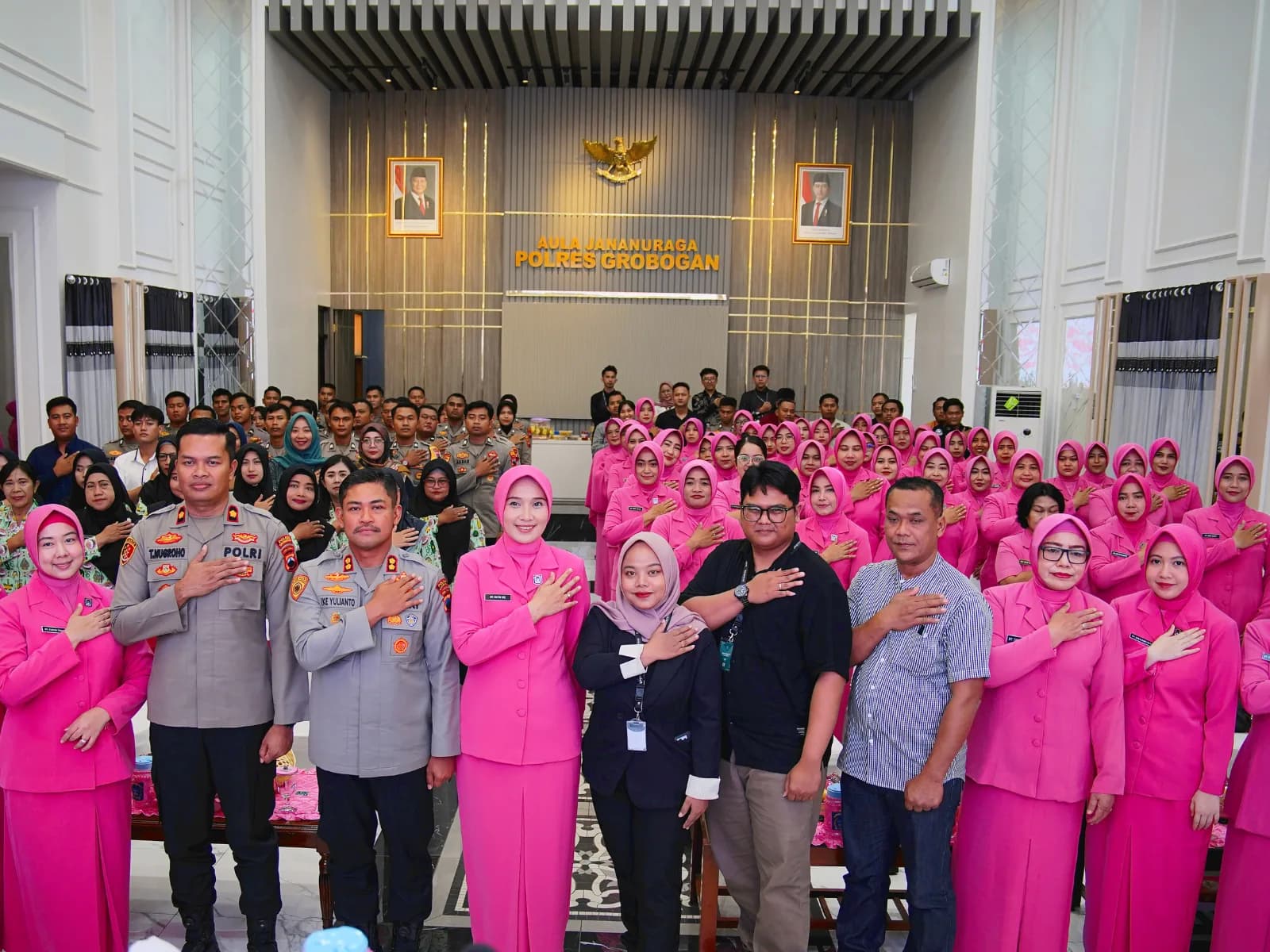
Polres Grobogan
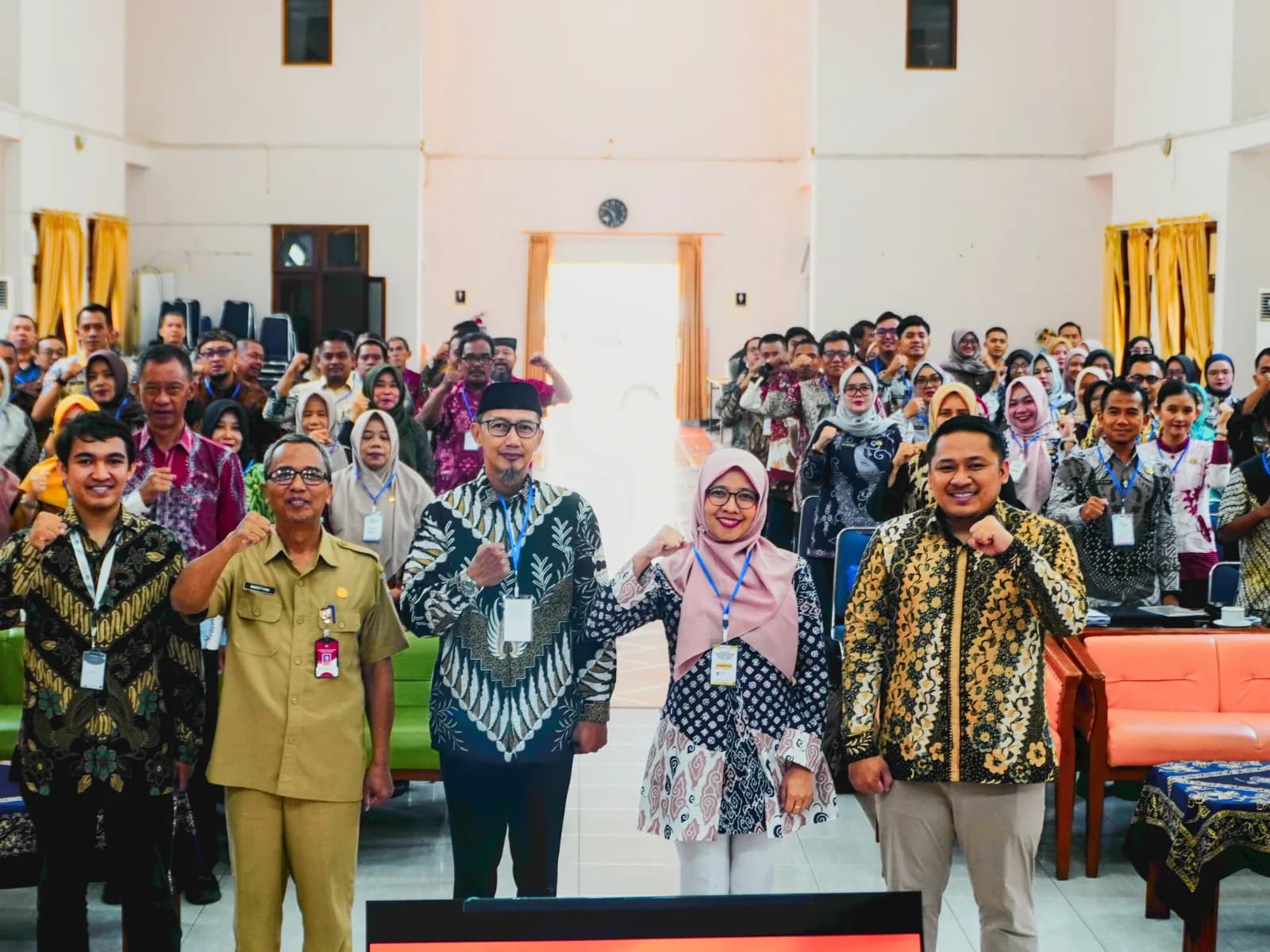
BKPSDM Cirebon
Taking AI Models into Everyday Use
MLOps & Production AI Engineering is the engineering discipline that brings machine learning models to production reliably, repeatably, observably, and accountably (covering data pipelines, feature store, training, model registry, deployment, drift/performance monitoring, and model governance), mapped to the Google MLOps Practitioners Guide, the Microsoft MLOps maturity model (levels 0–4), the ML Test Score (Eric Breck), NIST AI RMF 1.0 (Govern/Map/Measure/Manage), and ISO/IEC 42001:2023 (AI Management System).
Measurable Outcomes
Expected Outcomes
Indicators mapped to Kirkpatrick levels and Microsoft MLOps maturity: qualitative targets, set during TNA against your team baseline.
- MLOps discipline mastered across the team
- Most participants pass pipeline assessment (data → feature → train → registry → deploy → monitor) and can read Google/Microsoft/AWS reference architectures. Assessed through a check of the model workflow closing the class (Kirkpatrick L2).
- Pipelines re-run with the same result
- Team runs a reproducible training pipeline (versioned code, versioned data via DVC/LakeFS, hyperparameters & metrics logged in MLflow). Seen when a pipeline is re-run and returns the same result (Kirkpatrick L3).
- Models catalogued and ready to release
- One real use case promoted via model registry (staging → production) with auditable rollback. Visible in the model version records the team tidies up (Kirkpatrick L3).
- Model quality slips get caught early
- Data drift, prediction drift, and production performance dashboards available for primary models; actionable alerts on threshold breach.
- System readiness is measurable
- Team maps position against the 28 ML Test Score tests (data/model/infra/monitoring) and builds a roadmap to close the gap.
- Model governance is in order
- Model cards, data sheets, and decision logs documented as auditable governance evidence. The baselines are NIST AI RMF 1.0 and ISO/IEC 42001:2023.
Program Format
Program Format Options
Chosen by team's MLOps maturity position, finalized after TNA. A single model can be carried to the point of real use inside those five days. Organizations wanting many models running side by side normally carry on through a three to four month phased programme while practice maturity improves.
MLOps Foundations Bootcamp (4–5 days)
Intensive bootcamp: data pipeline, feature store, reproducible training, model registry, deployment (batch/online), basic monitoring, and governance. Hands-on in lab environment.
Production AI Workshop (one real use case)
Consultative workshop: team brings one priority use case, facilitator guides from data pipeline → training → registry → deployment → monitoring, with ML Test Score as checklist.
MLOps Maturity Assessment & Roadmap
Assessment of position on Microsoft MLOps maturity 0–4 + ML Test Score; output: roadmap to close gaps, recommended tooling list, and investment ordering.
Recurring AI Governance Enablement
Recurring program for governance, compliance, and AI lead teams: cadence of model review, model cards, data sheets, drift monitoring, and reporting to leadership/regulator.
Free Consultation
Discuss your AI team's MLOps plan
We map platform, roles, maturity position, and priority use cases, then build a proposal and budget based on real needs.
Curriculum
Curriculum Framework
Designed via ADDIE; final modules curated by platform (Vertex AI / Azure ML / SageMaker / on-prem), tooling, and maturity position from TNA.
- MLOps vs DevOps: definition & scope; why models are living artifacts that depend on changing data
- Google MLOps Practitioners Guide: reference architecture pipeline + core components
- Microsoft MLOps maturity model: level 0 (no MLOps) → 4 (fully automated retraining)
- ML Test Score (Eric Breck): 28 tests across data/model/infra/monitoring as production quality standard
- Mature tooling: Vertex AI / Azure ML / SageMaker + open-source (MLflow, Kubeflow, Feast, Airflow)
- Data versioning (DVC, LakeFS) and schema validation (Great Expectations, TFDV)
- Pipeline orchestration: Airflow, Kubeflow Pipelines, Prefect, Dagster
- Feature store: Feast (open-source), Tecton, Vertex AI Feature Store (offline vs online)
- PII handling in feature store: masking, encryption, role-based access (UU PDP)
- Common anti-patterns: training–serving skew, label leakage, undetected feature drift
- Logged experiments: MLflow Tracking + parameters, metrics, artifacts, model versioning
- Hyperparameter tuning: Optuna, Ray Tune, Vertex AI Vizier
- Reproducibility: environment pinning (Conda/Poetry), seeds, dataset hash
- Model registry: MLflow Model Registry / Vertex AI / Azure ML (staging vs production)
- Candidate selection: offline metric vs online A/B test; canary model release
- Batch inference: BigQuery ML, Spark, scheduled jobs; cost & latency
- Online inference: FastAPI / TorchServe / TensorFlow Serving + Kubernetes
- Streaming inference: Kafka + ksqlDB / Flink; low-latency patterns
- Edge inference: model quantization, ONNX, TensorRT (when it makes sense)
- Canary, blue-green, shadow deployment: when each applies
- Data drift: KS test, PSI, evidently AI, Arize, Fiddler (when alerts are actionable)
- Concept drift: performance degradation from a changing world; retraining triggers
- Production model performance: ground truth lag, proxy metrics, business metric tie-in
- Bias & fairness monitoring: demographic groups, disparate impact, fairlearn
- Observability: Prometheus + Grafana + prediction tracing; actionable alerts
- NIST AI RMF 1.0 (2023): 4 functions Govern/Map/Measure/Manage + AI RMF Playbook
- ISO/IEC 42001:2023, the first international AI Management System standard
- Model cards (Google style) + data sheets for datasets (Gebru et al.)
- UU PDP No. 27/2022 for models processing personal data; data subject rights
- Sectoral regulations (POJK, OJK) on AI use in credit/customer-facing decisions
- LLMOps vs MLOps: differences and equivalents (prompt as 'code', structured evaluation)
- Retrieval-augmented generation (RAG): index, retriever, evaluator, telemetry
- Prompt versioning, evaluation harness (Ragas, OpenAI Evals, LangSmith), guardrails
- Model & cost monitoring for LLM (token cost, latency, cache hit rate)
- LLM governance: OWASP LLM Top 10 2025, NIST AI RMF Generative AI Profile
Comparison
Choosing the Program Format
Concise decision matrix. Final recommendation set after training needs analysis.
| Aspect | MLOps Foundations Bootcamp | Production AI Workshop (1 Use Case) | Maturity Assessment & Roadmap | Recurring AI Governance |
|---|---|---|---|---|
| Primary goal | MLOps discipline foundation | One real model to production | Maturity position & investment roadmap | Sustained AI governance discipline |
| Ideal participants | Teams new to AI production | Teams with model not in production | Data/AI leadership exploring | Governance team & multi-model |
| Typical duration | 4–5 intensive days | 2–3 day workshop | 1–2 week consulting | Monthly / quarterly |
| Main output | Fundamentals mastery + labs | Pipeline + registry + monitoring | Maturity position + roadmap | Governance cadence + model cards |
| Core framework | Google MLOps Guide + Microsoft maturity | ML Test Score + end-to-end use case | Microsoft maturity 0–4 + ML Test Score | NIST AI RMF + ISO/IEC 42001:2023 |
For Whom
Who This Program Is For
Designed by role because MLOps challenges differ for data scientist vs ML engineer vs governance.
Data Scientist
Teams building & training models for business use cases.
Common challenges
- Models look good in notebooks but never reach production; depends on ad-hoc handover
- Experiments untracked; reproducibility is weak; hyperparameters lost
- No visibility into production performance after deployment
ML Engineer / MLOps Engineer
Teams bridging data science with production.
Common challenges
- Pipelines manual; every retraining needs engineer intervention
- No feature store yet; training–serving skew happens often
- Drift & performance monitoring not standardized; alert noise high
Platform / Infrastructure Engineer
Teams providing platform for production models.
Common challenges
- No MLOps paved-road; each model team rolls its own pipeline
- GPU & inference resources not cost-allocated per team/model
- Artifact versioning & model rollback not standardized
AI / Data Governance Lead
Teams ensuring AI models comply with regulation & policy.
Common challenges
- No model cards & data sheets; hard to answer audits
- Not yet mapped to NIST AI RMF / ISO 42001
- Data subject rights (UU PDP) not integrated into model lifecycle
Tech / Data Lead / AI Executive
Owner of AI strategy and impact accountability.
Common challenges
- MLOps maturity position unknown; investment unfocused
- Many offline models that never deliver production value
- AI governance not yet presented to the board with formal framework
Industry Context
Industry Applications
One specific use case per industry, naming relevant models, regulations, and MLOps patterns.
MLOps pipeline for credit scoring, fraud detection, and customer propensity models with governance meeting POJK 11/POJK.03/2022 (bank IT), POJK on AI in credit decisions, and UU PDP for customer data, including model cards, audit trails, and ability to answer data subject rights.
See in Banking & Financial Services context →MLOps platform for technology companies running many product models (recommendation, ranking, search, personalization, anti-abuse), so data scientists can experiment fast without endangering production, with a consistent paved-road.
See in Technology & Startups context →AI model governance across BUMN holding subsidiaries with NIST AI RMF & ISO/IEC 42001:2023 framework, standard model cards, and impact reporting accountable to the board & BPK.
See in State-Owned Enterprises (BUMN) context →MLOps pipeline for predictive maintenance, quality inspection (computer vision), and demand forecasting models at the plant, with plant data integration (PLC/SCADA) and models that can run at the edge when latency is critical.
See in Manufacturing context →MLOps platform for demand forecasting, dynamic pricing, recommendation, and churn prediction models in modern retail, with seasonal retraining cadence (Lebaran, Harbolnas) and drift monitoring actionable by the merchandising team.
See in Retail & FMCG context →MLOps pipeline for clinical models (early detection, triage, outcome prediction) at hospitals & health networks, with staged clinical validation, strong governance (specific personal data UU PDP), and KARS readiness for information governance.
Delivery Method
Delivery
Format adapts to your data & engineering team distribution; all formats hands-on in lab environment + your real use case.
On-site intensive & workshop
Facilitator comes to your office for a 4–5 day bootcamp; labs in your existing environment (Vertex AI / Azure ML / SageMaker / on-prem) with case studies from one priority use case.
Live online + managed labs
Interactive classes via Zoom/Teams; labs run in cloud sandboxes provided by Neksus or your internal accounts with limited scope.
Hybrid
On-site for consultative modules (Maturity Assessment, Governance), online for technical modules (suits multi-location teams).
Engagement Flow
Engagement Path
Follows ADDIE + Google MLOps Practitioners Guide: qualitative durations, scaled to maturity position.
Training Needs Analysis & Maturity Position
Mapping platform (Vertex AI / Azure ML / SageMaker / on-prem), roles, Microsoft MLOps maturity position, ML Test Score baseline, priority use cases, and regulatory obligations.
Initial stageProgram Design by Role (ADDIE)
Drafting measurable learning objectives, role-based syllabi (data scientist/ML engineer/MLOps/governance), lab scenarios, and framework map to NIST AI RMF, ISO 42001.
Pre-deliveryMLOps Foundations Bootcamp
Core 4–5 day session: data pipeline, feature store, reproducible training, registry, deployment, basic monitoring, governance. Hands-on in your environment.
Core weekProduction AI Workshop: One Use Case
Consultative workshop: team brings one priority use case, guided end-to-end (data → training → registry → deploy → monitor) with ML Test Score as checklist.
Post-bootcampMaturity Assessment & Governance Enablement
Assessment of position on Microsoft MLOps maturity & ML Test Score; institutionalization of NIST AI RMF + ISO 42001 governance cadence (model cards, data sheets, periodic review).
Rolling per quarterEvaluation & Maturity Roadmap
Kirkpatrick L1–L4 evaluation (Phillips L5 on request), remapping maturity position, and roadmap for closing the next gap.
Recurring & continuousCase Studies
Typical Outcome Patterns
Illustrative patterns based on similar program structures. No named clients or promised numbers. Microsoft MLOps maturity, ML Test Score, NIST AI RMF and ISO/IEC 42001 are attributed as external sources (Microsoft, Google Research, NIST, ISO).
Financial institution with many credit scoring & fraud models
Intervention
Bootcamp + one real use case workshop + NIST AI RMF governance framework
Result
Reproducible pipelines with complete model cards, active drift monitoring, and governance reportable to OJK
Technology company with many customer-facing product models
Intervention
Maturity assessment + paved-road MLOps platform + recurring governance cadence
Result
Average time from notebook → production decreased and governance posture uniform
Manufacturer with multi-plant predictive maintenance initiative
Intervention
Bootcamp + edge workshop + retraining trigger + data sheet
Result
PdM models active at core plants, drift monitored, and unplanned downtime consistently decreasing
Procurement Info
Information for Procurement & Vendor Management
What procurement, finance, legal, and AI governance teams need.
Structured proposal: measurable learning objectives, role-based syllabus, framework map (Google MLOps Practitioners Guide / Microsoft MLOps maturity 0–4 / ML Test Score / NIST AI RMF 1.0 / ISO/IEC 42001:2023 / UU PDP / POJK), facilitator profile, schedule, and TNA-based cost detail.
TNA-based: flat per program, per session, per participant, tiered, or custom. Estimate issued after TNA is agreed.
Flexible terms (DP + balance / per-batch installments); tax invoice (PPN) and PO documentation supported.
Familiar with BUMN/government procurement: vendor documentation, e-procurement / SPSE, HPS/offers, and compliance clauses.
Kirkpatrick L1–L3 evaluation reports (attendance, knowledge assessment, lab + real use case behavior); Phillips ROI L5 on finance/risk request.
NDA signing, confidentiality of use cases & internal data used as case studies, and practices aligned with UU PDP and your internal security policy.
Model cards, data sheets, pipeline references, and documents built for your company are yours; usage rights of training materials are agreed in the contract.
FAQ
Frequently Asked Questions
Next Step
Discuss your AI team's MLOps plan
We map platform, roles, maturity position, and priority use cases, then build a proposal and budget based on real needs.
- Proposal, role-based syllabus, and framework map (Google MLOps / Microsoft MLOps / NIST AI RMF / ISO 42001)
- Labs in your environment with real use cases; sandbox if needed
- Procurement-ready documents (company profile, NPWP, NDA, PPN tax invoice)
Taking AI Models into Everyday Use training for your Healthcare & Pharmaceuticals team
We map platform, roles, maturity position, and priority use cases, then build a proposal and budget based on real needs.
- Proposal, role-based syllabus, and framework map (Google MLOps / Microsoft MLOps / NIST AI RMF / ISO 42001)
- Labs in your environment with real use cases; sandbox if needed
- Procurement-ready documents (company profile, NPWP, NDA, PPN tax invoice)