Document AI Assistant Training for the Banking & Financial Services Sector
Banks need answers accountable to auditors: credit analysts and compliance officers search clause-by-clause through policies, relevant POJK regulations, and decade-old committee memos. RAG saves significant search time, but every answer must show its source and never mix customer data into public-model prompts. The vector index becomes a new shadow database that must obey bank data-classification policy.
- 4.9/5 · 287 reviews
- 300+ clients nationwide
- 2,000+ trainers
- 1 to hundreds of participants
- Standard · Premium · Private 1-on-1
- format
- In-house / online / hybrid
- duration
- 5 intensive days per cohort
- participants
- 8-20 per batch (engineer-grade)
- language
- Indonesian / English
2,000+ trainers and experts
Our group's teaching network, matched to what your team needs.
See class documentationYou see your trainer first
The trainer's profile, track record and field come with the proposal, before you decide.
4.9 out of 5
287 participant reviews.
300+ clients nationwide and 180,000+ private training sessions completed. Among them: MPR RI, Akademi Militer Magelang, DPRD Provinsi Jawa Timur.
One person to hundreds
Private coaching for one participant, a class for one team, or several cohorts at once.
Three budget levels
- Standard: core class, material fitted to the participants’ work
- Premium: senior trainer, deeper material design
- Private 1-on-1: one participant, one trainer, schedule set by the participant
Why AI Assistants That Answer from Company Documents is different in Banking & Financial Services
Banks need answers accountable to auditors: credit analysts and compliance officers search clause-by-clause through policies, relevant POJK regulations, and decade-old committee memos. RAG saves significant search time, but every answer must show its source and never mix customer data into public-model prompts. The vector index becomes a new shadow database that must obey bank data-classification policy.
- Faithfulness score on bank-policy golden eval setConsistently above the quality baseline set by IT risk
- Per-chunk classification coverageNearly all chunks tagged with classification before user access
- Citation-missing incidentsApproaching zero after pipeline hardening
- POJK 11/POJK.03/2022 IT Risk Management for Commercial Banks
- SEOJK 29/SEOJK.03/2022 Bank Cyber Resilience & Security
- UU PDP No. 27/2022 — customer data as personal data
- OWASP Top 10 for LLM Applications 2025 — LLM06 sensitive information disclosure, LLM08 vector & embedding weaknesses
- Head of IT Risk & Cybersecurity
- AVP Data Architecture
- Lead AI/ML Engineer
- Head of Compliance & DPO
- Senior Credit Analyst
- Head of Digital Banking Engineering
- Credit analysts & compliance can query policies with answers cited to specific clauses/documents
- Per-chunk data classification applied: public / internal / restricted / confidential enter separate indexes with different ACLs
- IT risk teams have a RAG-architecture mapping to POJK 11 and SEOJK 29
- Vector store monitored like a production database: access, refresh, backup, retention
- No customer data enters a public embedding model without masking / tokenisation
Quick Answer
Enterprise RAG training is an engineering program that builds end-to-end retrieval-augmented generation over corporate corpus: chunking, embeddings, vector DB (Pinecone/Weaviate/Qdrant/pgvector), LangChain/LlamaIndex orchestration, RAGAS & TruLens evaluation, plus OWASP LLM Top 10 2025, NIST AI RMF GenAI Profile, and UU PDP hardening.
Without structured evaluation, RAG is only 'feels right'
RAG demos look convincing; production RAG demands proof. A golden eval set, RAGAS faithfulness/context precision, and regression tests before release are the foundation so retriever or prompt changes do not silently degrade quality. This program installs the evaluation foundation on day one.
Security mapped to OWASP LLM Top 10 2025
Security module mapped explicitly to OWASP LLM01 prompt injection, LLM06 sensitive information disclosure, LLM08 vector & embedding weaknesses, and LLM09 misinformation, plus NIST AI RMF GenAI Profile (NIST AI 600-1) and UU PDP.
Most common mistake: jumping to vector DB without chunking & evaluation
Many teams busy themselves picking a vector database then become disappointed when answer quality stays low. Proper chunking, corpus-fit embedding, and a golden eval set matter more than DB choice. This program puts the right priority order in place.
Clients & Documentation
Some of the institutions we have trained
Photos from sessions we have delivered, each one named after the institution it belongs to.
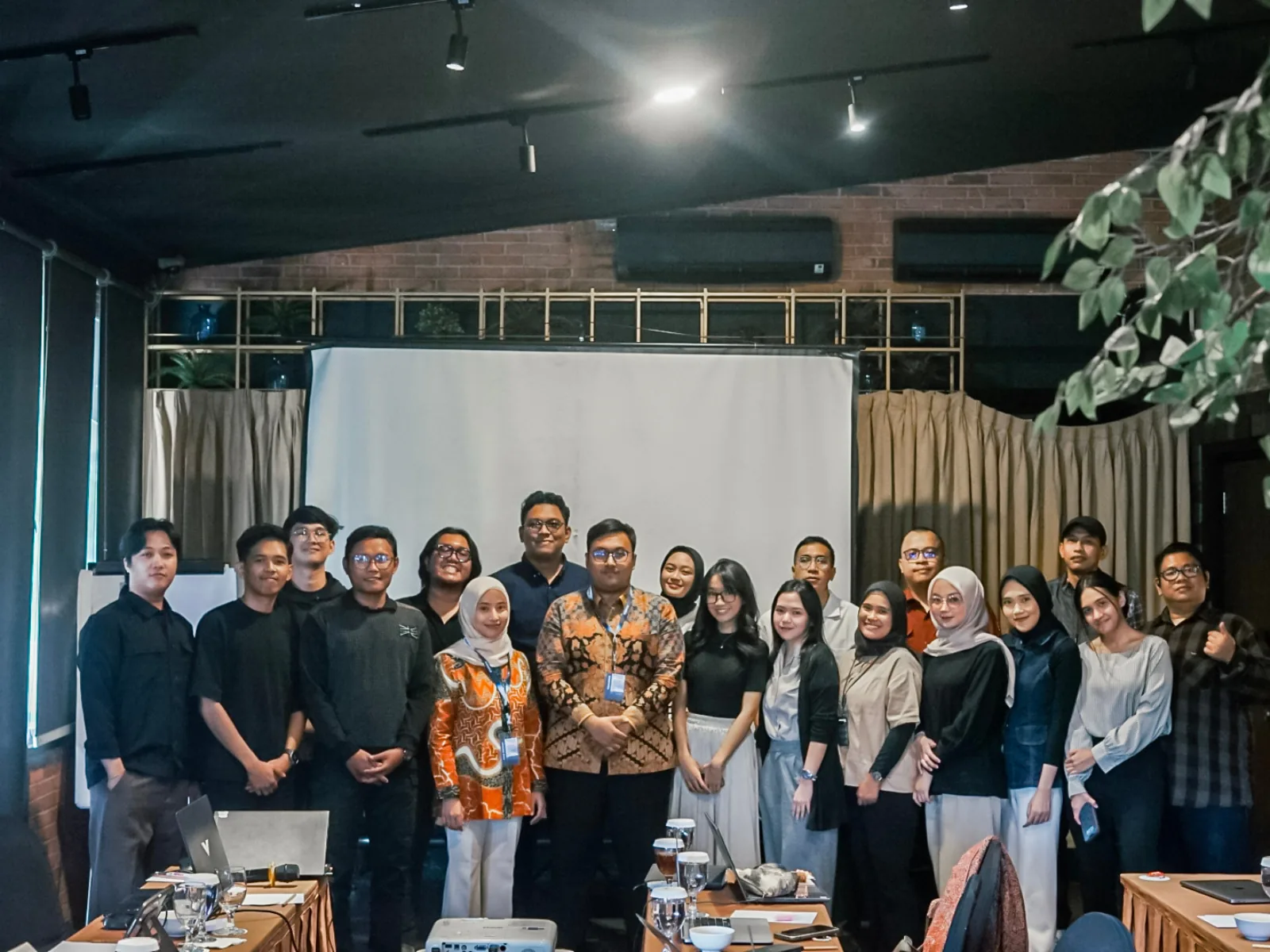
MPR RI
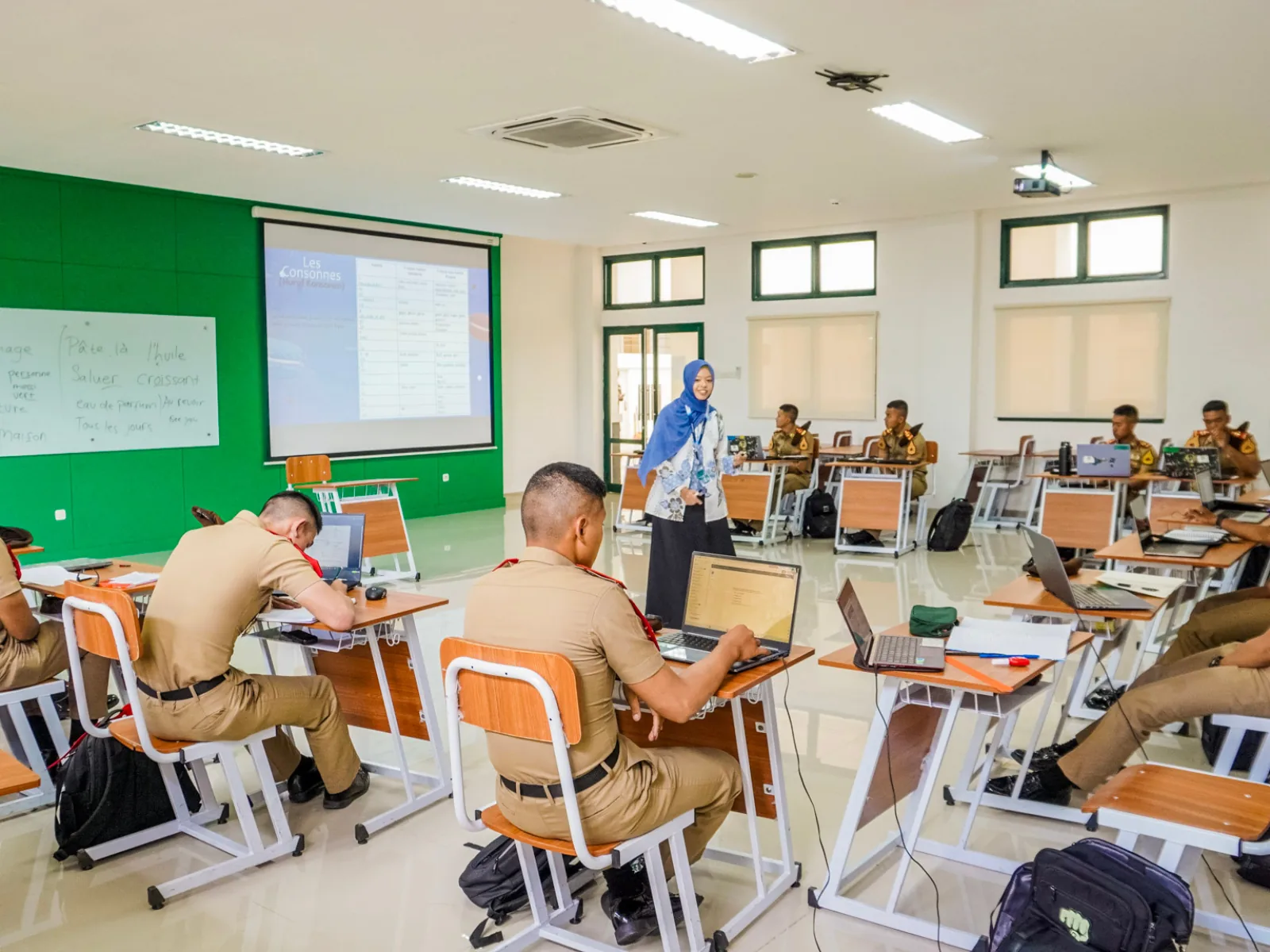
Akademi Militer Magelang
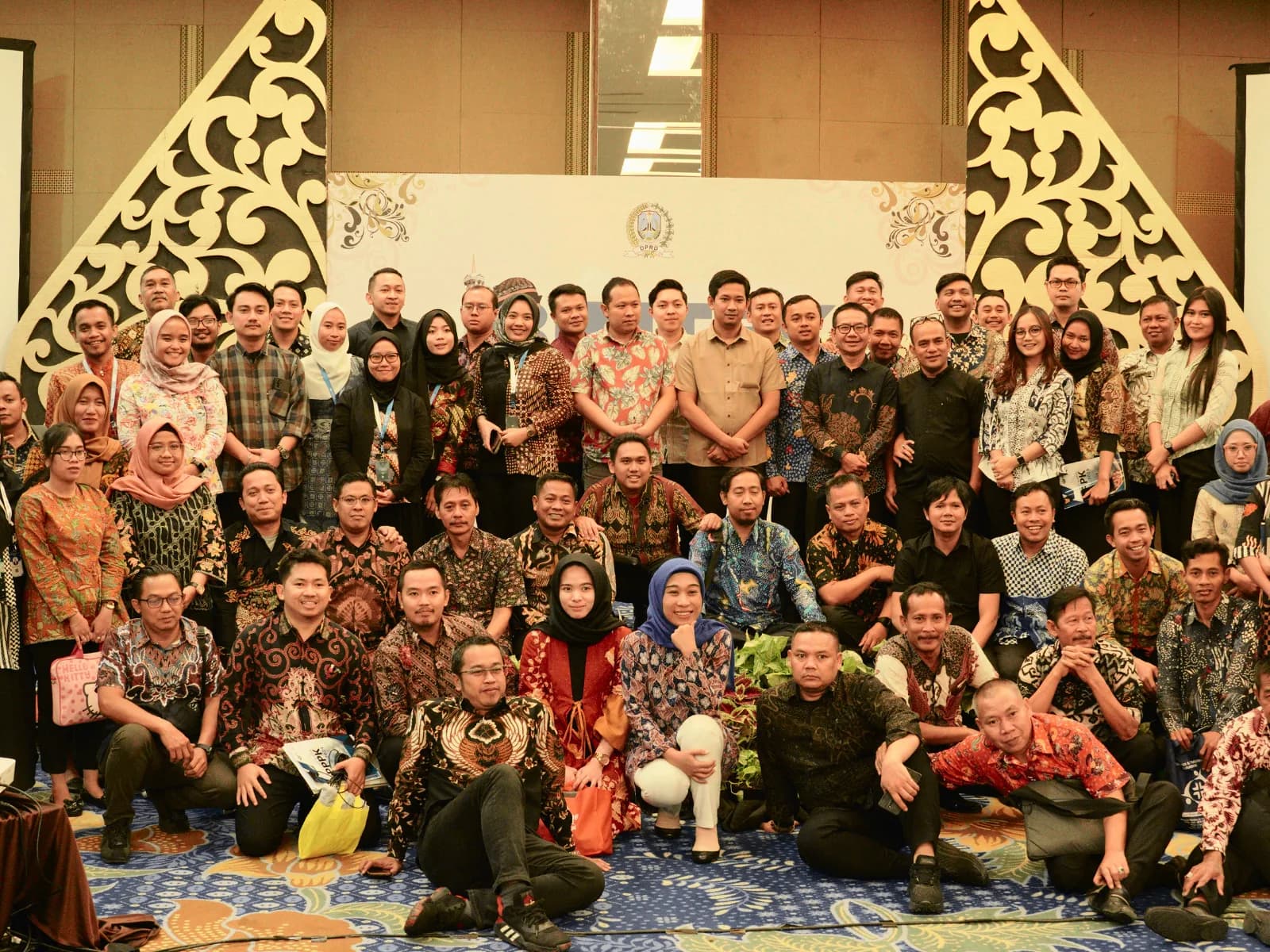
DPRD Provinsi Jawa Timur
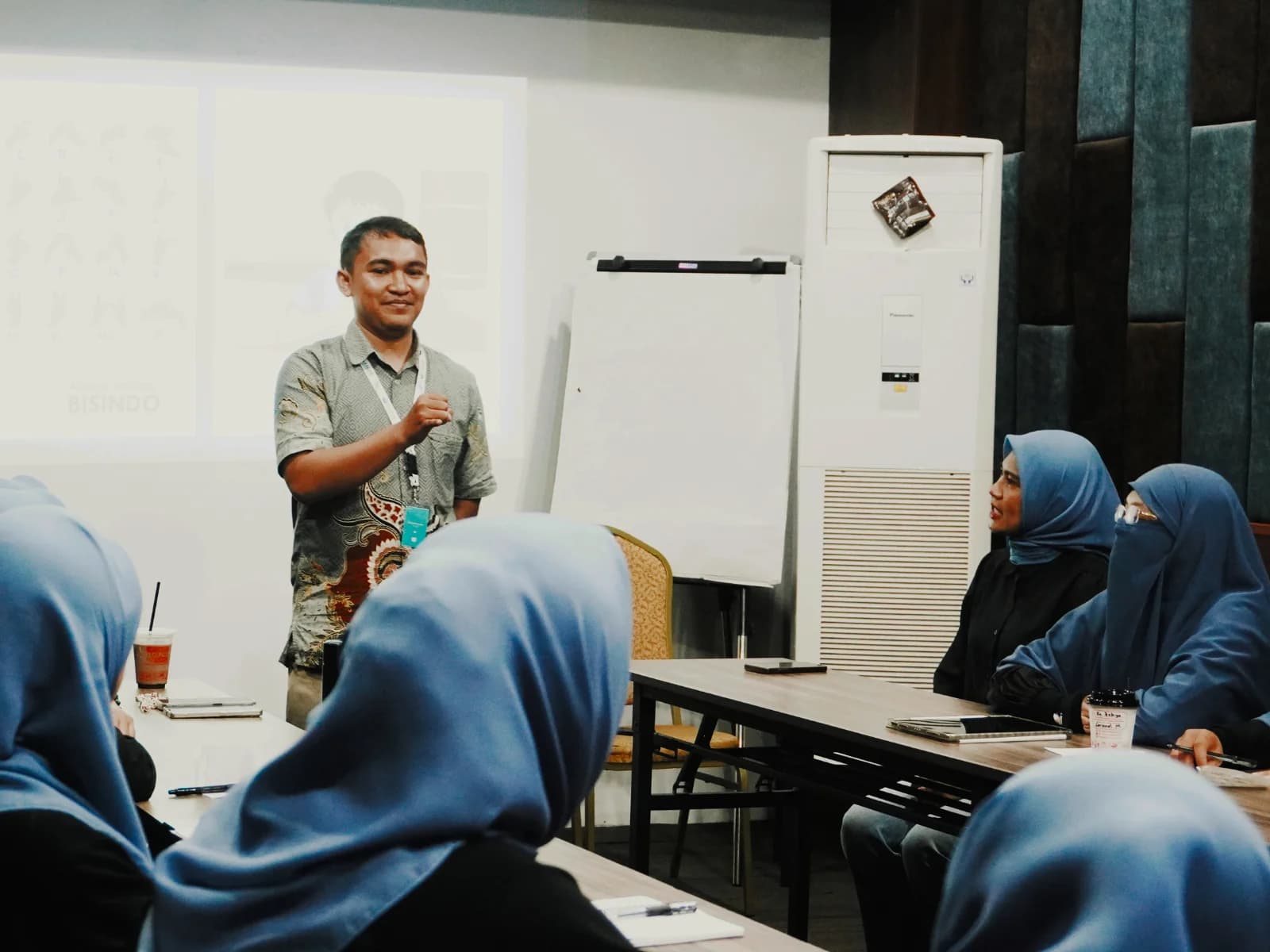
DPMPTSP Pemprov Maluku Utara
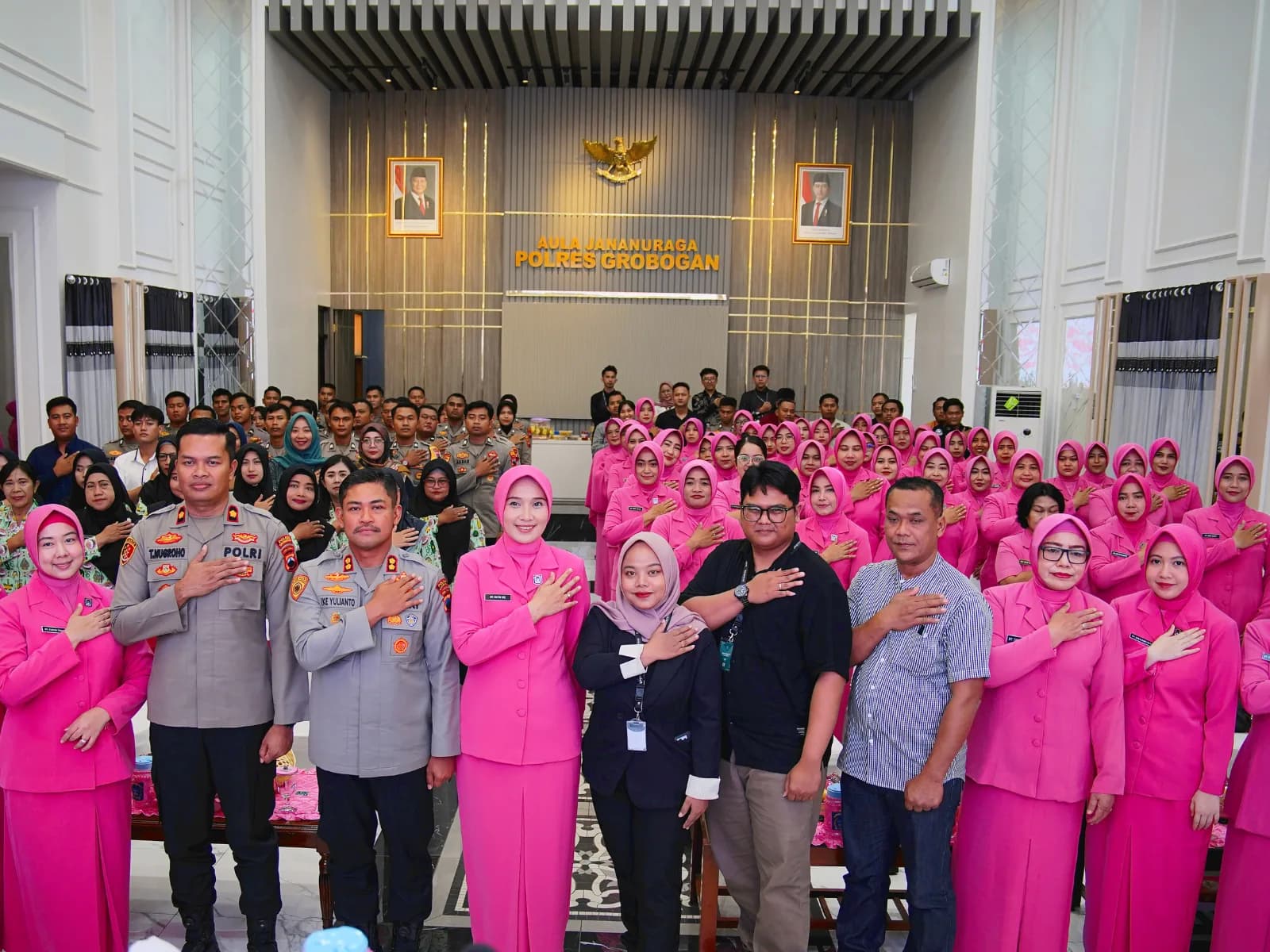
Polres Grobogan
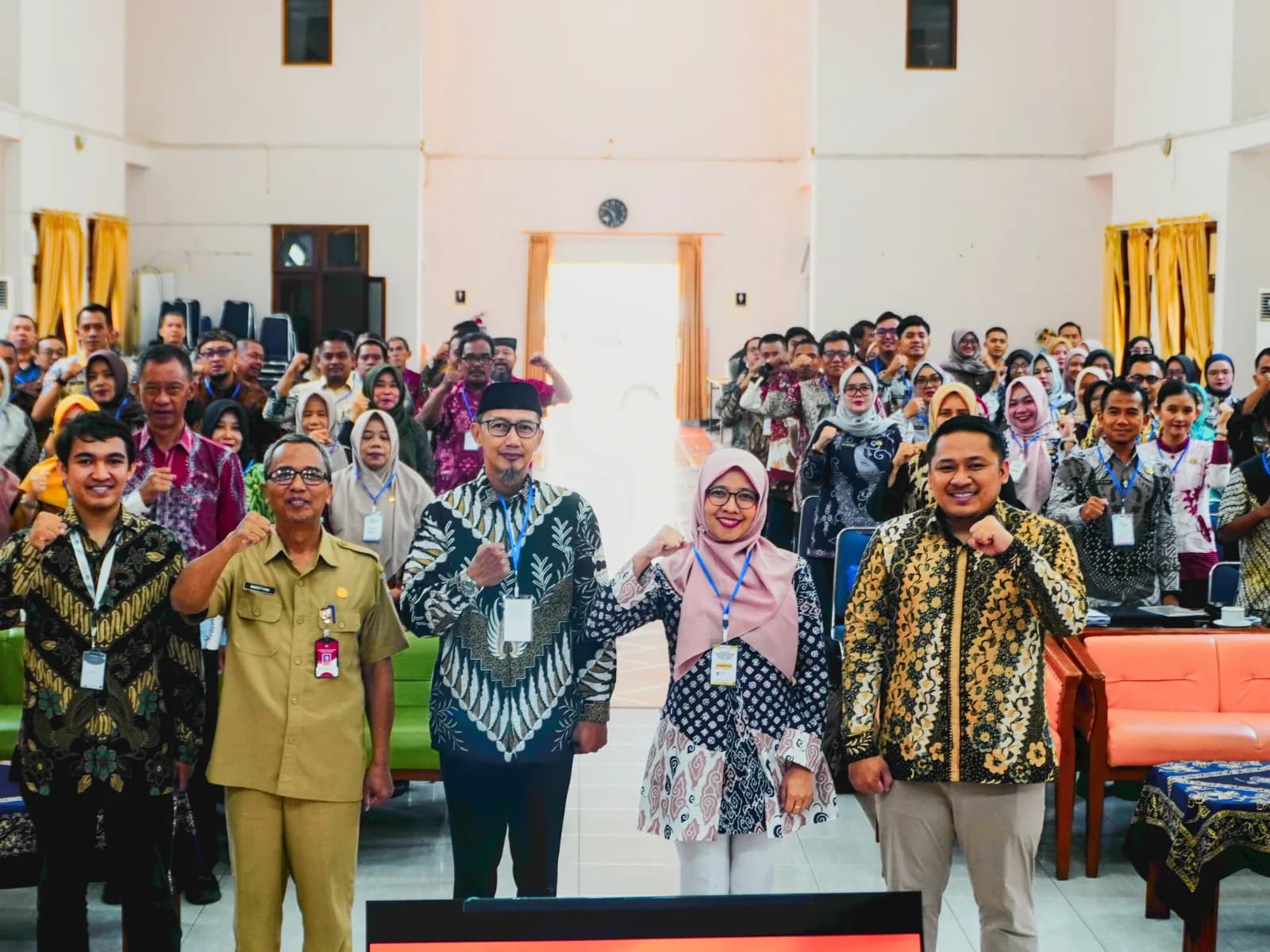
BKPSDM Cirebon
AI Assistants That Answer from Company Documents
Enterprise RAG training is a technical program that equips engineering, data, and product teams to build retrieval-augmented generation for corporate LLM applications: from document chunking strategy, embedding model selection, indexing on vector databases (Pinecone, Weaviate, Qdrant, pgvector), LangChain/LlamaIndex orchestration, through quality evaluation with RAGAS and TruLens, with risk controls mapped to OWASP LLM Top 10 2025, NIST AI RMF GenAI Profile (NIST AI 600-1), and the obligations of Indonesia's Personal Data Protection Law (UU PDP No. 27/2022).
Measurable Outcomes
Expected Outcomes
Indicators mapped to Kirkpatrick L1-L4; qualitative targets set jointly during TNA. Every promise is one we can prove.
- How a document assistant works is understood
- All participants pass assessment on retrieve→augment→generate, chunking strategy, and embedding trade-offs. Measured through a review of the retrieve, augment, and answer flow (Kirkpatrick L2).
- A working prototype by the end of the class
- Each working group produces a functional RAG prototype by end of the intensive, integrated with corporate corpus. Seen in the prototype each group runs at the end of the class (Kirkpatrick L3).
- Assistant answers are proven accurate
- RAGAS faithfulness & context precision scores above the team-set baseline, measured on the golden eval set. Read from answer accuracy scores on the agreed test questions (Kirkpatrick L4).
- Security guardrails are in place
- Participants pass the OWASP LLM Top 10 2025 checklist for the RAG architecture they built. Checked against the language model security checklist (Kirkpatrick L2).
- A design ready to take to production
- Deployment documentation, observability (TruLens/Langfuse), and index refresh SOP approved by IT/security. It takes the form of a design document the security team signs off (Kirkpatrick L3 transfer).
- Monetary value per use case (optional)
- Per-use-case net benefit calculation isolated from other factors, when finance requests it. Per use case value in rupiah rests on Phillips L5 when asked.
Program Format
Program Format Options
Selected by team maturity, corpus complexity, and deployment target, finalised after TNA. One team holds a working prototype once those five days close. Companies wanting the assistant genuinely used day to day continue with a three to four month programme to raise answer quality, widen document coverage, and prepare the operations around it.
RAG Use Case Sprint (2 days)
Focused sprint building one RAG prototype over a real internal corpus: scope target questions, initial chunking, index, and first-pass RAGAS evaluation.
RAG Engineering Intensive (4-5 days)
Complete deep dive: advanced chunking, hybrid search (BM25 + dense), rerankers, multi-vector retrieval, RAGAS + TruLens evaluation, observability, and OWASP LLM hardening.
Modular RAG Bootcamp (6-8 sessions)
Weekly sessions with experimentation gaps between: participants practice, return with results, get reviewed before the next session. Designed for teams who cannot leave operations.
RAG Maturity Program (3-4 months)
Continuous program with office hours, code review, and quarterly maturity checkpoints, until RAG ships to production with maintained SLA and observability dashboards.
Free Consultation
Build production RAG with your engineering team
We map your corpus, team maturity, and deployment target, then build a proposal & budget estimate grounded in real need.
Curriculum
Curriculum Framework
Designed with ADDIE; final modules curated based on TNA. The coverage below is the full menu, activated partially based on team maturity.
- Why RAG: knowledge cutoff, hallucination, cost of fine-tuning vs retrieval (Lewis et al. 2020)
- RAG anatomy: ingestion → retrieval → augmentation → generation
- RAG vs fine-tuning vs prompt-only vs agentic: decision criteria
- Use cases that fit RAG vs use cases that should not be RAG
- Framework landscape: LangChain, LlamaIndex, Haystack; philosophical differences
- Parsing complex documents: layered PDF, tables, images, slides, email, tickets
- Chunking strategies: fixed-size, sentence-based, semantic, parent-document, recursive character splitter
- Trade-offs of chunk size vs overlap vs LLM context window
- Decisive metadata: source, author, date, data classification
- Refresh strategy: full reindex vs incremental upsert vs CDC
- Embedding model selection: OpenAI text-embedding-3, Cohere embed-v3, BGE, E5, multilingual for Indonesian
- Vector DB options: Pinecone, Weaviate, Qdrant, Milvus, pgvector; selection criteria (cost, latency, hybrid search, RBAC, residency)
- ANN indexes: HNSW, IVF, product quantization; recall & memory implications
- Hybrid search: dense + sparse (BM25), reciprocal rank fusion
- Rerankers (Cohere Rerank, ColBERT, cross-encoder) for top-K precision
- LangChain LCEL chains vs LlamaIndex query engines: when to use which
- Multi-vector retrieval (HyDE, parent-document, summary index)
- Query transformation: query expansion, decomposition, step-back prompting
- Agentic RAG: router, query planner, multi-hop, self-correcting RAG
- Caching layer (semantic cache) for cost & latency
- Building a golden eval set with internal subject matter experts
- RAGAS four core metrics: faithfulness, answer relevancy, context precision, context recall
- TruLens triad: context relevance, groundedness, answer relevance
- Production observability: Langfuse, Arize Phoenix, traces & spans
- Regression testing: CI/CD for prompt & retriever changes
- OWASP LLM Top 10 2025 for RAG: LLM01 prompt injection, LLM06 sensitive information disclosure, LLM08 vector & embedding weaknesses, LLM09 misinformation
- Data classification before entering the vector store + per-chunk access control
- Citation & attribution: every answer shows a verifiable source
- NIST AI RMF GenAI Profile (NIST AI 600-1): Govern/Map/Measure/Manage for RAG
- UU PDP No. 27/2022: personal data in corpus, right to erasure, residency
- Deployment blueprint: containerisation, scaling, secret management, audit log
Comparison
Choosing the RAG Program Format
Concise decision matrix, finalised after training needs analysis.
| Aspect | RAG Use Case Sprint (2 days) | RAG Engineering Intensive (4-5 days) | Modular RAG Bootcamp (6-8 sessions) | RAG Maturity Program (3-4 mo) |
|---|---|---|---|---|
| Primary goal | Validate 1 use case | Full technical capability | Learn alongside operations | Production with SLA |
| Ideal participants | Small ML team with concrete case | Mid-large engineering team | Operational engineering team | Multiple teams across use cases |
| Evaluation depth | Basic RAGAS | RAGAS + TruLens + observability | RAGAS + experimental iteration | Full eval + regression CI/CD |
| Training evaluation level | Kirkpatrick L1-L2 | Kirkpatrick L1-L3 | Kirkpatrick L1-L3 | Kirkpatrick L1-L4 (+Phillips L5) |
| Best for | Check viability before invest | Teams wanting fast production | Operationally-loaded teams | Cross-use-case deployment target |
For Whom
Who This Program Is For
Engineer-grade: participants assumed to have basic Python and LLM API familiarity. TNA maps baseline so content stays relevant.
ML/AI Engineer & Data Scientist
Build end-to-end RAG pipelines from ingestion through observable production evaluation.
Common challenges
- RAG prototype works in notebook, quality drops on real corpus
- No way to measure RAG quality beyond 'feels right'
- Vector DB & embedding choices follow tutorials, lack independent criteria
Software Engineer & Platform Engineer
Integrate RAG into internal applications, manage deployment, observability, and SLA.
Common challenges
- Uncontrolled RAG latency, LLM API costs leaking
- No CI/CD for prompt & retriever changes
- Audit log & citation not sufficient for security review
AI Product Manager / Tech Lead
Select viable RAG use cases, set quality criteria, balance cost vs value.
Common challenges
- Hard to judge which use case fits RAG vs prompt-only vs fine-tune
- No evaluation framework presentable to leadership
- Vendor lock-in on a single framework/DB without exit strategy
Security, Data Governance & Legal
Ensure corpus, indexes, and answers comply with security policies, data privacy, and sector regulations.
Common challenges
- Vector store becomes shadow database without data classification
- No mapping to OWASP LLM Top 10 2025 or NIST AI RMF
- UU PDP: right to erasure & data minimisation not translated to RAG architecture
Industry Context
Industry Applications
Each industry has different corpus, regulations, and accuracy criteria. RAG is designed to follow them.
Internal assistant for credit analysts & compliance answering from policy documents, relevant OJK regulations, product manuals, and committee memos, with mandatory citation and per-chunk data classification.
Documentation & dev-portal assistant for engineers: answer from internal docs, ADR, runbooks, Jira/Linear tickets, with reranker, hybrid search, and Langfuse/TruLens observability in production.
See in Technology & Startups context →Non-diagnostic clinical decision-support assistant answering from clinical practice guidelines (PPK), hospital formulary, and SOPs, with citation, case boundaries, and audit trails for the Medical Committee.
See in Healthcare & Pharmaceuticals context →Internal policy assistant across subsidiaries: answer from corporate regulations, SOPs, derived AKHLAK policies, and audit recommendations, with trails auditable by BPK and SPI.
See in State-Owned Enterprises (BUMN) context →ASN assistant for searching regulations, policies, and official correspondence, with information classification (public/restricted/confidential), mandatory citation, and inspectorate audit trails.
See in Government & Public Sector context →Academic & student-service assistant: answer from academic regulations, curriculum guides, service FAQs, with citation and role boundaries (does not replace academic advisors / academic units).
See in Education & Academic Institutions context →Delivery Method
Delivery
Engineer-grade training: every session is intensive practice with real labs, code review, and architectural design.
In-house onsite
Facilitator comes to the office; lab runs on participants' laptops with corporate corpus (in a safe environment). Best for 3-5 day intensives.
Live online
Interactive class via Zoom/Teams with screen-share code review, per-team use-case breakouts, and session recordings. Best for staged modular bootcamps.
Hybrid
Onsite sessions for architecture & intensive labs, followed by online office hours for prototype development and ongoing code review.
Engagement Flow
Engagement Path
From need to measurable RAG in production: qualitative duration, scaled to organisation size.
Training Needs Analysis & Corpus Discovery
Mapping team maturity, corpus complexity, sector regulation, and target use cases. Output: needs profile + measurement baseline + first-use-case scoping.
Initial phaseProgram Design (ADDIE)
Drafting learning objectives, engineer-grade syllabus, draft golden eval set, and reference architecture blueprint matching the team's stack.
Before deliveryDelivery: Intensive Lab
Hands-on lab: ingestion → chunking → embedding → index → retrieval → augmentation → generation. Each group brings internal corpus for a real use case.
Program coreEvaluation & Hardening
RAGAS/TruLens measurement, OWASP LLM Top 10 2025 hardening, governance mapping (NIST AI RMF GenAI Profile, ISO/IEC 42001, UU PDP).
After labOffice Hours & Production Pilot
Coaching prototype development into limited production pilot: Langfuse observability, index refresh SOP, audit log, prompt & retriever CI/CD.
Post-intensiveKirkpatrick Evaluation & Forward Roadmap
L1-3 report (attendance, assessment, behaviour/adoption), L4-5 option if pilot is measurable, plus maturity roadmap for further use cases.
Post-programCase Studies
Typical Outcome Patterns
Illustrations of impact patterns from similar program structures; no named clients or promised numbers.
Engineering team at a tech company with an existing RAG prototype stuck on quality
Intervention
5-day intensive focused on advanced chunking, hybrid search, reranker, RAGAS evaluation, Langfuse observability
Result
Faithfulness & context precision scores on golden set improved over baseline; team has regression test before each release
SOE data division wanting an internal policy assistant across subsidiaries
Intervention
4-month continuous program + per-subsidiary engineer champion network + ISO/IEC 42001 governance
Result
Several RAG pilots reached limited production with data classification and audit log; SPI has a ready-to-use review working paper
ML team at a financial institution just starting RAG
Intervention
2-day workshop + first use-case sprint + OWASP LLM Top 10 2025 mapping
Result
One internal-policy RAG prototype with citation running; team has deployment blueprint approved by IT risk
Procurement Info
Information for Procurement & Vendor Management
Materials for procurement, finance, legal, and information security teams.
Technical proposal: measurable learning objectives, syllabus, security mapping (OWASP LLM/NIST AI RMF GenAI Profile/ISO 42001/UU PDP), engineer facilitator profile, schedule, TNA-based cost breakdown.
TNA-based: flat per program, per session, per participant, tiered, or custom. Estimate provided after TNA.
Flexible terms (down payment + balance / per-batch terms); PPN tax invoice and PO document support available.
Experienced with SOE/government procurement: vendor documents, e-procurement, HPS/bidding, SPBE compliance clauses.
Kirkpatrick Level 1-3 evaluation report (attendance, assessment, lab results); Phillips ROI Level 5 on finance request.
NDA, confidentiality clauses, and lab practice that does not force confidential data into public models (aligned with OWASP LLM & UU PDP).
Notebooks, golden eval set, and blueprints built for the company become the company's property; training-material usage rights agreed in contract.
FAQ
Frequently Asked Questions
Next Step
Build production RAG with your engineering team
We map your corpus, team maturity, and deployment target, then build a proposal & budget estimate grounded in real need.
- Proposal, syllabus, and security mapping
- Procurement-ready documents (company profile, NPWP, NDA, PPN invoice)
- Kirkpatrick impact measurement (Phillips ROI on request)
AI Assistants That Answer from Company Documents training for your Banking & Financial Services team
We map your corpus, team maturity, and deployment target, then build a proposal & budget estimate grounded in real need.
- Proposal, syllabus, and security mapping
- Procurement-ready documents (company profile, NPWP, NDA, PPN invoice)
- Kirkpatrick impact measurement (Phillips ROI on request)