SQL for Analysts Training
Train your analyst team and business users to write SQL that is correct and honest, from SELECT, JOIN, and aggregation through to CTEs and window functions under the SQL:2016 standard. The exercises use the questions leaders actually ask, and run on the dialect your company uses.
- 4.9/5 · 287 reviews
- 300+ clients nationwide
- 2,000+ trainers
- 1 to hundreds of participants
- Standard · Premium · Private 1-on-1
- format
- In-house / online / hybrid
- duration
- 4 intensive days per cohort
- participants
- 10–25 per cohort
- language
- Indonesian / English
2,000+ trainers and experts
Our group's teaching network, matched to what your team needs.
See class documentationYou see your trainer first
The trainer's profile, track record and field come with the proposal, before you decide.
4.9 out of 5
287 participant reviews.
300+ clients nationwide and 180,000+ private training sessions completed. Among them: MPR RI, Akademi Militer Magelang, DPRD Provinsi Jawa Timur.
One person to hundreds
Private coaching for one participant, a class for one team, or several cohorts at once.
Three budget levels
- Standard: core class, material fitted to the participants’ work
- Premium: senior trainer, deeper material design
- Private 1-on-1: one participant, one trainer, schedule set by the participant
Quick Answer
SQL & Analytics Fundamentals training for corporate analysts is an in-house program equipping analyst and business teams to write SQL that is correct, honest, and efficient: from SELECT, JOIN, CTE, to window functions SQL:2016, across dialects (PostgreSQL, MySQL, BigQuery, Snowflake) with sustainable corporate analytics patterns (cohort, funnel, retention, time-series).
Grounded in SQL:2016 standard and industry references
Core material is grounded in SQL:2016 standard (window function, OFFSET/FETCH, basic JSON), so it carries across dialects. Pattern references: Kimball Group analytics patterns and Joe Celko SQL for Smarties. Target dialect (PostgreSQL/MySQL/BigQuery/Snowflake/SQL Server) is chosen per your stack.
SELECT * and old workarounds: two most common analyst problem sources
SELECT * in production queries makes dashboards fragile when schema changes and exhausts BigQuery / Snowflake budget. Long workarounds with self-join when 1-line window function would suffice is a sign the team hasn't matured SQL. The module teaches both explicitly.
Analytics patterns matter more than dialect tricks
Cohort, funnel, retention, time-series, gap & island: these patterns are the same across dialects and become 'analyst grammar'. Teams mastering these patterns can move between dialects quickly. Training focus: patterns first, dialect is execution.
Clients & Documentation
Some of the institutions we have trained
Photos from sessions we have delivered, each one named after the institution it belongs to.
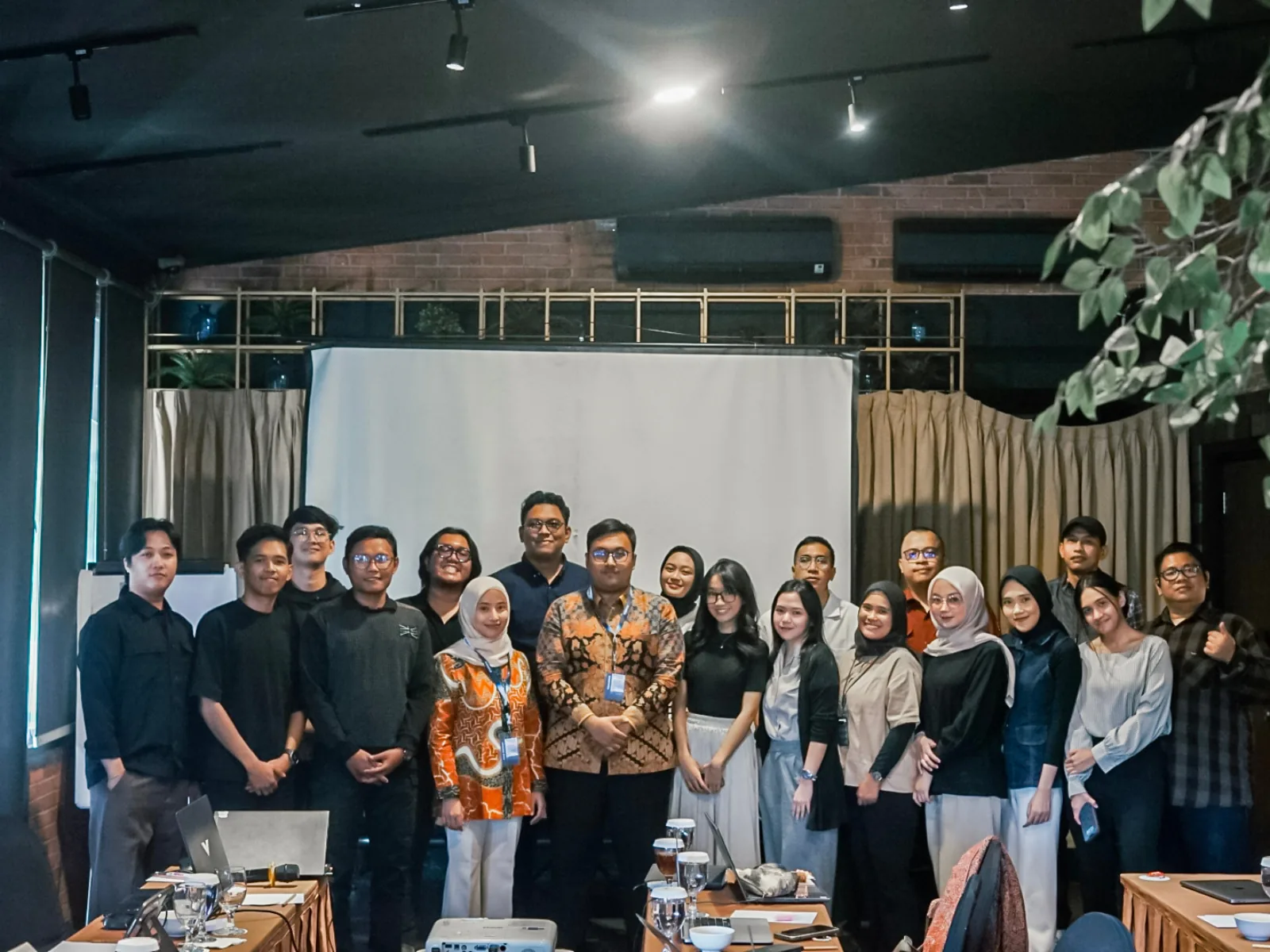
MPR RI
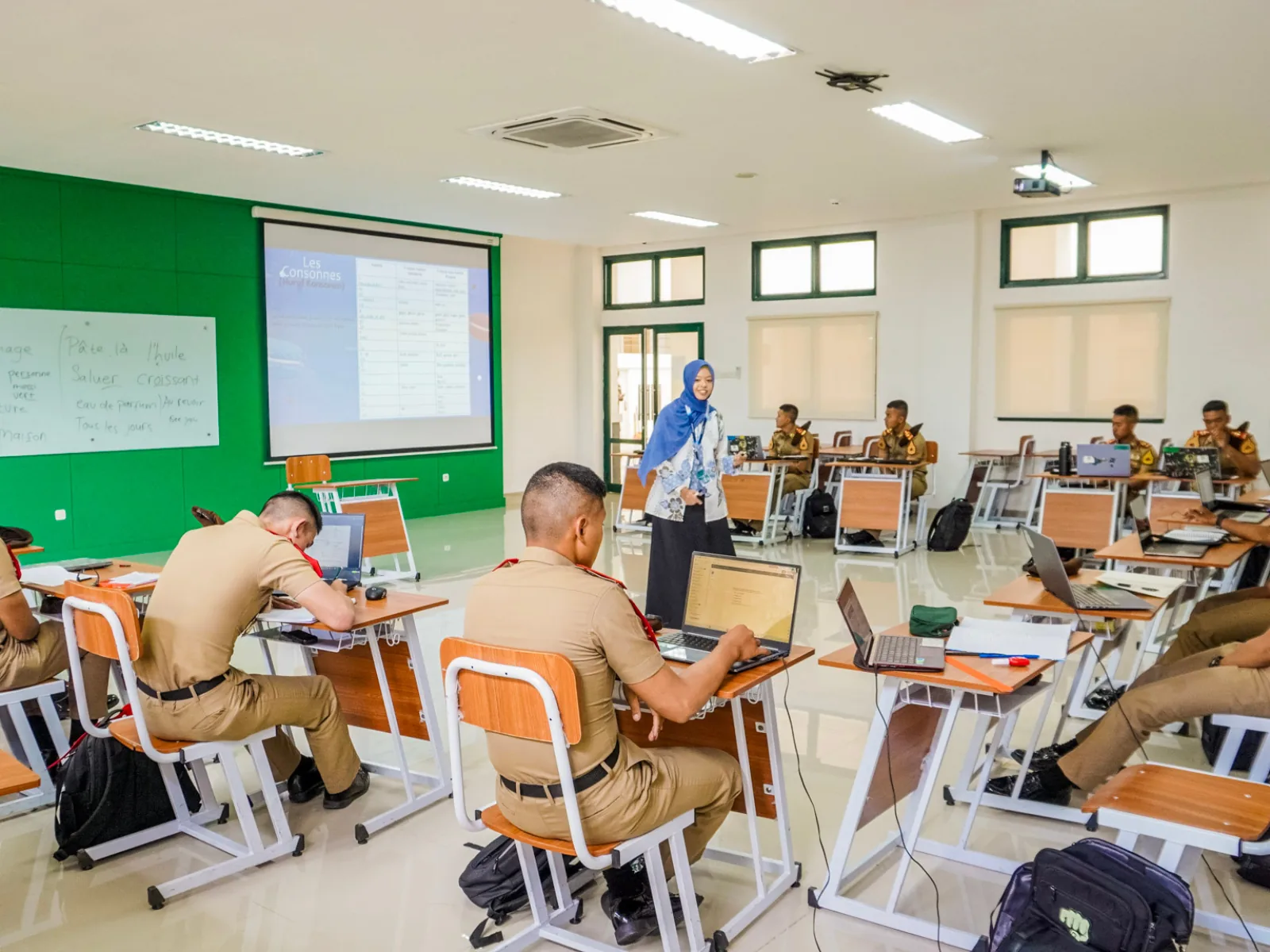
Akademi Militer Magelang
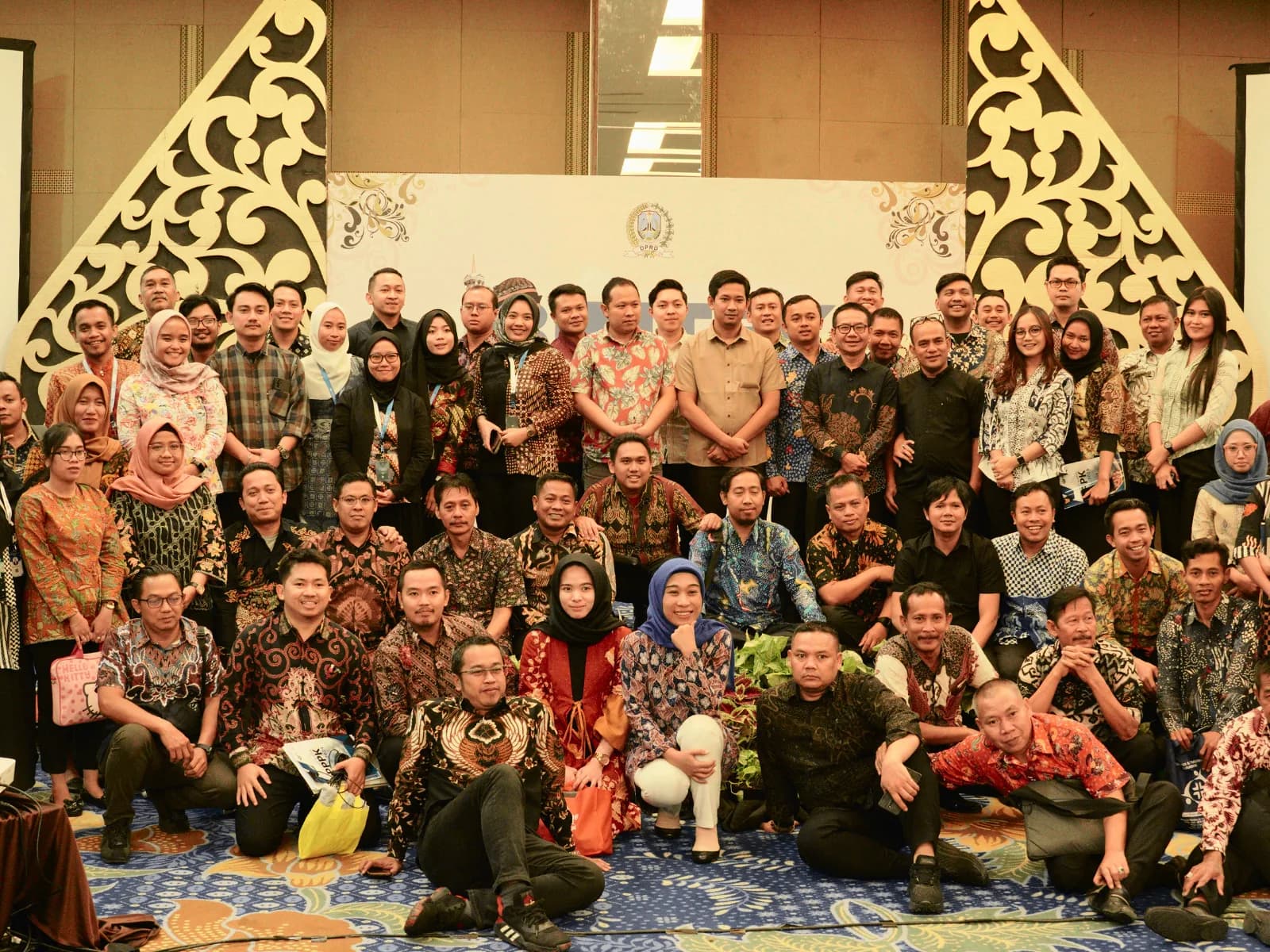
DPRD Provinsi Jawa Timur
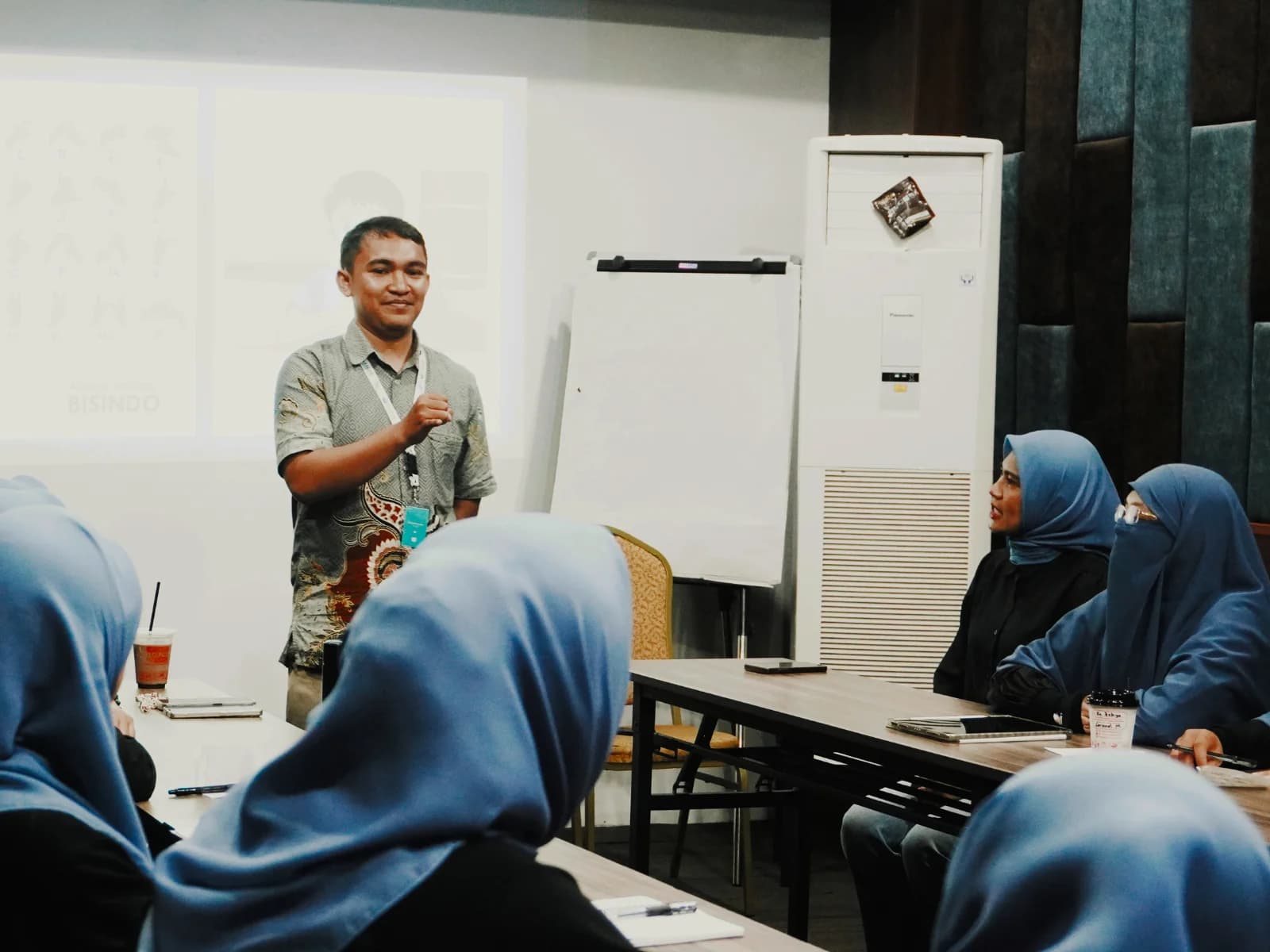
DPMPTSP Pemprov Maluku Utara
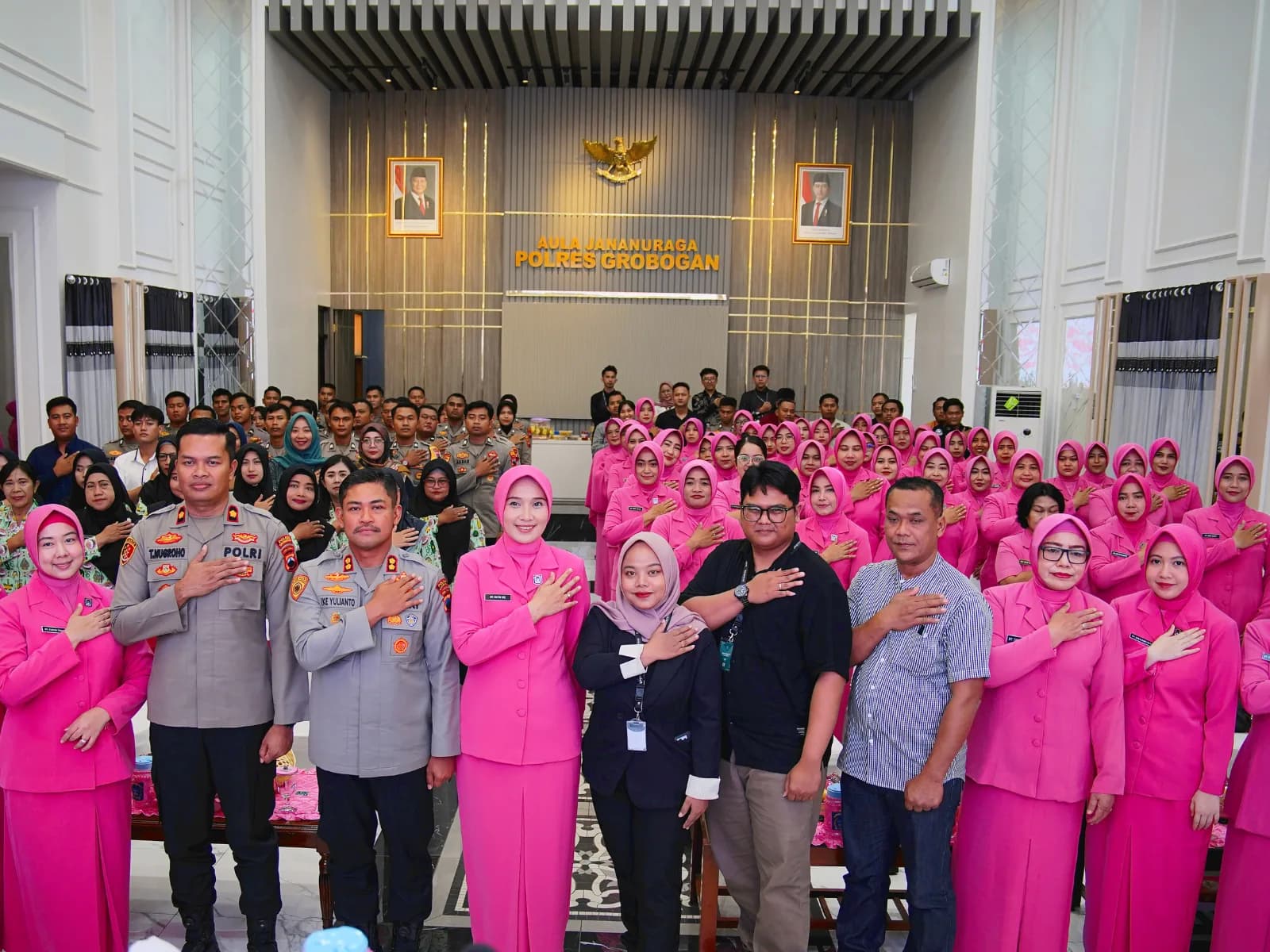
Polres Grobogan
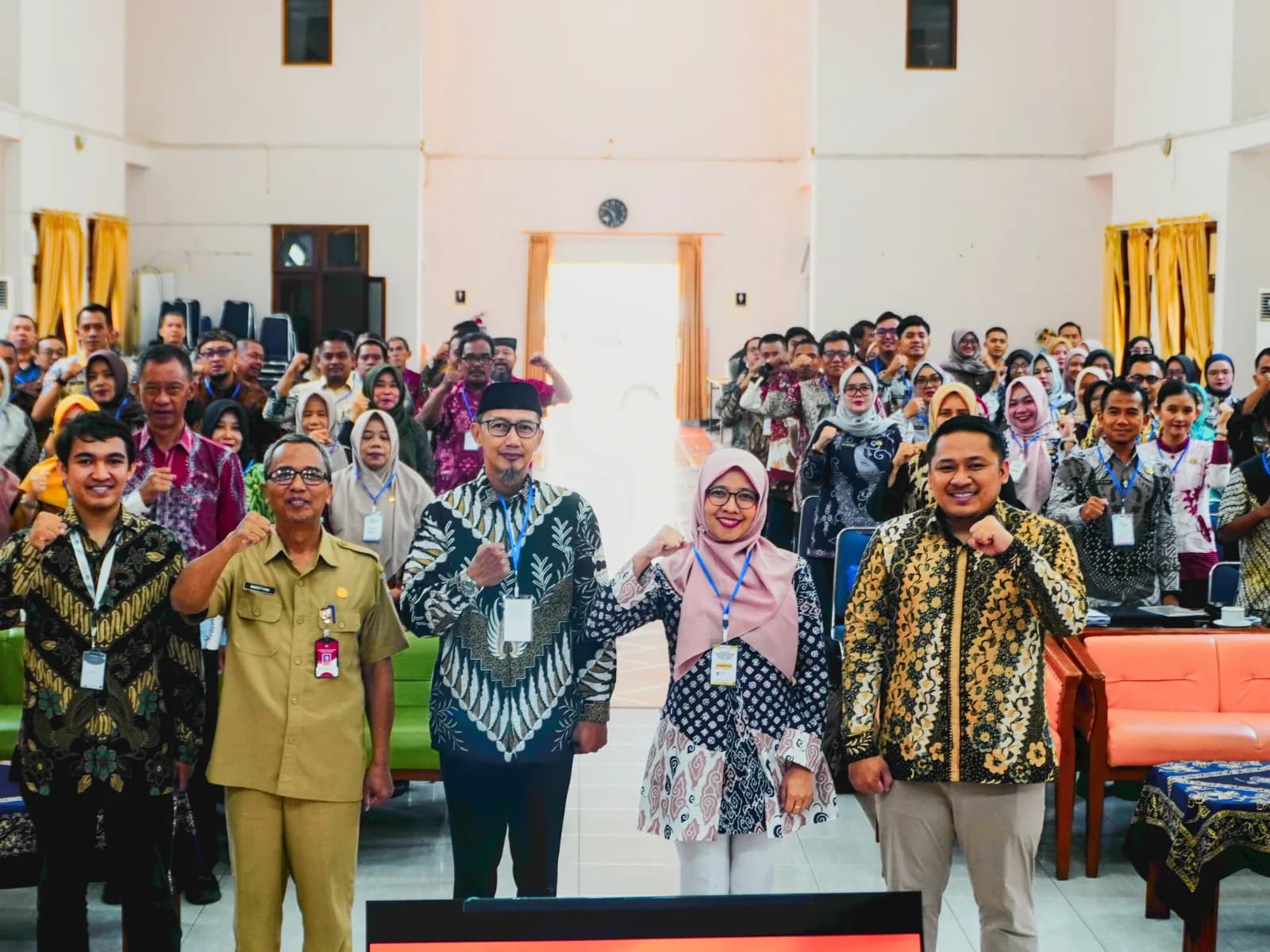
BKPSDM Cirebon
SQL for Analysts
SQL & analytics fundamentals training is an in-house program equipping data analysts, business analysts, finance, and operations to write SQL that is correct, honest, and efficient for business analytics: from SELECT, JOIN, aggregation, CTE & recursive queries, window functions (relevant SQL:2016 subset for analysts), to query optimization basics & analytics patterns (cohort, funnel, retention, time-series), across common dialects (PostgreSQL, MySQL, BigQuery, Snowflake) per your corporate stack.
Measurable Outcomes
Expected Outcomes
Indicators mapped to Kirkpatrick levels: qualitative targets, set during TNA against your team baseline.
- Core SQL is mastered
- Most participants pass advanced SELECT, JOIN, aggregation, GROUP BY + HAVING, and subquery assessment. Judged through a query writing assessment as the class wraps (Kirkpatrick L2).
- Window functions and CTEs used correctly
- Participants write cohort, retention, and top N + others queries using window functions & CTEs in place of workarounds. Seen in the layered queries participants build themselves (Kirkpatrick L3).
- Heavy queries can be tidied without help
- Participants read EXPLAIN, recognize when indexing helps, and recognize common anti-patterns (SELECT *, function on indexed column, unexpected cartesian join). Judged on reading an execution plan and fixing a slow query.
- Corporate analytics patterns are mastered
- Participants complete case studies of cohort, funnel, retention, time-series, gap & island with sustainable queries. Judged on answering the business questions that come up often with the right query pattern.
- Able to move between dialects
- Participants map common patterns to organizational dialect (PostgreSQL/MySQL/BigQuery/Snowflake) and understand key differences. Judged on moving the same query between dialects without changing what it means.
- The numbers produced can be defended
- Participants understand NULL handling, COUNT(DISTINCT) trade-offs, sampling, and present defensible numbers. Judged on clarity of assumptions, handling of empty values, and whether the numbers reconcile on review (Kirkpatrick L4).
Program Format
Program Format Options
Chosen by team baseline and target dialect, finalized after TNA. Most analysts write correct queries without help by the time those four days close. Teams wanting query quality to hold carry on through a two month phased programme of shared query reviews and practice tidying heavy queries.
SQL Analytics Bootcamp (3–5 days)
Intensive bootcamp: SELECT, JOIN, aggregation, GROUP BY, subquery, CTE, window function, basic query optimization. Hands-on in lab database + corporate analytics patterns.
Advanced Analytics Patterns Workshop
Consultative workshop: cohort, funnel, retention, time-series, gap & island, with case studies from your business domain (NDA applies).
Query Optimization & Code Review Workshop
Consultative session: review internal queries (slow / inconsistent results), EXPLAIN, indexing, partitioning, refactoring to CTE / window function.
Recurring Analyst SQL Enablement
Recurring program: SQL clinic, query peer review, analytics pattern sessions, and shared query quality audit cadence.
Free Consultation
Discuss your analyst team's SQL upskill plan
We map dialect, roles, team baseline, and priority analytics cases, then build a proposal and budget based on real needs.
Curriculum
Curriculum Framework
Designed via ADDIE; final modules curated by target dialect (PostgreSQL/MySQL/BigQuery/Snowflake), role, and TNA baseline.
- Basic relational model (Codd): table, column, primary key, foreign key, normalization 1NF–3NF
- Advanced SELECT: aliasing, DISTINCT, ORDER BY, LIMIT/OFFSET (SQL:2016 FETCH FIRST)
- WHERE & operators: =, <>, BETWEEN, IN, LIKE, IS NULL (NULL behavior that often traps)
- Functions: string (SUBSTRING, REPLACE, CONCAT), date (DATE_TRUNC, EXTRACT, DATEADD/INTERVAL), conditional (CASE WHEN, COALESCE, NULLIF)
- Important dialect differences (PostgreSQL/MySQL/BigQuery/Snowflake) for date & string functions
- JOIN: INNER, LEFT/RIGHT OUTER, FULL OUTER, CROSS (selection driven by the question instead of habit)
- Self-join for hierarchy & row comparison in the same table
- Common anti-patterns: SELECT * from large JOIN results; LEFT JOIN when actually INNER
- GROUP BY & HAVING: aggregation (SUM, COUNT, AVG, MIN, MAX, COUNT(DISTINCT) trade-offs)
- GROUPING SETS, ROLLUP, CUBE (SQL:2003) for subtotal & compact cross-tab
- Subquery: scalar, single-row, multi-row; differences from joins
- EXISTS vs IN vs JOIN: when each is right & performance
- Common Table Expression (CTE / WITH clause): breaking long queries into readable steps
- Recursive CTE: for hierarchy (org chart, BOM, path dependency)
- CTE vs subquery vs temporary view: readability & performance trade-offs
- OVER() clause: PARTITION BY, ORDER BY, frame (ROWS/RANGE BETWEEN)
- Ranking: ROW_NUMBER, RANK, DENSE_RANK, NTILE
- Lag/Lead: LAG, LEAD for period-on-period comparison
- Running total & moving average: SUM OVER, AVG OVER with frames
- Distribution: PERCENT_RANK, CUME_DIST, NTILE; usage for segmentation
- Cohort analysis: cohort definition, month-N pivot, retention matrix
- Funnel analysis: ordered steps, drop-off, simple attribution
- Retention: rolling retention, classic retention, churn definitions
- Time-series: monthly/weekly aggregation, gap-fill, moving average, YoY/MoM
- Gap & island: continuous sequence (e.g. consecutive logins), top N + others, pareto
- Reading EXPLAIN / EXPLAIN ANALYZE: sequential scan, index scan, hash join, nested loop, merge join
- Index: B-tree, when it helps, when it adds write cost; multi-column index & column order
- Partitioning (PostgreSQL/BigQuery/Snowflake) & clustering: when it makes sense
- Slow anti-patterns: function on indexed column (WHERE LOWER(email)=...), implicit cast, OR that destroys index
- Statistics: ANALYZE / ANALYZE TABLE; importance of fresh statistics for the planner
- Key differences: PostgreSQL vs MySQL vs BigQuery vs Snowflake (date functions, JSON, window, identifier quoting)
- JSON in SQL: JSON_EXTRACT (MySQL), -> & ->> (PostgreSQL), JSON_VALUE (BigQuery, SQL:2016)
- SQL injection: basic prevention for analysts writing internal ad-hoc tools
- Safe practice: parameterized query, role-based access control, masking PII (UU PDP)
- Analyst ethics: honest numbers (transparent NULL handling), labelling COUNT(DISTINCT) trade-offs, clear sampling
Comparison
Choosing the Program Format
Concise decision matrix. Final recommendation set after training needs analysis.
| Aspect | SQL Analytics Bootcamp | Advanced Patterns Workshop | Query Optimization & Review | Recurring SQL Enablement |
|---|---|---|---|---|
| Primary goal | SQL foundation mastery | Senior-level analytics patterns | Fast & consistent production queries | Living SQL community |
| Ideal participants | New / deepening analysts | Mid to senior analysts | Teams with slow queries | Large organizations with many analysts |
| Typical duration | 3–5 intensive days | 2–3 day workshop | 1–2 week consulting | Monthly / quarterly |
| Main output | Fundamentals mastery + labs | Patterns & case studies | Refactored queries + standard | Peer review + clinic |
| Supporting certification | Microsoft DP-900 / Google ADP | Snowflake SnowPro Core basics | BigQuery / Snowflake practitioner | Mature practitioner |
For Whom
Who This Program Is For
Designed by role because SQL usage differs for data analyst vs business analyst vs finance.
Data Analyst
Teams writing SQL daily for dashboards & ad-hoc reports.
Common challenges
- Can SQL, but stuck on long workarounds when window functions would suffice
- Slow queries in production; not used to reading EXPLAIN
- Cohort / funnel / retention patterns still confusing; often done via Excel export
Business Analyst / Business Unit
Users writing ad-hoc SQL for their own business questions.
Common challenges
- JOIN often wrong (LEFT vs INNER) so numbers inconsistent
- GROUP BY + HAVING vs WHERE not yet clear
- Results with NULL misleading; doesn't understand COALESCE & IS NULL
Finance / Controlling Analyst
Teams reading financial data directly from databases.
Common challenges
- Uncomfortable with SQL time intelligence (YoY, YTD, rolling)
- Mostly Excel exports when SQL could be more efficient
- Doesn't understand window functions for comparative reports
Operations / Process Analyst
Teams monitoring operational metrics from logs & events.
Common challenges
- Log queries slow because not partition-aware
- Gap & island pattern not yet mastered (e.g. detecting consecutive downtime)
- Funnel & cohort analytics ad-hoc without sustainable patterns
Senior Analyst / Data Lead
Owners of query review & internal standards.
Common challenges
- Team queries inconsistent in style; hard to review
- No internal SQL coding standard
- No code review cadence for analytics queries
Industry Context
Industry Applications
One specific use case per industry, naming relevant data, regulations, and SQL patterns.
Customer & risk analysis in bank data warehouse (customer segmentation, fraud pattern detection, compliance monitoring, and internal reporting), with honest SQL (NULL handling, COUNT(DISTINCT) trade-offs) and access control to sensitive data per UU PDP.
See in Banking & Financial Services context →Self-service SQL for PM, growth, marketing, and finance at technology companies, so business questions are answered directly via data warehouse (BigQuery / Snowflake / Redshift) without making data science a bottleneck.
See in Technology & Startups context →SQL fundamentals for BUMN analysts across holding subsidiaries, so performance reporting, consolidation, and operations monitoring are consistent across entities and defensible to the board & BPK.
See in State-Owned Enterprises (BUMN) context →SQL for manufacturing analysts (OEE, downtime, quality, and supply-chain analysis from data warehouse combining PLC/SCADA, MES, and ERP), with gap & island patterns and window functions for shift floor.
See in Manufacturing context →SQL for retail analysts: multi-channel sales analysis (POS, e-commerce, marketplace), basket analysis, loyalty cohort, and retention with idiomatic SQL patterns for modern data warehouse.
See in Retail & FMCG context →SQL fundamentals for analysts in central & regional government agencies, so SPBE reporting, budget transparency, and public service analytics can be done independently & consistently with UU PDP-aligned access control.
See in Government & Public Sector context →Delivery Method
Delivery
Format adapts to your analyst team distribution; all formats hands-on with lab database + your internal dataset.
On-site intensive & workshop
Facilitator comes to your office for a 3–5 day bootcamp; labs in lab database + option to use non-sensitive internal dataset (NDA applies).
Live online + managed labs
Interactive classes via Zoom/Teams; labs in sandbox database (PostgreSQL/MySQL/BigQuery/Snowflake) provided by Neksus.
Hybrid
On-site for intensive modules (analytics patterns, optimization), online for concept & lab modules. Suits multi-location teams.
Engagement Flow
Engagement Path
Follows ADDIE: qualitative durations, scaled to team baseline & target dialect.
Training Needs Analysis & Baseline
Mapping target dialect (PostgreSQL/MySQL/BigQuery/Snowflake/SQL Server), roles, team baseline, internal dataset to use as case study, and priority analytics cases.
Initial stageProgram Design by Role (ADDIE)
Drafting measurable learning objectives, role-based syllabi (data analyst, business analyst, finance, operations), lab scenarios, and framework map to SQL:2016 + Kimball patterns.
Pre-deliverySQL Analytics Bootcamp
Core 3–5 day session: SELECT, JOIN, aggregation, GROUP BY, subquery, CTE, window function, basic optimization. Hands-on in lab database.
Core weekAdvanced Analytics Patterns Workshop
Practical workshop: cohort, funnel, retention, time-series, gap & island with case studies from your business domain (NDA applies).
Post-bootcampQuery Optimization & Code Review Roll-out
Consultative session: review slow production queries, EXPLAIN, indexing, partitioning, refactoring to CTE / window function; internal SQL coding standard.
Rolling per teamEnablement & Recurring Evaluation
Monthly/quarterly cadence: SQL clinic, peer review, pattern sessions, Kirkpatrick L1–L4 evaluation (Phillips L5 on request), shared query quality audit.
Recurring & continuousCase Studies
Typical Outcome Patterns
Illustrative patterns based on similar program structures. No named clients or promised numbers. SQL:2016 standard & Kimball / Joe Celko references are attributed as external sources (ISO/IEC, Kimball Group, Joe Celko).
Financial institution with many risk / fraud analysts
Intervention
Bootcamp + corporate analytics patterns workshop + internal query review
Result
Analysts write cohort/funnel with window functions; cross-team number consistency; query audit becomes a cadence
Technology company with BigQuery / Snowflake self-service
Intervention
Bootcamp + analytics patterns + cost-aware query workshop
Result
Non-data teams (PM/growth/marketing/finance) self-service; query costs stable; data science focuses on modeling
BUMN holding with many subsidiary analysts
Intervention
Bootcamp roadshow + holding SQL code standard
Result
Performance metric consistency across subsidiaries rises; holding reporting more defensible
Procurement Info
Information for Procurement & Vendor Management
What procurement, finance, and BI / data units need.
Structured proposal: measurable learning objectives, role-based syllabus, framework map (SQL:2016 standard / Kimball analytics patterns / Joe Celko / target dialect / UU PDP), facilitator profile, schedule, and TNA-based cost detail.
TNA-based: flat per program, per session, per participant, tiered, or custom. Estimate issued after TNA is agreed.
Flexible terms (DP + balance / per-batch installments); tax invoice (PPN) and PO documentation supported.
Familiar with BUMN/government procurement: vendor documentation, e-procurement / SPSE, HPS/offers, and compliance clauses.
Kirkpatrick L1–L3 evaluation reports (attendance, knowledge assessment, behavior: queries written); Phillips ROI L5 on finance/risk request.
NDA signing, confidentiality of internal datasets used as case studies, and practices aligned with UU PDP and your internal security policy.
Queries, views, and documents built for your company are yours; usage rights of training materials are agreed in the contract.
FAQ
Frequently Asked Questions
Next Step
Discuss your analyst team's SQL upskill plan
We map dialect, roles, team baseline, and priority analytics cases, then build a proposal and budget based on real needs.
- Proposal, role-based syllabus, and framework map (SQL:2016 standard / Kimball / Joe Celko / target dialect)
- Labs with practice database; option to use non-sensitive internal datasets
- Procurement-ready documents (company profile, NPWP, NDA, PPN tax invoice)