Agile & Scrum Training for the Retail & FMCG Sector
E-commerce and omnichannel retail teams operate under stacked campaign seasons (Harbolnas, Ramadan, year-end). A large promo backlog can choke daily delivery if release slicing is not disciplined and flow metrics are not monitored. Healthy Scrum in retail means discovery from customer behaviour, fast releases with seasonal feature flags, and WIP control so big campaigns do not kill regular iteration.
- 4.9/5 · 287 reviews
- 300+ clients nationwide
- 2,000+ trainers
- 1 to hundreds of participants
- Standard · Premium · Private 1-on-1
- format
- In-house / online / hybrid
- duration
- 2 intensive days per product team
- participants
- Per product team 8–15 (scalable multi-squad)
- language
- Indonesian / English
2,000+ trainers and experts
Our group's teaching network, matched to what your team needs.
See class documentationYou see your trainer first
The trainer's profile, track record and field come with the proposal, before you decide.
4.9 out of 5
287 participant reviews.
300+ clients nationwide and 180,000+ private training sessions completed. Among them: MPR RI, Akademi Militer Magelang, DPRD Provinsi Jawa Timur.
One person to hundreds
Private coaching for one participant, a class for one team, or several cohorts at once.
Three budget levels
- Standard: core class, material fitted to the participants’ work
- Premium: senior trainer, deeper material design
- Private 1-on-1: one participant, one trainer, schedule set by the participant
Why Agile & Scrum for Product Teams is different in Retail & FMCG
E-commerce and omnichannel retail teams operate under stacked campaign seasons (Harbolnas, Ramadan, year-end). A large promo backlog can choke daily delivery if release slicing is not disciplined and flow metrics are not monitored. Healthy Scrum in retail means discovery from customer behaviour, fast releases with seasonal feature flags, and WIP control so big campaigns do not kill regular iteration.
- Cycle Time of non-campaign omnichannel featuresHolds steady or drops even during campaign season
- Production incidents at peak seasonDrops with feature flag & canary deployment
- Traffic-forecast accuracy for major campaignsImproves against historical baseline
- Scrum Guide 2020
- Kanban Method — David J. Anderson: WIP, flow metrics
- Consumer Protection Law No. 8/1999 — discount / promo features released
- UU PDP No. 27/2022 — loyalty / e-commerce customer data
- Indonesian PSAK / IFRS retail revenue recognition — transaction & refund features
- Head of E-commerce / Omnichannel
- Head of Digital Retail Product
- Senior Product Manager
- E-commerce Engineering Manager
- Senior Scrum Master / Agile Coach
- Head of Digital Operations
- Product teams run discovery from customer-behaviour data (clickstream, cohorts) as the primary source of truth (replacing merchandiser assumptions)
- Seasonal release slicing is prepared early with feature flags and canary
- Flow metrics (WIP, Cycle Time, Throughput) keep big promo backlogs from choking daily delivery
- Definition of Done includes discount-feature compliance (Consumer Law) and privacy (PDP Law)
- Teams monitor business metrics (basket size, conversion) together with delivery metrics in an integrated view
Quick Answer
Agile & Scrum training for product teams is an in-house program that trains product, engineering, and stakeholders to work Agile correctly, grounded in the 2020 Scrum Guide (3 accountabilities, 3 commitments), the Agile Manifesto values, product discovery (Torres/Cagan), DORA delivery metrics, and SAFe/LeSS scaling, practiced on your own backlog and measured with Kirkpatrick.
The biggest danger: 'Dark Scrum' (full ritual, dead values)
Many teams run every Scrum event and artifact but lose the empiricism and Agile Manifesto values (Ron Jeffries' term: Dark Scrum; also Zombie Scrum). The result is often worse than tidy waterfall. This program deliberately diagnoses and cures this pattern (outside the approach of adding new ritual).
Grounded in industry-recognized frameworks
The curriculum rests on the 2020 Scrum Guide (Schwaber & Sutherland), the 2001 Agile Manifesto (4 values, 12 principles), DORA/Accelerate metrics (four keys + 2024 DORA Report), Teresa Torres & Marty Cagan/SVPG product discovery, Daniel Vacanti's flow metrics, and a SAFe vs LeSS scaling comparison: primary sources that go well beyond generic 'best practice'.
Correct Scrum builds the thing right. Discovery ensures it is the right thing
A team can be highly efficient at producing features no one uses. That is why this program combines Scrum mechanics, product discovery (the Opportunity Solution Tree), and DORA delivery metrics: skill, direction, and measurement in one package.
Clients & Documentation
Some of the institutions we have trained
Photos from sessions we have delivered, each one named after the institution it belongs to.
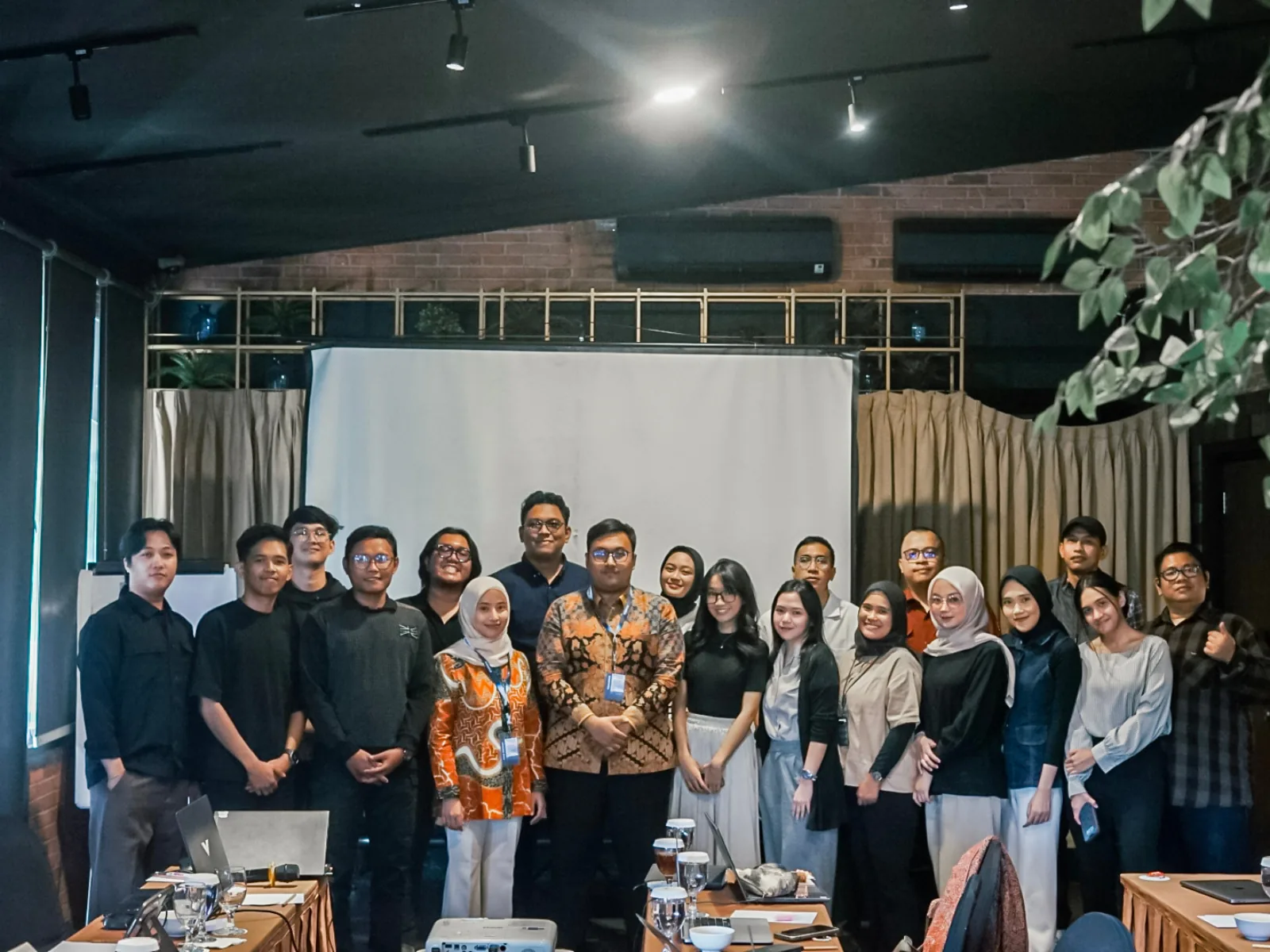
MPR RI
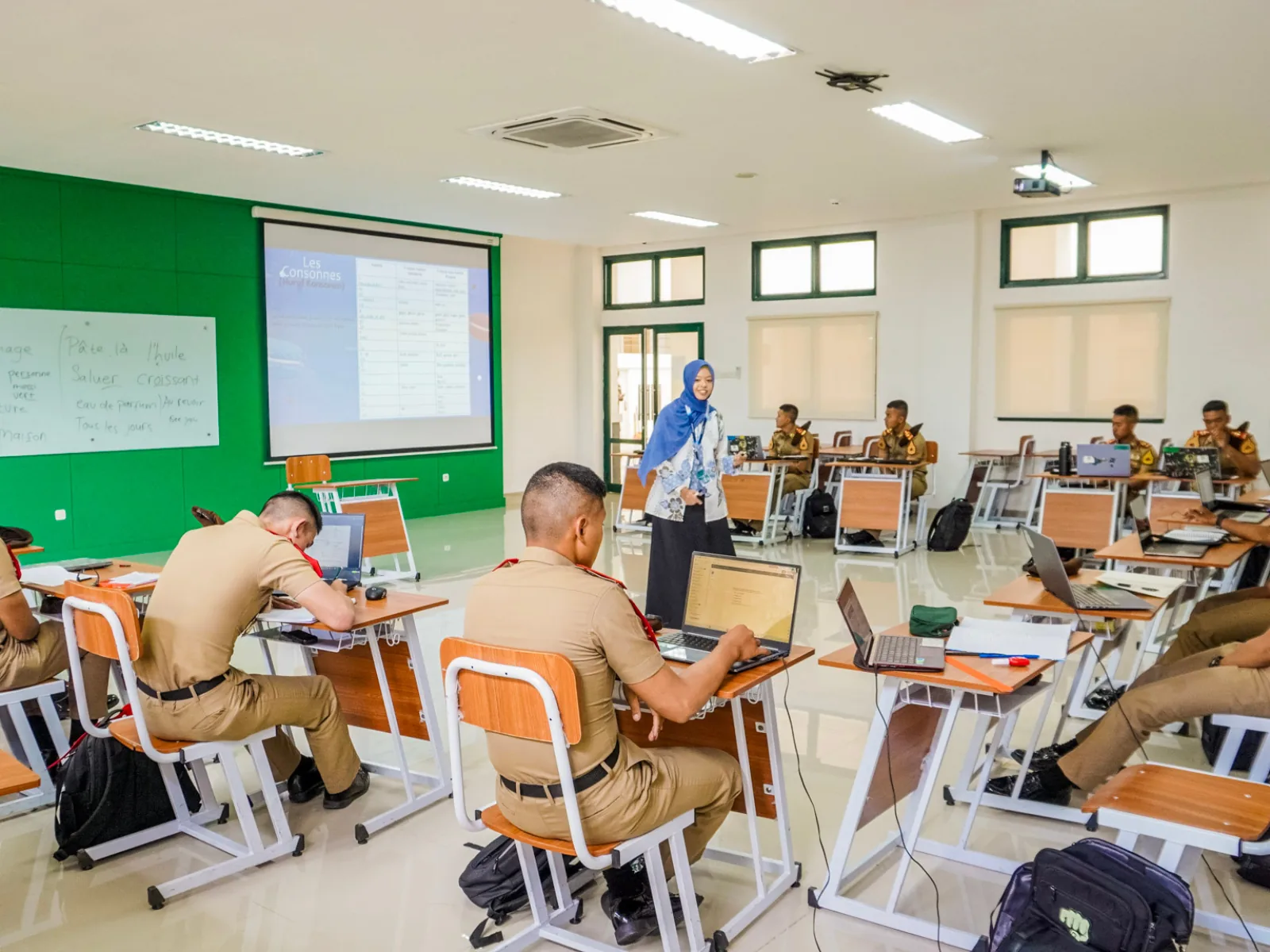
Akademi Militer Magelang
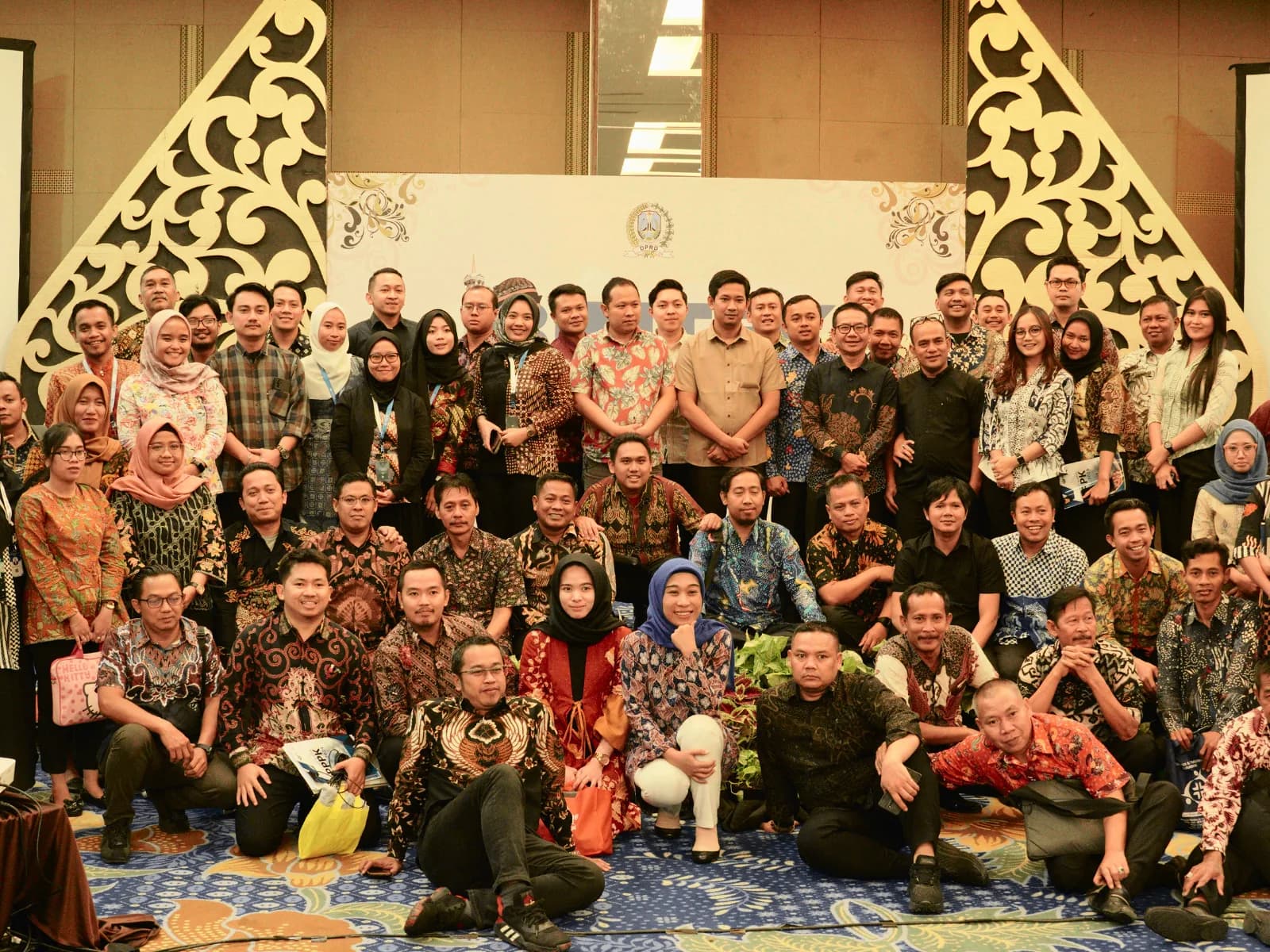
DPRD Provinsi Jawa Timur
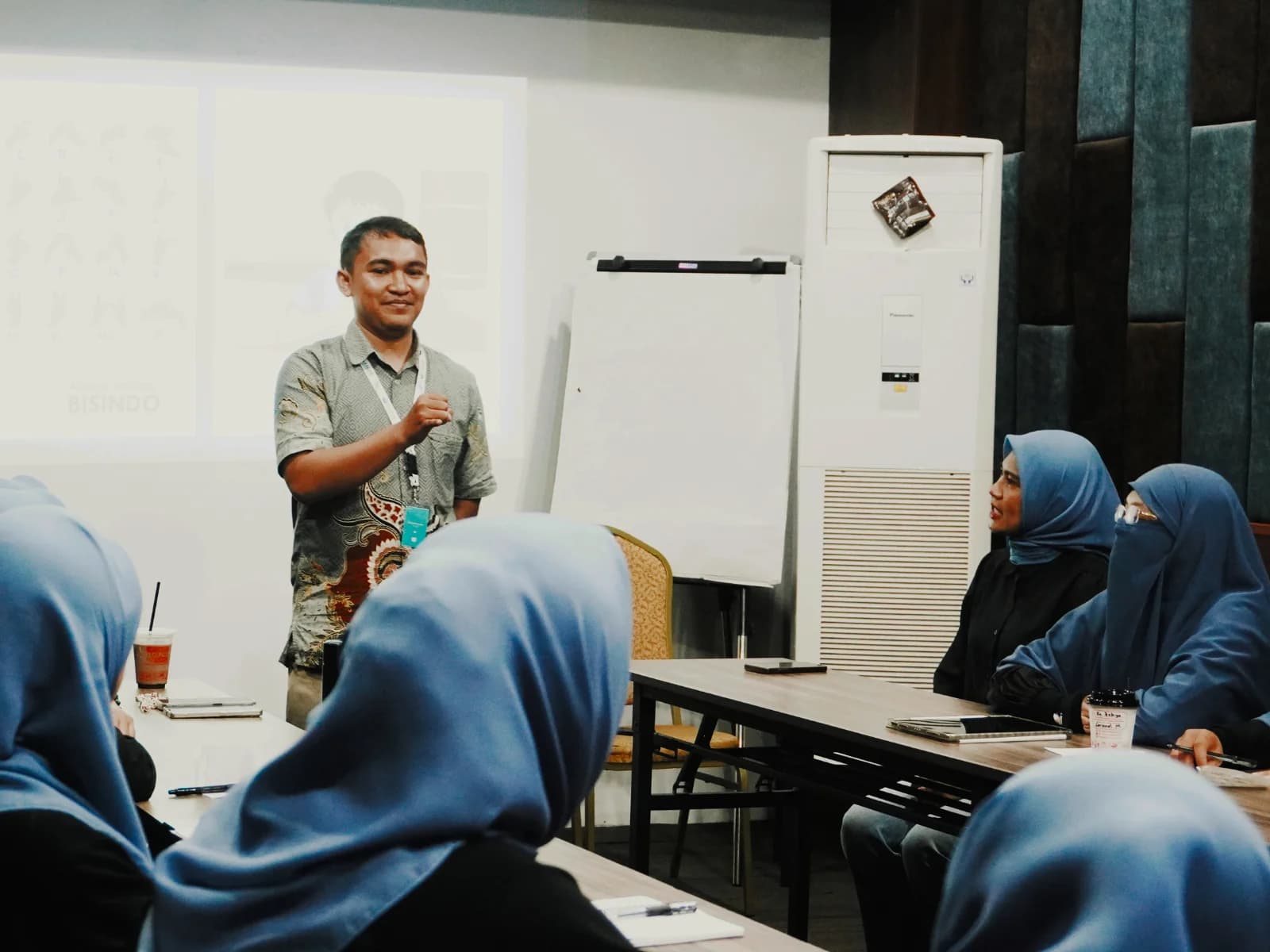
DPMPTSP Pemprov Maluku Utara
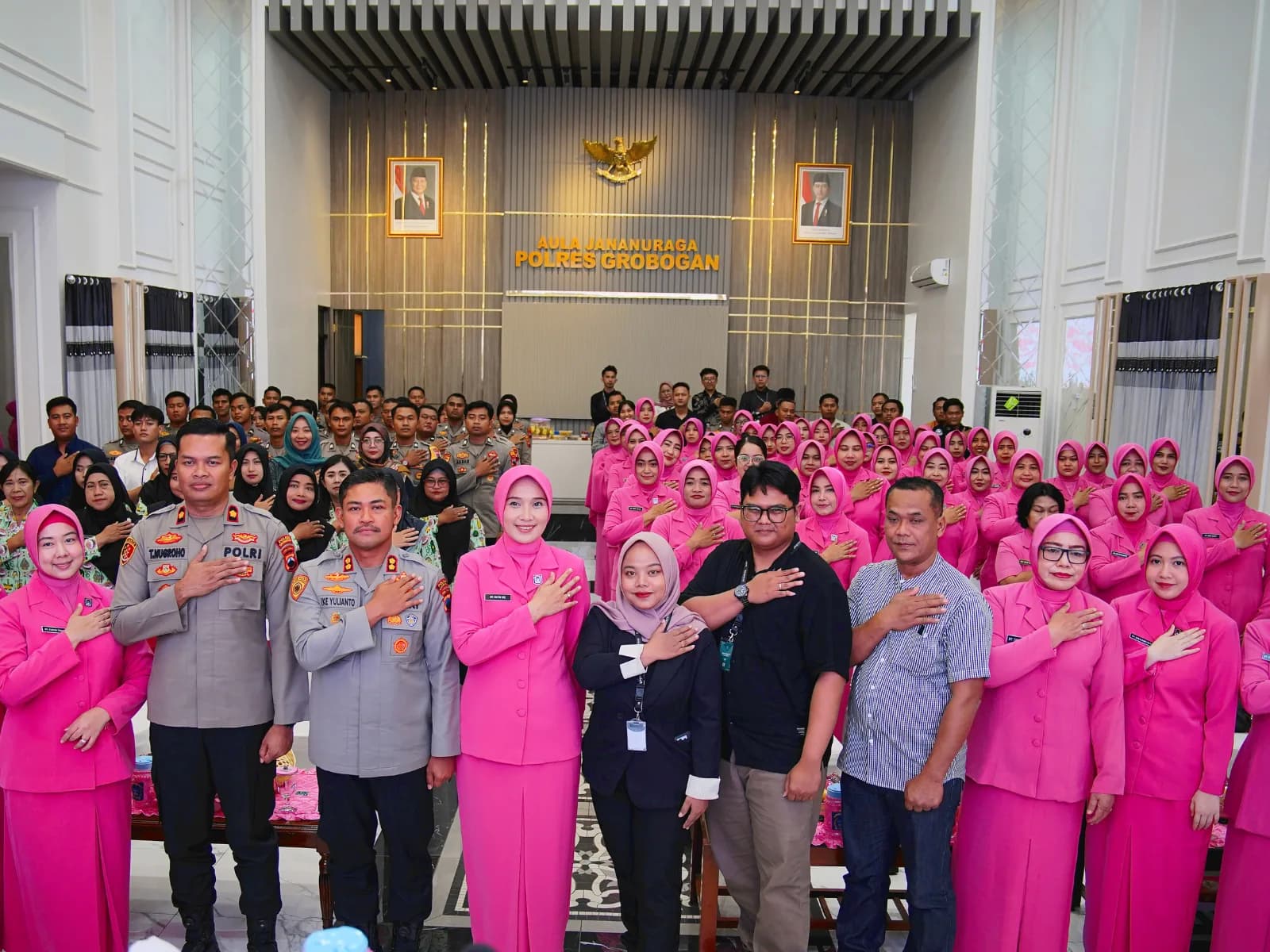
Polres Grobogan
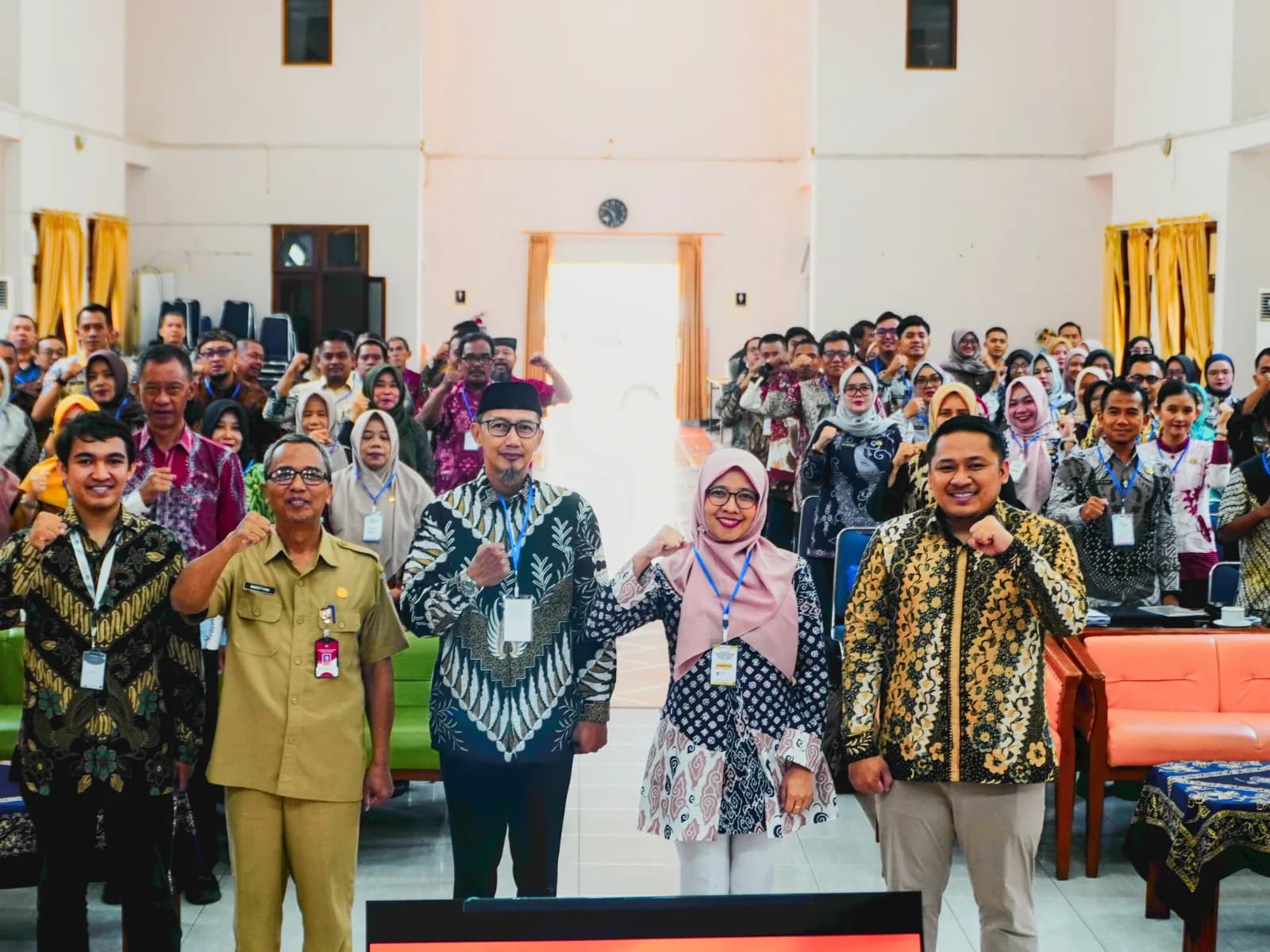
BKPSDM Cirebon
Agile & Scrum for Product Teams
Agile & Scrum training for product teams is an in-house program that equips product, engineering, and business stakeholders to work Agile correctly: from the Agile Manifesto values and Scrum empiricism (transparency, inspection, adaptation), the three accountabilities and three commitments of the 2020 Scrum Guide (Product Goal, Sprint Goal, Definition of Done), continuous product discovery in the tradition of Teresa Torres and Marty Cagan, through to DORA delivery metrics and the fundamentals of SAFe/LeSS scaling, practiced directly on participants' own backlog and product so behavior actually changes (avoiding the failure mode of an empty Scrum ritual / dark/zombie Scrum).
Measurable Outcomes
Expected Outcomes
Success indicators mapped to Kirkpatrick/Phillips evaluation levels and recognized delivery metrics: qualitative targets, set together at TNA against the team baseline.
- Release dates become predictable
- More stable, forecastable Lead Time for Changes & Cycle Time across sprints, measured against the team baseline (per DORA & flow metrics). Read from the gap between sprint plan and outcome (Kirkpatrick L4).
- Scrum practice shows up in daily work
- Scrum events run with clear purpose and a living Sprint Goal (avoiding relapse into ceremony); Definition of Done enforced consistently. Seen when the team runs daily, review, and retrospective (Kirkpatrick L3).
- Sharper backlog and discovery
- Product Backlog prioritized against the Product Goal; team runs continuous discovery (Opportunity Solution Tree) before building. Visible in the backlog items rewritten together (Kirkpatrick L3).
- Steadier releases and less rework
- Change Failure Rate and rework decline thanks to a real Definition of Done and better slicing, tracked honestly from baseline. Reflected in how many bugs return after a release (Kirkpatrick L4).
- Agile concepts understood at the root
- Participants pass an assessment on the 2020 Scrum Guide, accountabilities, and metrics: the foundation before behavior change. Judged through a concept assessment closing the class (Kirkpatrick L2).
- Monetary value of the delivery gains (optional)
- Estimated value from faster time-to-value & reduced rework with training-effect isolation, when finance asks for figures. The rupiah side is modelled with the Phillips L5 method when the team asks.
Program Format
Program Format Options
Chosen by Agile maturity, number of teams, and release schedule, finalized after TNA. The entry point most teams choose is that two-day class on its own. When the new habits need to reach daily work, coaching across several real sprints can follow it.
Agile Health Check & Diagnostic (0.5–1 day)
Diagnostic of the team's current Agile way of working: audit of events & artifacts vs the 2020 Scrum Guide, detection of Dark/Zombie Scrum symptoms, DORA/flow metric baseline, and discovery gap mapping. Output: a prioritized improvement map.
Scrum Practitioner Intensive (2–3 days)
Full foundation: Agile Manifesto values, empiricism & the 3 commitments of the 2020 Scrum Guide, PO/SM/Developers accountabilities, user-story slicing, Definition of Done, delivery metrics. All applied to the participant team's backlog and product.
Advanced Modules: Discovery, Metrics & Scaling (multi-session)
Deep dive into product discovery (Opportunity Solution Tree, customer interviewing, product trio), DORA & Kanban flow metrics, and the fundamentals of SAFe vs LeSS scaling for PO, SM, and engineering leads.
Sprint Coaching & Institutionalization (several sprints)
Hands-on guidance over several real sprints following the 70-20-10 pattern: review of actual events, PO/SM coaching, metric improvement, and a champion network so practice sticks and does not relapse into dark Scrum.
Free Consultation
Discuss your product team's Agile transformation needs
We audit your team's Scrum way of working, baseline delivery metrics, and discovery gaps, then build a proposal & budget estimate based on real needs.
Curriculum
Curriculum Framework
Designed with ADDIE; final modules curated by TNA results and role. The topics below are the full scope that can be activated.
- The 2001 Agile Manifesto: 4 values & 12 principles, the 'why' behind the practice
- Scrum empiricism: transparency, inspection, adaptation (2020 Scrum Guide)
- Scrum values: commitment, focus, openness, respect, courage as real behaviors
- Agile substance vs ritual mimicry: recognizing and preventing Dark Scrum (Ron Jeffries) & Zombie Scrum
- When Agile fits and when it does not: honest context (complex vs complicated)
- Three accountabilities: Product Owner, Scrum Master, Developers (the 2020 model that replaces pre-2020 'roles')
- Five events: the Sprint, Sprint Planning, Daily Scrum, Sprint Review, Sprint Retrospective
- Three artifacts & three commitments: Product Backlog→Product Goal, Sprint Backlog→Sprint Goal, Increment→Definition of Done
- Sprint Planning Topics 1-2-3 (Why/What/How) with a meaningful Sprint Goal
- Self-managing teams & the Scrum Master as a true leader who grows the team (well beyond the ceremony note-taker stereotype)
- A living Product Backlog: prioritized against the Product Goal, effective refinement
- User stories & vertical slicing; INVEST and testable acceptance criteria
- Continuous discovery: Opportunity Solution Tree & regular customer interviews (Teresa Torres)
- Product trio and loved-viable-feasible products (Marty Cagan / SVPG)
- Distinguishing discovery (find the right problem) vs delivery (build the thing right)
- The four DORA keys: Deployment Frequency, Lead Time for Changes, Change Failure Rate, Failed Deployment Recovery Time
- Velocity: its use, its limits, and why it stays a single-team signal (failing as a cross-team KPI)
- Kanban flow metrics: WIP, Cycle Time, Throughput, Work Item Age (Daniel Vacanti)
- Limiting WIP & flow efficiency: bottlenecks, wait time, and predictability
- Reading metrics to improve the system (anti-weaponization: preventing use as a tool to judge teams)
- Managing stakeholders: expectations, priorities, and sudden changes
- Sprint Review as real collaboration that goes well beyond a formality demo
- Retrospectives that produce measurable change (avoiding repeated complaints with no follow-through)
- Common anti-patterns: estimates becoming promises, velocity pressured, refinement skipped, soft DoD
- Theory X management & psychological safety: 2024 DORA Report findings on performance predictors
- When scaling is needed, and why a healthy single-team foundation must come first
- SAFe (Scaled Agile): prescriptive, Agile Release Train, fits large/regulated organizations
- LeSS (Larman & Vodde): minimal rules, feature teams, fits strong engineering cultures
- Cross-team dependencies, integration, and a shared Definition of Done
- Agile maturity roadmap: champion network, 70-20-10 cadence, Kirkpatrick L1–L4 evaluation
Comparison
Choosing a Program Format
A concise decision matrix. The final recommendation is set after the training needs analysis.
| Aspect | Health Check & Diagnostic | Scrum Practitioner Intensive | Discovery/Metrics/Scaling Modules | Sprint Coaching & Institutionalization |
|---|---|---|---|---|
| Primary goal | Diagnose gaps & dark Scrum | A correct Scrum foundation | Product & multi-team capability | Behavior change that persists |
| Ideal participants | Teams that 'claim Agile' | New/transforming teams | PO/SM & engineering leads | Post-training teams |
| Content focus | Event/artifact audit + baseline | 2020 Scrum Guide + Manifesto | Discovery + DORA + SAFe/LeSS | Coaching real events + metrics |
| Evaluation level | Diagnostic (pre-baseline) | Kirkpatrick L1–L2 | Kirkpatrick L1–L3 | Kirkpatrick L1–L4 (+Phillips L5) |
| Best suited for | Knowing the position before investing | Building the team foundation | Growing product capability | Making the practice stick |
For Whom
Who Is This Program For?
Role-tailored via TNA because PO, SM, engineering, and stakeholder challenges differ.
Product & engineering teams (Developers)
Execute iterative delivery and own an Increment that meets the Definition of Done.
Common challenges
- Unpredictable sprints; commitments missed for reasons no one understands
- Events run as ceremony: Daily Scrum becomes a status report, retros have no follow-up
- A soft Definition of Done means 'done' is not really done (high rework)
Product Owner & Product Manager
Maximize product value through a clear Product Backlog and Product Goal.
Common challenges
- The backlog becomes a request list with no prioritization against the Product Goal
- Building without discovery: features ship but go unused (output without outcome)
- Pulled in many directions by stakeholders with no decision framework
Scrum Master & Engineering/Delivery Lead
Grow a self-managing team and improve the system of work, a role that reaches well beyond guarding ceremonies.
Common challenges
- Stuck in an administrative role; Scrum turns mechanical (Dark/Zombie Scrum symptoms)
- No objective metrics to show improvement to management
- Hard to drive change without leadership support (Theory X)
Business stakeholders, sponsors & L&D/HR teams
Interact with Agile teams and/or are accountable for proving training impact.
Common challenges
- Expectations misaligned with iterative working; frequent sudden re-prioritization
- Hard to tell a genuinely Agile team from one that only uses the terms
- No recognized evaluation framework (Kirkpatrick/Phillips) to justify budget
Industry Context
Use Cases by Industry
One specific use case per industry, naming the real workflow & delivery context in that vertical.
Multi-squad digital product teams: growing continuous discovery (Opportunity Solution Tree, product trio) aligned with delivery, with LeSS/SAFe scaling fundamentals for cross-squad dependencies and DORA metrics as a shared engineering–product language.
See in Technology & Startups context →IT & digital banking teams: predictable mobile/internet banking feature delivery with a strict Definition of Done (security & compliance baked into the DoD), Sprint Reviews involving risk & compliance, and Lead Time/Change Failure Rate metrics to evidence release readiness in financial services.
See in Banking & Financial Services context →Transforming internal digital teams across subsidiaries: from waterfall projects to correct Scrum, with a Product Goal aligned to corporate objectives, an auditable trail of events & metrics, and a champion network for cross-unit institutionalization.
See in State-Owned Enterprises (BUMN) context →E-commerce & omnichannel platform teams: discovery driven by customer behavior, fast release slicing for campaign seasons, and flow metrics (WIP, Cycle Time) so a large promo backlog does not choke daily delivery.
Tracking & operational platform product teams: coordinating product teams with field operations, a Definition of Done covering integration reliability, and a Sprint Goal that links feature releases to real operational metrics (tracking accuracy, order lead time).
See in Logistics & Supply Chain context →Delivery Method
Delivery
Format adapts to team distribution and release schedule; every format is hands-on using participants' backlog & product with active practice throughout.
In-house on-site
Facilitator comes to the office/training venue; a practice lab using the participant team's backlog and product, sprint simulation, and a real-event audit.
Live online
Interactive class via Zoom/Teams with hands-on breakouts, a collaborative board, sprint simulation, screen-share reviews, and session recordings.
Hybrid
On-site sessions for intensive practice & lab, followed by online sprint coaching as follow-up so the practice sticks.
Engagement Flow
Engagement Path
From diagnosis to embedded behavior: qualitative durations, adapted to number of teams & maturity.
Training Needs Analysis & Agile Health Check
Audit of the Scrum way of working vs the 2020 Scrum Guide, detection of Dark/Zombie Scrum symptoms, DORA/flow metric baseline, and discovery gap mapping. Output: a needs profile + measurement baseline.
Initial stageProgram Design (ADDIE)
Defining measurable learning objectives, a role-based syllabus (PO/SM/Developers/stakeholder), and exercises built on the participant team's backlog & product.
Before deliveryDelivery: Scrum Practitioner Foundation
Agile Manifesto values, empiricism & the 3 commitments of the 2020 Scrum Guide, accountabilities, slicing, and the Definition of Done applied directly to the team context.
2–3 daysDelivery: Discovery, Metrics & Scaling
Product discovery (Opportunity Solution Tree, product trio), DORA & Kanban flow metrics, and the SAFe vs LeSS decision fundamentals for key roles.
Multi-sessionSprint Coaching (70-20-10)
Coaching across several real sprints: event reviews, PO/SM coaching, metric improvement, and forming a champion network so practice sticks.
Several sprintsEvaluation & Institutionalization
Kirkpatrick L1–L4 evaluation with DORA/flow metric context (Phillips L5 on request), evidence for L&D/leadership, and an organizational Agile maturity roadmap.
Post-program & ongoingCase Studies
Typical Outcome Patterns
Indicative impact based on similar program structures. Illustrative, with no named clients or promised numbers. External benchmarks (e.g. Standish CHAOS, DORA) are cited as industry references (outside the status of Neksus results).
A multi-squad digital banking team that 'claims Agile'
Intervention
Health check + Scrum Practitioner + sprint coaching, with a tightened Definition of Done
Result
Sprint Goals became meaningful and commitments more stable; rework dropped as the DoD was enforced; the team gained delivery metrics to discuss with management
A retail e-commerce team shipping many features but with low usage
Intervention
Practitioner + product discovery module (Opportunity Solution Tree, customer interviews)
Result
The backlog began to be prioritized against outcomes (replacing the request-list pattern); the team validated assumptions before building
A BUMN digital unit transforming from waterfall projects
Intervention
Practitioner + champion network + scaling fundamentals (when SAFe vs LeSS) aligned to the corporate Product Goal
Result
An iterative way of working started to stick across units with an event & metric trail auditable by internal oversight
Procurement Info
Information for Procurement & Vendor Management
What procurement, finance, legal, and information-security teams need.
Structured proposal: measurable learning objectives, role-based syllabus (PO/SM/Developers/stakeholder), reference frameworks (2020 Scrum Guide, DORA, discovery), facilitator profiles, schedule, and cost breakdown based on TNA results.
TNA-based: flat per program, per session, per participant, tiered, or custom. No standard figures without a needs analysis; an estimate is provided after the TNA and coaching scope is agreed.
Flexible terms (deposit + balance / per-batch or per-coaching-phase); tax invoice (VAT) and PO document support available.
Familiar with BUMN/agency procurement stages: vendor documents, e-procurement, owner's estimate/bids, and compliance clauses.
Kirkpatrick Level 1–3 evaluation report (attendance, comprehension assessment, exercise & event-audit results) with DORA/flow metric context; Phillips ROI Level 5 on finance request.
NDA signing and confidentiality clauses; exercises use the participant team's backlog/product in an agreed environment & scope, aligned with your internal security policy.
Working templates (Definition of Done, Opportunity Solution Tree, metric board) built for the company become the company's property; training-material usage rights agreed in the contract.
FAQ
Frequently Asked Questions
Next Step
Discuss your product team's Agile transformation needs
We audit your team's Scrum way of working, baseline delivery metrics, and discovery gaps, then build a proposal & budget estimate based on real needs.
- A free first consultation, then a training needs analysis with a concise Agile health check
- Proposal, role-based syllabus, and reference frameworks
- Procurement-ready documents (company profile, tax ID, NDA, VAT invoice)
- Kirkpatrick impact measurement + DORA metrics (Phillips ROI on request)
Agile & Scrum for Product Teams training for your Retail & FMCG team
We audit your team's Scrum way of working, baseline delivery metrics, and discovery gaps, then build a proposal & budget estimate based on real needs.
- A free first consultation, then a training needs analysis with a concise Agile health check
- Proposal, role-based syllabus, and reference frameworks
- Procurement-ready documents (company profile, tax ID, NDA, VAT invoice)
- Kirkpatrick impact measurement + DORA metrics (Phillips ROI on request)