Kubernetes Training for the Banking & Financial Services Sector
Indonesian banks migrate digital services to containers for release speed and multi-AZ resilience. OJK supervises bank IT infrastructure via POJK 11/POJK.03/2022 and SEOJK 29/SEOJK.03/2022, covering vendor management, hardening, segregation of duties, and audit log. Bank engineering teams need to master K8s up to a regulator-reportable posture: CIS hardening, PSS Restricted, least-privilege RBAC, microsegmentation NetworkPolicy, and complete audit trail.
- 4.9/5 · 287 reviews
- 300+ clients nationwide
- 2,000+ trainers
- 1 to hundreds of participants
- Standard · Premium · Private 1-on-1
- format
- In-house / online / hybrid
- duration
- 5 intensive days per cohort
- participants
- 10–20 per cohort
- language
- Indonesian / English
2,000+ trainers and experts
Our group's teaching network, matched to what your team needs.
See class documentationYou see your trainer first
The trainer's profile, track record and field come with the proposal, before you decide.
4.9 out of 5
287 participant reviews.
300+ clients nationwide and 180,000+ private training sessions completed. Among them: MPR RI, Akademi Militer Magelang, DPRD Provinsi Jawa Timur.
One person to hundreds
Private coaching for one participant, a class for one team, or several cohorts at once.
Three budget levels
- Standard: core class, material fitted to the participants’ work
- Premium: senior trainer, deeper material design
- Private 1-on-1: one participant, one trainer, schedule set by the participant
Why Kubernetes for IT Teams is different in Banking & Financial Services
Indonesian banks migrate digital services to containers for release speed and multi-AZ resilience. OJK supervises bank IT infrastructure via POJK 11/POJK.03/2022 and SEOJK 29/SEOJK.03/2022, covering vendor management, hardening, segregation of duties, and audit log. Bank engineering teams need to master K8s up to a regulator-reportable posture: CIS hardening, PSS Restricted, least-privilege RBAC, microsegmentation NetworkPolicy, and complete audit trail.
- Workload coverage on PSS Baseline/RestrictedNearly all non-legacy production workloads
- kube-bench score (CIS K8s Benchmark compliance)Significant improvement period-on-period
- OJK examination findings on container infrastructureNo material findings in the next period
- POJK 11/POJK.03/2022 Commercial Bank IT Risk Management
- SEOJK 29/SEOJK.03/2022 Commercial Bank Cyber Resilience & Security
- CIS Kubernetes Benchmark — control plane, kubelet, RBAC, networking controls
- Pod Security Standards (Kubernetes v1.25+)
- NIST SP 800-204C Microservices Security in Service Mesh
- UU PDP No. 27/2022 — customer data
- Bank CIO / Head of IT
- Head of Cloud Center of Excellence
- Head of SRE / Platform Engineering
- Head of IT Security / CISO
- Lead Backend / Channel Engineering
- Head of IT Risk
- Bank engineering teams master K8s production patterns with PSS Restricted
- Least-privilege RBAC documented per workload & ServiceAccount
- Priority CIS Kubernetes Benchmark hardening applied & reported via kube-bench
- Centralized Kubernetes audit log usable for OJK examinations
- ArgoCD GitOps provides auditable production change trails
Quick Answer
Corporate Kubernetes training for engineering teams is an in-house program equipping developers, SREs, and platform engineers to run containers in production (Docker, Kubernetes v1.30+, Helm, ArgoCD, observability), guided by the CIS Kubernetes Benchmark, Pod Security Standards, and NIST SP 800-204C, and aligned with CNCF CKAD/CKA competencies.
Pod Security Policies were removed in Kubernetes v1.25
The replacement is Pod Security Standards (Privileged/Baseline/Restricted). Teams still relying on PSP must migrate. A dedicated module guides workload identification, PSS mapping, and enforcement via Pod Security admission or Gatekeeper/Kyverno.
Aligned with CNCF CKAD/CKA competencies
The curriculum aligns with Certified Kubernetes Application Developer (CKAD) and Certified Kubernetes Administrator (CKA) blueprints. Primary focus remains enterprise application (production, hardening, FinOps), but participants pursuing certification get a strong foundation.
Healthy adoption pattern: paved-road > each team rediscovering
Successful K8s adoption across many teams typically rests on a paved-road curated by the platform team: library charts, ArgoCD ApplicationSets, policy as code (Gatekeeper/Kyverno). Without paved-road, posture goes uneven and cluster costs explode. The module teaches this pattern explicitly.
Clients & Documentation
Some of the institutions we have trained
Photos from sessions we have delivered, each one named after the institution it belongs to.
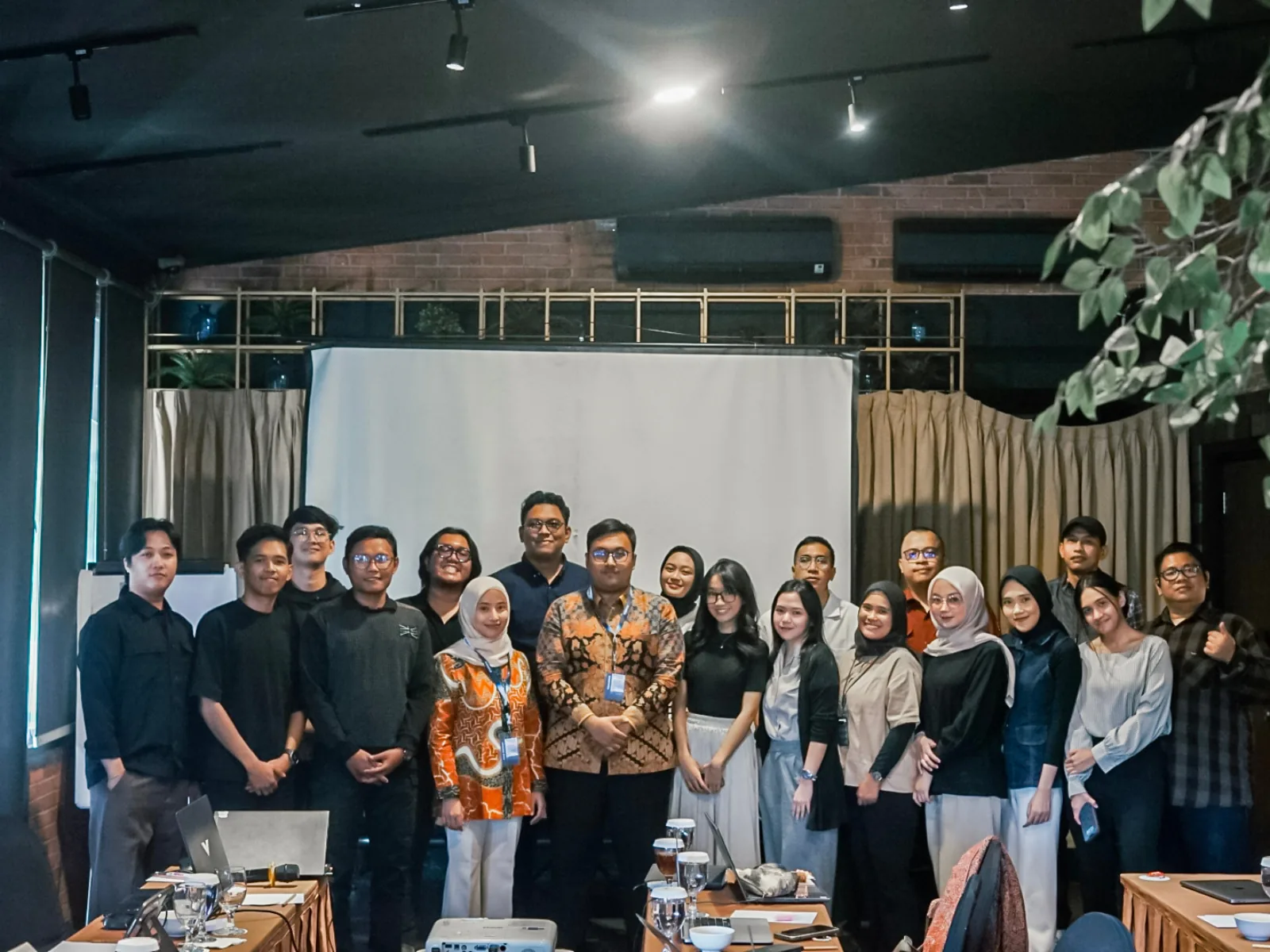
MPR RI
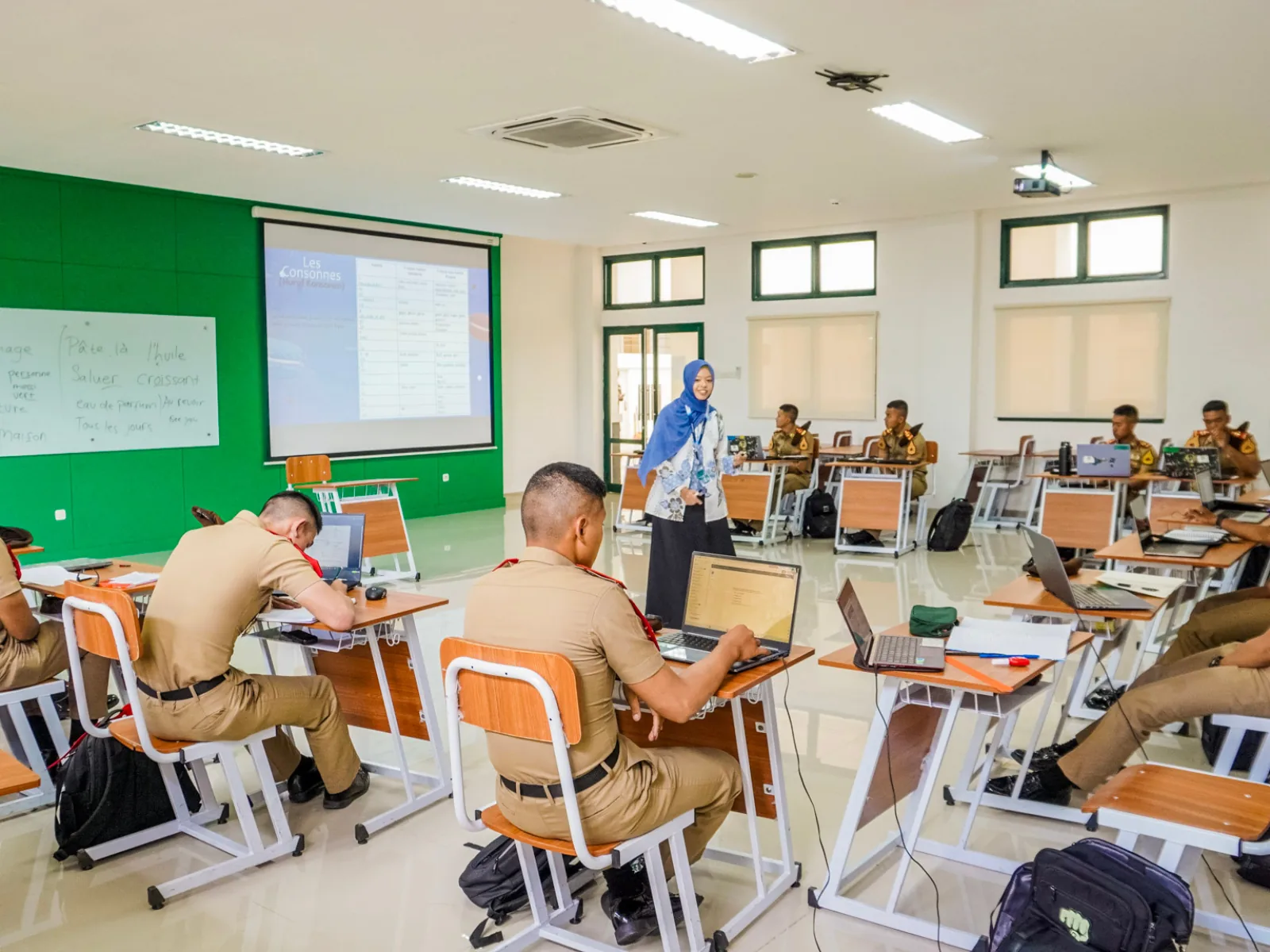
Akademi Militer Magelang
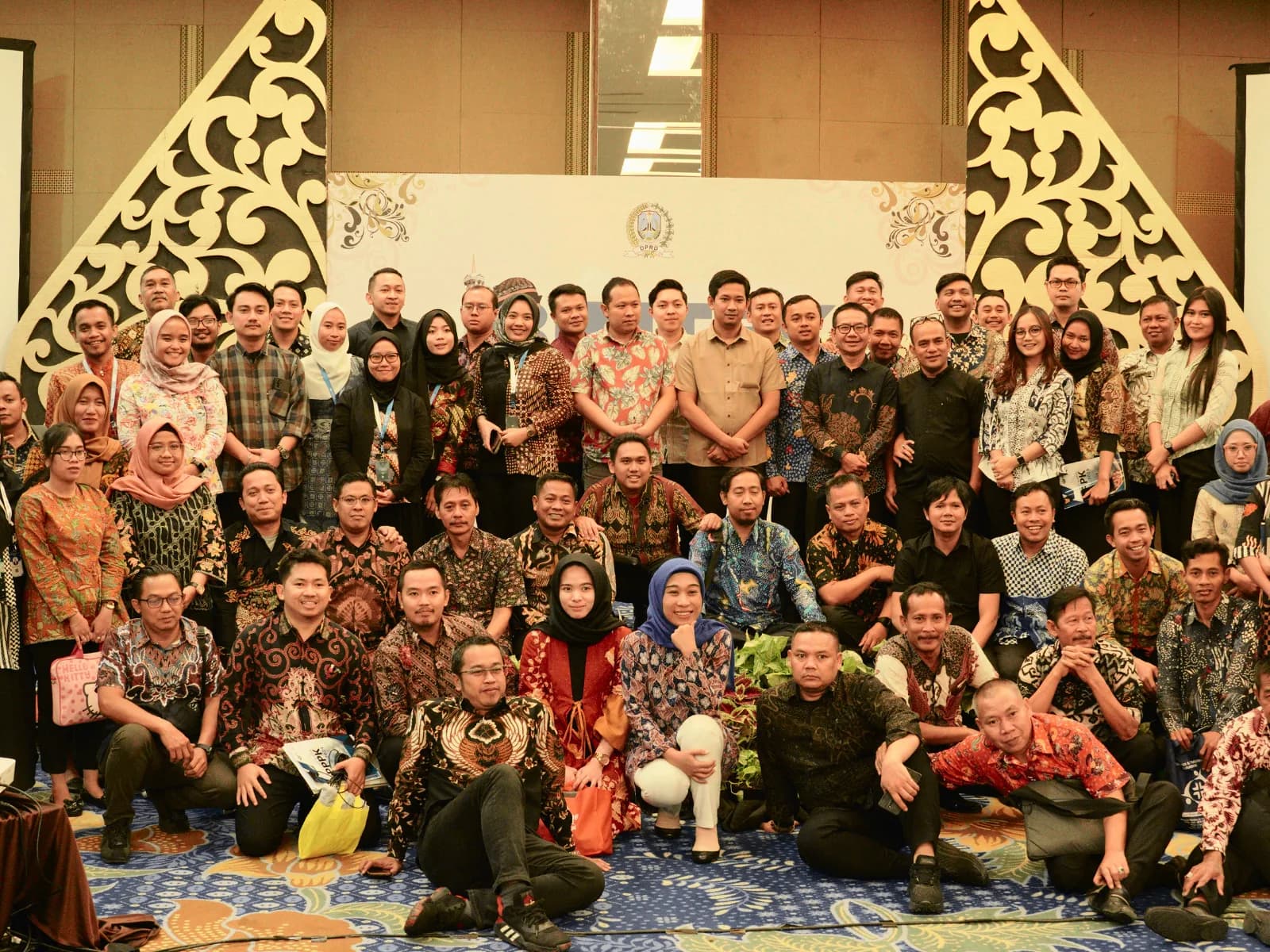
DPRD Provinsi Jawa Timur
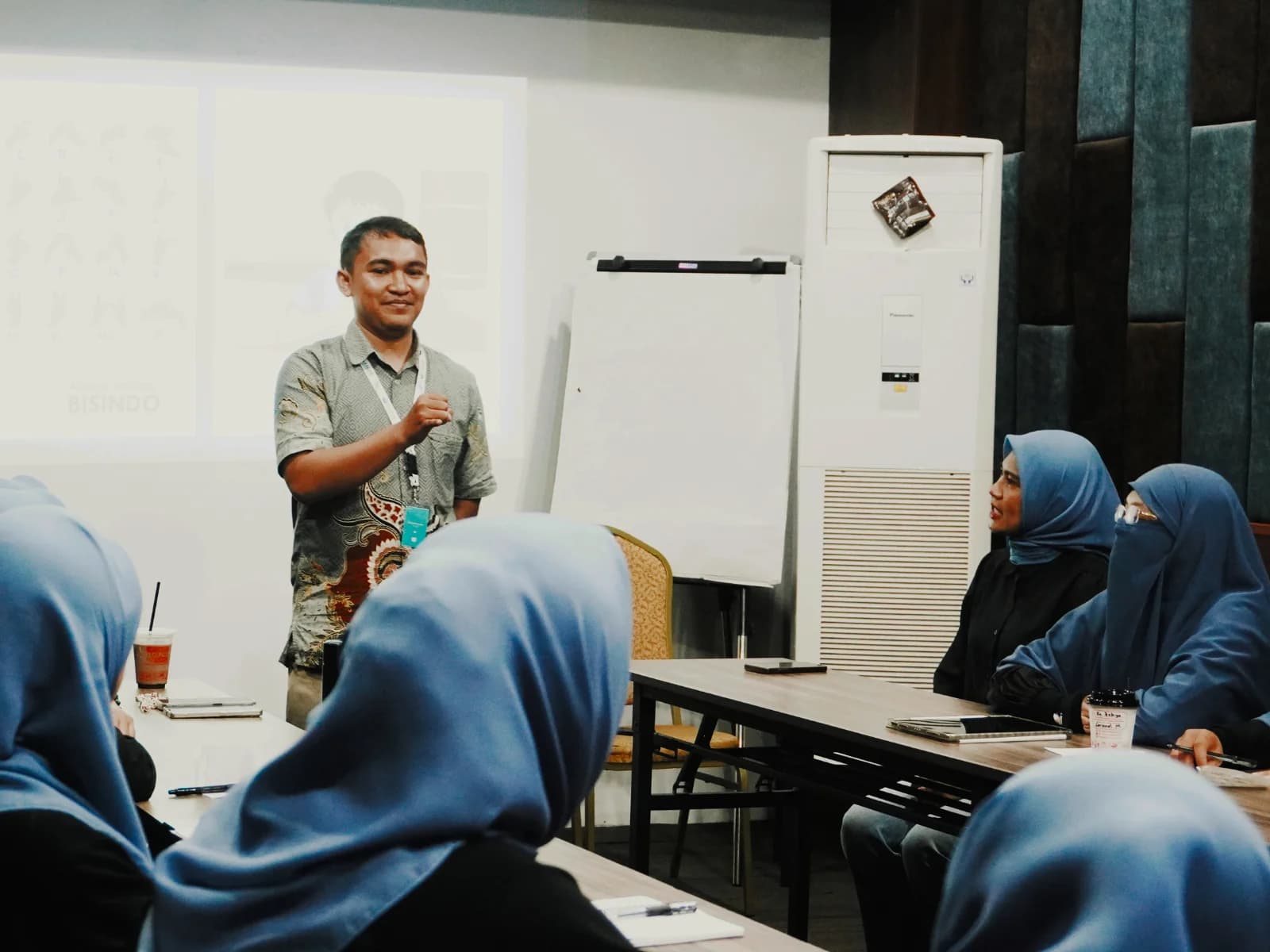
DPMPTSP Pemprov Maluku Utara
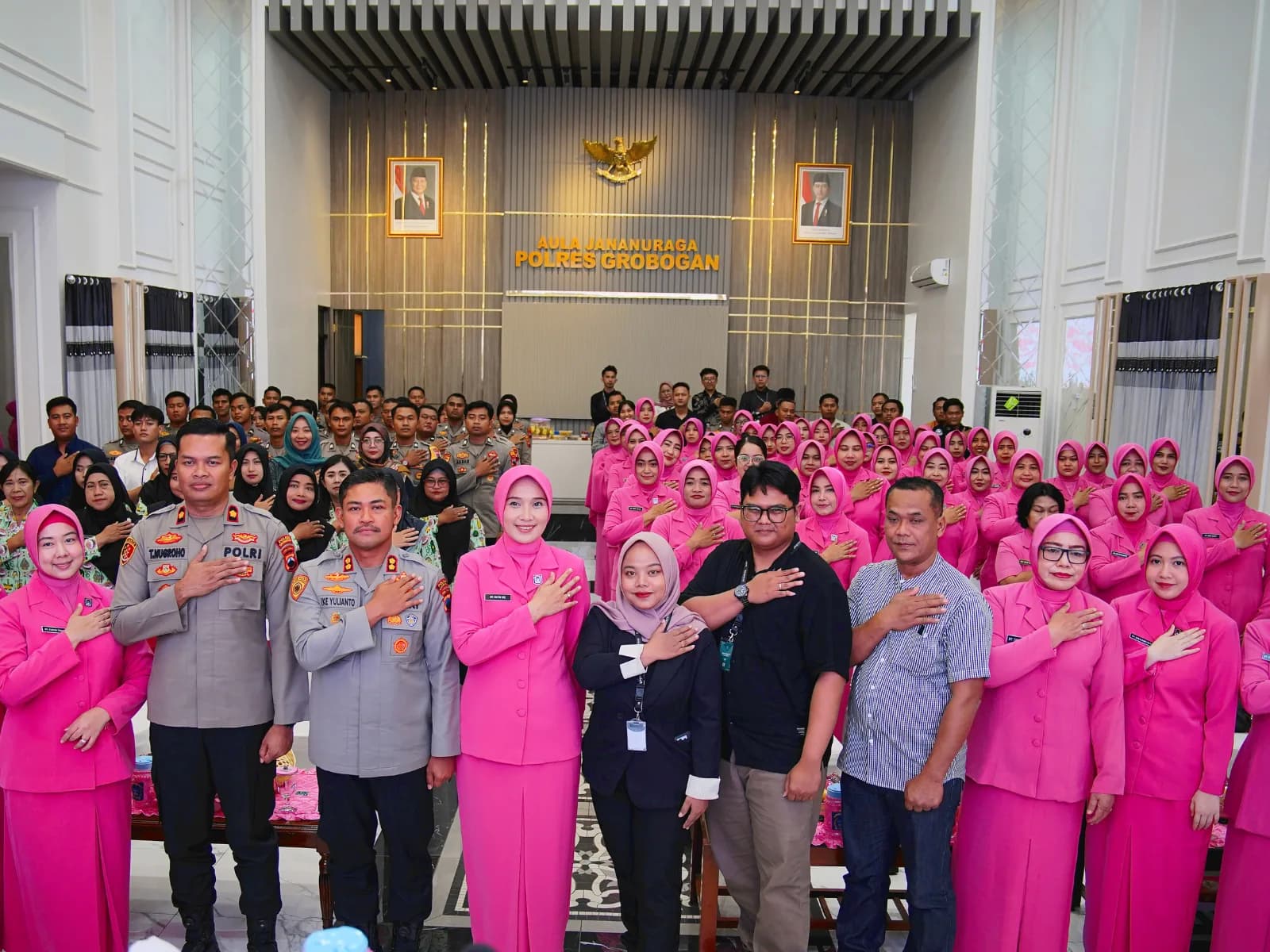
Polres Grobogan
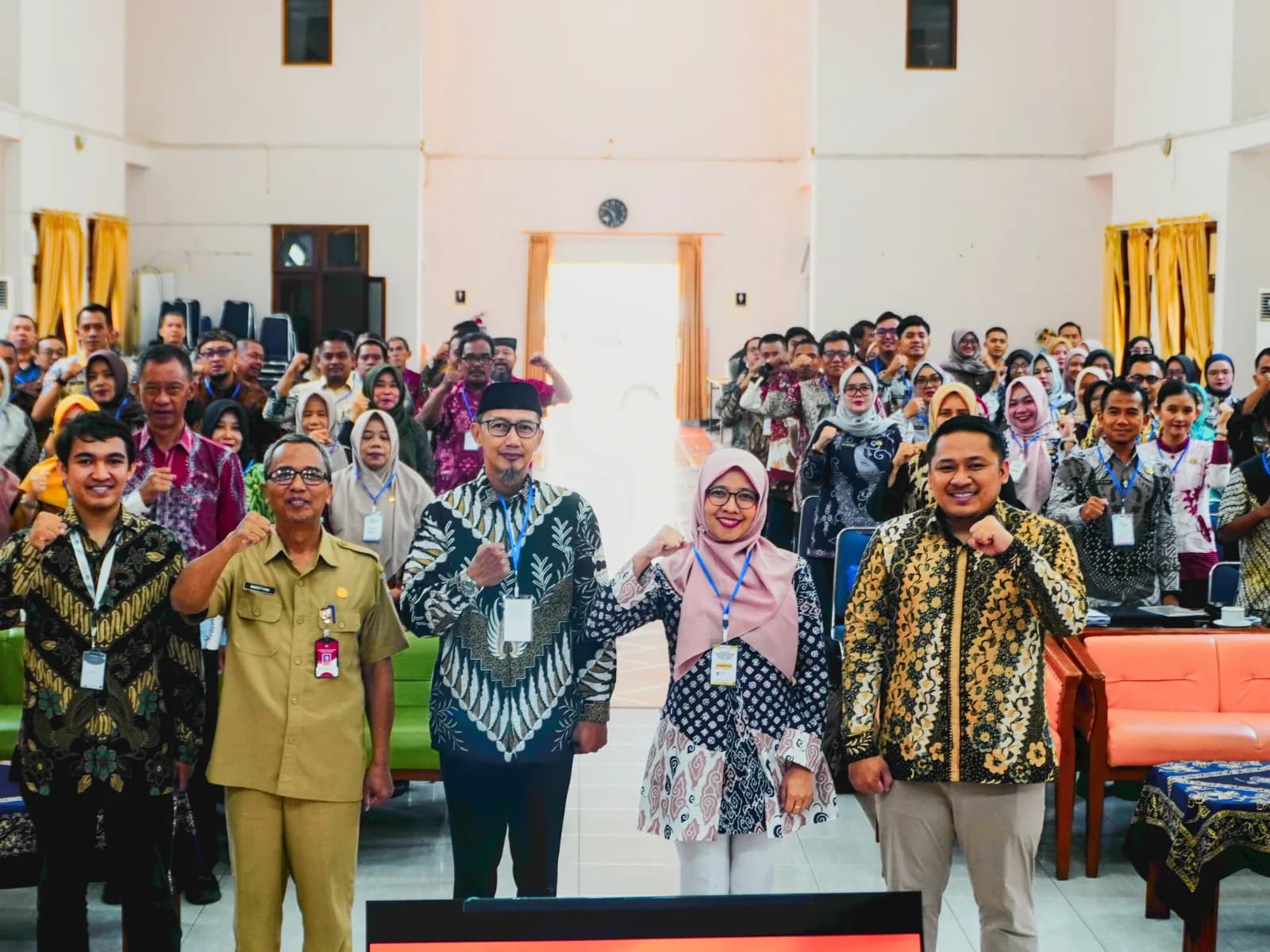
BKPSDM Cirebon
Kubernetes for IT Teams
Corporate Kubernetes training for engineering teams is an in-house program equipping developers, SREs, and platform engineers to run container workloads in production (from Docker fundamentals, Kubernetes v1.30+ manifests, Helm, GitOps via ArgoCD, to observability and hardening), mapped to the CIS Kubernetes Benchmark, Pod Security Standards (Restricted/Baseline/Privileged), NIST SP 800-204C for microservices security, and aligned with the CKAD/CKA certification competencies from CNCF.
Measurable Outcomes
Expected Outcomes
Indicators mapped to Kirkpatrick levels and CKAD/CKA competencies: qualitative targets, set during TNA against your team baseline.
- Kubernetes fundamentals mastered
- Most participants pass manifest assessment (Deployment/Service/Ingress/ConfigMap/Secret), basic networking, and kubectl. Judged through an assessment of core cluster objects closing the class (Kirkpatrick L2).
- Automated release through GitOps runs
- Participants build a Helm chart + ArgoCD pipeline for one internal app, with auditable rollback. Seen when a change reaches the cluster through the repository (Kirkpatrick L3).
- Pod security standards are applied
- Team workloads migrated to PSS Baseline or Restricted, with configuration docs (runAsNonRoot, readOnlyRootFilesystem, seccomp, drop capabilities). Visible in the manifest files participants tidy up (Kirkpatrick L3).
- The cluster is hardened to the baseline
- Priority CIS K8s controls applied in lab cluster (control plane, kubelet, RBAC, networking).
- Production health is visible
- Team has initial SLO/SLI dashboards (Prometheus + Grafana) + OpenTelemetry traces for one service. Readiness shows in the metrics, logs, and traces already wired into the cluster.
- Ready to sit the official certification
- Participants map competencies against CKAD/CKA blueprints and can take CNCF certification exams per individual readiness.
Program Format
Program Format Options
Chosen by team's K8s adoption stage, finalized after TNA. One team runs its own cluster by the time those five days close. Organizations moving many applications generally carry on for another two or three months of phased work while the platform way of working takes shape.
Docker → Kubernetes Bootcamp (4–5 days)
Intensive bootcamp: Docker fundamentals, K8s v1.30+ manifests, Service & Ingress, ConfigMap & Secret, basic observability, Baseline PSS hardening. Hands-on in lab cluster.
GitOps & Helm Mastery Workshop
Practical workshop building reusable Helm charts + multi-environment ArgoCD GitOps pipelines (dev/stg/prod) with rollback and progressive delivery.
Cluster Hardening & PSS Migration
Consultative session applying CIS Kubernetes Benchmark priorities and migrating workloads to Pod Security Standards Baseline/Restricted, plus NetworkPolicy & RBAC review.
Recurring Platform Engineering Enablement
Recurring program (monthly/quarterly) for platform teams: SLO review, capacity planning, upgrade patterns, and institutionalization of internal paved-road.
Free Consultation
Discuss your team's Kubernetes adoption plan
We map your distribution, roles, adoption stage, and target posture, then build a proposal and budget based on real needs.
Curriculum
Curriculum Framework
Designed via ADDIE; final modules curated by distribution (EKS/AKS/GKE/on-prem), role, and TNA baseline. Topics below represent full coverage.
- Container vs VM concepts; runtime (containerd, runc) and OCI image specification
- Effective Dockerfile: multi-stage build, minimal base image (distroless), version pinning, layer cache
- Image vulnerability scanning (Trivy/Grype); SBOM (CycloneDX/SPDX) as build output
- Image signing with Sigstore (cosign) and supply-chain attestation
- Docker Compose for local dev/test; transition to Kubernetes manifests
- Cluster architecture: control plane (kube-apiserver, etcd, scheduler, controller-manager), node (kubelet, kube-proxy, container runtime)
- Core objects: Pod, ReplicaSet, Deployment, StatefulSet, DaemonSet, Job, CronJob
- Service (ClusterIP/NodePort/LoadBalancer), Ingress controller (NGINX, Traefik), Gateway API (GA 1.0+)
- ConfigMap & Secret; external secret store configuration (External Secrets Operator)
- kubectl mastery: get/describe/logs/exec/port-forward, kustomize, jsonpath, context & kubeconfig
- Helm 3: chart structure, templating, per-environment values, dependency management
- Library chart & umbrella chart for cross-team internal standards
- GitOps with ArgoCD: ApplicationSet, sync waves, hooks, and App-of-Apps pattern
- Progressive delivery (Argo Rollouts): canary, blue-green, analysis templates
- PR-based workflow: review manifest before merge, production impact verified
- Networking: CNI plugin (Cilium, Calico), service discovery, internal DNS
- NetworkPolicy: default deny + allow-list per namespace/workload (microsegmentation)
- Storage: PV/PVC, StorageClass, CSI driver (AWS EBS/EFS, Azure Disk/Files, GCP PD/Filestore)
- StatefulSet for databases & queues; backup & restore (Velero)
- Service mesh basics: Istio / Linkerd (mTLS, traffic shifting); when it makes sense vs over-engineering
- Pod Security Standards (Privileged/Baseline/Restricted) replacing removed Pod Security Policies (v1.25)
- securityContext configuration: runAsNonRoot, runAsUser, readOnlyRootFilesystem, allowPrivilegeEscalation=false, seccomp, capabilities
- RBAC: Role/RoleBinding vs ClusterRole/ClusterRoleBinding; least privilege; per-workload ServiceAccount
- CIS Kubernetes Benchmark: control plane, kubelet, RBAC, networking; application priorities & audit tooling (kube-bench)
- OPA Gatekeeper / Kyverno for policy as code; mutating & validating admission control
- 3-pillar observability: metrics (Prometheus + Grafana), logs (Loki/Elastic), traces (OpenTelemetry + Tempo/Jaeger)
- SLO/SLI/SLA per Google SRE; error budget; actionable alerts (not noise)
- Autoscaling: HPA, VPA, Cluster Autoscaler, Karpenter; request/limit rightsizing
- Disaster recovery patterns: etcd backup, Velero, multi-AZ vs multi-region trade-off
- Kubernetes FinOps: namespace-level cost allocation (OpenCost), node group strategy, spot/preemptible
- NIST SP 800-204C: microservices security guidance for service mesh environments
- Image policy: only from trusted registries, signed via cosign, scanned via Trivy
- Secret management: External Secrets Operator + Vault/AWS Secrets Manager/Azure Key Vault/GCP Secret Manager
- Runtime security: Falco for anomalies; eBPF basics; Kubernetes audit log
- OWASP Kubernetes Security Cheat Sheet as developer checklist
Comparison
Choosing the Program Format
Concise decision matrix. Final recommendation set after training needs analysis.
| Aspect | Docker → K8s Bootcamp | GitOps & Helm Mastery | Cluster Hardening & PSS Migration | Recurring Platform Engineering |
|---|---|---|---|---|
| Primary goal | K8s production foundation | Consistent GitOps delivery | Hardening & PSS posture | Sustained platform discipline |
| Ideal participants | Teams productionizing containers | Teams running, delivery manual | Facing audit / PSP migration | Platform team multi-team apps |
| Typical duration | 4–5 intensive days | 2–3 day workshop | 1–2 week consulting | Monthly / quarterly |
| Main output | Fundamentals mastery + labs | Helm chart + ArgoCD pipeline | PSS Baseline/Restricted + kube-bench | Library chart + paved-road |
| Related certification | CKAD/CKA foundation | CKAD application | CKS (security) preparation | CKA / practitioner supporting |
For Whom
Who This Program Is For
Designed by role because running K8s differs for developer vs SRE vs security.
Application Developer (CKAD-aligned)
Teams writing code and wanting to deploy their own apps to K8s.
Common challenges
- Not yet comfortable writing manifests (Deployment/Service/Ingress) and debugging crashing pods
- Unclear when to use Helm vs Kustomize and how to structure them
- GitOps workflow not understood; deploys still manual kubectl apply to production
Site Reliability Engineer / Platform Engineer (CKA-aligned)
Teams operating clusters and platform for application teams.
Common challenges
- No safe, repeatable cluster upgrade pattern
- Fragmented observability: metrics & logs not connected; alert noise high
- Ad-hoc capacity planning; cluster costs rise without namespace visibility
Security Engineer (CKS-aligned)
Teams ensuring K8s posture meets audit & regulation.
Common challenges
- PSP removed in v1.25 with migration to Pod Security Standards still pending
- CIS Kubernetes Benchmark not applied consistently; no kube-bench report
- Supply-chain security incomplete: images not signed, SBOM not yet used
DevOps / Build Engineer
Teams designing CI/CD pipelines and internal paved-roads.
Common challenges
- CI/CD pipelines still per-team custom; no paved-road standard
- GitOps not adopted; rollback depends on human + kubectl
- No PR-based workflow for production changes
Tech Lead / Engineering Manager
Owners of K8s adoption decisions and delivery accountability.
Common challenges
- Hard to decide when team is ready to manage K8s themselves vs use managed service
- Cluster cost vs benefit concerns; no Kubernetes FinOps yet
- Platform maturity roadmap not yet progressively staged
Industry Context
Industry Applications
One specific use case per industry, naming relevant workloads, regulations, and K8s patterns.
Modernization of bank digital service backends (internet banking, mobile, API channels) on K8s with posture meeting POJK 11/POJK.03/2022 (bank IT risk management) and SEOJK 29/SEOJK.03/2022 (cyber security), including PSS Restricted, strict RBAC, and audit trail usable for OJK examinations.
Internal K8s platform (paved-road) for fast-growing technology companies, so dozens of product teams deploy safely & quickly without each team rediscovering the same patterns.
See in Technology & Startups context →Standardizing holding-level K8s platform across BUMN subsidiaries with uniform security baseline, audit trail usable for BPK/SPI, and FinOps reportable to the holding.
See in State-Owned Enterprises (BUMN) context →E-commerce backend & modern POS systems on K8s for multi-channel retail, with peak-season resilience (Harbolnas, Lebaran), aggressive autoscaling patterns, and FinOps because traffic bursts sharply impact costs.
See in Retail & FMCG context →SIMRS and hospital integration platform on K8s, with strict patient-data access controls (UU PDP specific data), complete audit log, and KARS readiness for information governance.
See in Healthcare & Pharmaceuticals context →K8s platform for tracking systems, TMS, WMS, and logistics order orchestration, with real-time workloads, multi-partner integration, and high resilience because downtime causes large operational losses.
See in Logistics & Supply Chain context →Delivery Method
Delivery
Format adapts to your engineering team distribution; all formats hands-on in lab clusters.
On-site intensive & workshop
Facilitator comes to your office for a 4–5 day bootcamp; labs in EKS/AKS/GKE clusters or on-prem (kind/minikube/k3d), with your internal workload case studies.
Live online + managed labs
Interactive classes via Zoom/Teams; labs run in lab clusters provided by Neksus or your internal accounts with limited scope.
Hybrid
On-site for consultative modules (PSS migration, hardening, paved-road); online for concepts & labs. Suits multi-location teams.
Engagement Flow
Engagement Path
Follows ADDIE + K8s adoption patterns: qualitative durations, scaled to adoption stage & distribution.
Training Needs Analysis & K8s Adoption Position
Mapping distribution (EKS/AKS/GKE/on-prem), roles, adoption stage (greenfield/migration/scale), critical workloads, and measurement baseline. Output: needs profile + lab scope.
Initial stageProgram Design by Role (ADDIE)
Drafting measurable learning objectives, role-based syllabi (dev/SRE/platform/security), lab scenarios, and framework map to CIS, PSS, NIST SP 800-204C, CKAD/CKA.
Pre-deliveryDocker → Kubernetes Bootcamp
Core 4–5 day session: Docker fundamentals, K8s manifests, Service/Ingress, ConfigMap/Secret, basic observability, Baseline PSS hardening. Hands-on in lab cluster.
Core weekGitOps & Helm on Real Workload
Practical workshop building Helm chart + ArgoCD pipeline for one internal app, with rollback and progressive delivery.
Post-bootcampHardening, PSS Migration & RBAC Review
Consultative session applying priority CIS controls, migrating workloads to PSS Baseline/Restricted, and RBAC + NetworkPolicy review.
Rolling per workloadObservability, FinOps & Institutionalization
Recurring cadence: SLO review, autoscaler tuning, OpenCost per namespace, game day. Kirkpatrick L1–L4 evaluation (Phillips L5 on request) and platform maturity roadmap.
Recurring & continuousCase Studies
Typical Outcome Patterns
Illustrative patterns based on similar program structures. No named clients or promised numbers. CKAD/CKA certifications & CIS Kubernetes Benchmark / Pod Security Standards references are attributed as external CNCF / CIS sources.
Financial institution with digital services on EKS
Intervention
Bootcamp + PSS migration & RBAC review workshop + ArgoCD GitOps
Result
Production workloads moved to PSS Baseline/Restricted, audit log centralized, change trails auditable by OJK
Technology company with hundreds of microservices across teams
Intervention
Platform engineering enablement: library chart + ApplicationSet + Gatekeeper
Result
Stable paved-road, fast new-team onboarding, and consistent posture across teams
Seasonal multi-partner logistics provider
Intervention
Bootcamp + SLO/SLI workshop + autoscaling tuning + game day
Result
Peak-season resilience improved and cluster cost more controlled
Procurement Info
Information for Procurement & Vendor Management
What procurement, finance, legal, and information security teams need.
Structured proposal: measurable learning objectives, role-based syllabus, framework map (Kubernetes v1.30+/CIS K8s Benchmark/Pod Security Standards/NIST SP 800-204C/CKAD-CKA), facilitator profile, schedule, and TNA-based cost detail.
TNA-based: flat per program, per session, per participant, tiered, or custom. No standard numbers without needs analysis; estimates issued after TNA is agreed.
Flexible terms (DP + balance / per-batch installments); tax invoice (PPN) and PO documentation supported.
Familiar with BUMN/government procurement: vendor documentation, e-procurement / SPSE, HPS/offers, and compliance clauses.
Kirkpatrick L1–L3 evaluation reports (attendance, knowledge assessment, lab) + competency mapping to CKAD/CKA; Phillips ROI L5 on finance/risk request.
NDA signing, confidentiality of internal workloads used as case studies, and practices aligned with UU PDP and your internal security policy.
Manifests, Helm charts, and documents built for your company are yours; usage rights of training materials are agreed in the contract.
FAQ
Frequently Asked Questions
Next Step
Discuss your team's Kubernetes adoption plan
We map your distribution, roles, adoption stage, and target posture, then build a proposal and budget based on real needs.
- Proposal, role-based syllabus, and framework map (Kubernetes v1.30+/CIS/PSS/NIST 800-204C/CKAD-CKA)
- Labs in sandbox cluster with cost guardrails; internal workload review option
- Procurement-ready documents (company profile, NPWP, NDA, PPN tax invoice)
Kubernetes for IT Teams training for your Banking & Financial Services team
We map your distribution, roles, adoption stage, and target posture, then build a proposal and budget based on real needs.
- Proposal, role-based syllabus, and framework map (Kubernetes v1.30+/CIS/PSS/NIST 800-204C/CKAD-CKA)
- Labs in sandbox cluster with cost guardrails; internal workload review option
- Procurement-ready documents (company profile, NPWP, NDA, PPN tax invoice)