Project Management Training for the State-Owned Enterprises (BUMN) Sector
SOEs run strategic initiatives (digital transformation, expansion, acquisition, post-merger integration) accountable to RUPS, Board of Commissioners, BPK, and SPI. Predictive governance is required, but execution work is often iterative. Holding PMO acts as the standard across subsidiaries. AKHLAK is the behaviour component used across all projects.
- 4.9/5 · 287 reviews
- 300+ clients nationwide
- 2,000+ trainers
- 1 to hundreds of participants
- Standard · Premium · Private 1-on-1
- format
- In-house / online / hybrid
- duration
- 4 intensive days per batch
- participants
- 12-25 per batch
- language
- Indonesian / English
2,000+ trainers and experts
Our group's teaching network, matched to what your team needs.
See class documentationYou see your trainer first
The trainer's profile, track record and field come with the proposal, before you decide.
4.9 out of 5
287 participant reviews.
300+ clients nationwide and 180,000+ private training sessions completed. Among them: MPR RI, Akademi Militer Magelang, DPRD Provinsi Jawa Timur.
One person to hundreds
Private coaching for one participant, a class for one team, or several cohorts at once.
Three budget levels
- Standard: core class, material fitted to the participants’ work
- Premium: senior trainer, deeper material design
- Private 1-on-1: one participant, one trainer, schedule set by the participant
Why Project Management is different in State-Owned Enterprises (BUMN)
SOEs run strategic initiatives (digital transformation, expansion, acquisition, post-merger integration) accountable to RUPS, Board of Commissioners, BPK, and SPI. Predictive governance is required, but execution work is often iterative. Holding PMO acts as the standard across subsidiaries. AKHLAK is the behaviour component used across all projects.
- Status report format consistency for strategic initiativesStandard format used by majority of subsidiaries
- Strategic initiative schedule variance at quarterly reviewReduced vs baseline without standardised governance
- SPI/BPK findings related to project managementNo material findings in subsequent period
- PER-2/MBU/03/2023 SOE Corporate Governance Guidelines
- AKHLAK Core Values BUMN
- PMI PMBOK Guide 7th Edition (2021)
- PRINCE2 (Axelos) — staged governance contrast
- ISO 21502:2020
- Director of HR & GA
- Head of Transformation / Strategy Division
- Head of Holding PMO
- Project Director Strategic Initiative
- Head of Internal Audit (SPI)
- Corporate Secretary
- Strategic initiative PMs use standard charter, risk register, and EVM across subsidiaries
- Holding PMO has a PM playbook consistent with director-level governance
- Initiative decision log recorded for SPI examination and BPK working papers
- AKHLAK integrated into PM behaviour: Amanah (commitment), Kompeten (tools discipline), Loyal (policy compliance), Kolaboratif (RACI), Adaptif (tailoring), Harmonis (stakeholder), Loyal to sponsor
- Project knowledge management alive: lessons learned used in next initiative
Quick Answer
Project management training on PMBOK 7th Ed & Agile Hybrid equips PMs and corporate project teams to run initiatives across delivery modes (predictive/adaptive/hybrid) based on PMBOK 7's 12 principles + 8 performance domains, the Disciplined Agile toolkit, PRINCE2 contrast, SAFe elements, and Earned Value Management (EIA-748) discipline, with conscious per-project tailoring.
Choosing one method for all projects = the most common source of failure
PMs who force Scrum onto construction projects or force waterfall onto digital product development invite systematic failure. PMBOK 7 + DA give conscious tailoring discipline: choose delivery mode by context, leaving team habit aside. This program installs tailoring habit from the first module.
PMBOK 7 = principles, not 49 processes
PMBOK 7 (2021) shifted from process approach (PMBOK 6) to principle approach: 12 principles + 8 performance domains + 35+ tailoring considerations. More flexible across delivery modes. This training teaches PMBOK 7 with explicit contrast to PMBOK 6 for participants already familiar.
Hybrid is a conscious decision
Good hybrid is per-work-package delivery mode selection with real criteria, going beyond lazy mixing of waterfall and Scrum. The DA way-of-working module provides a concrete decision tree: when to iterate, when staged governance, when both run parallel.
Clients & Documentation
Some of the institutions we have trained
Photos from sessions we have delivered, each one named after the institution it belongs to.
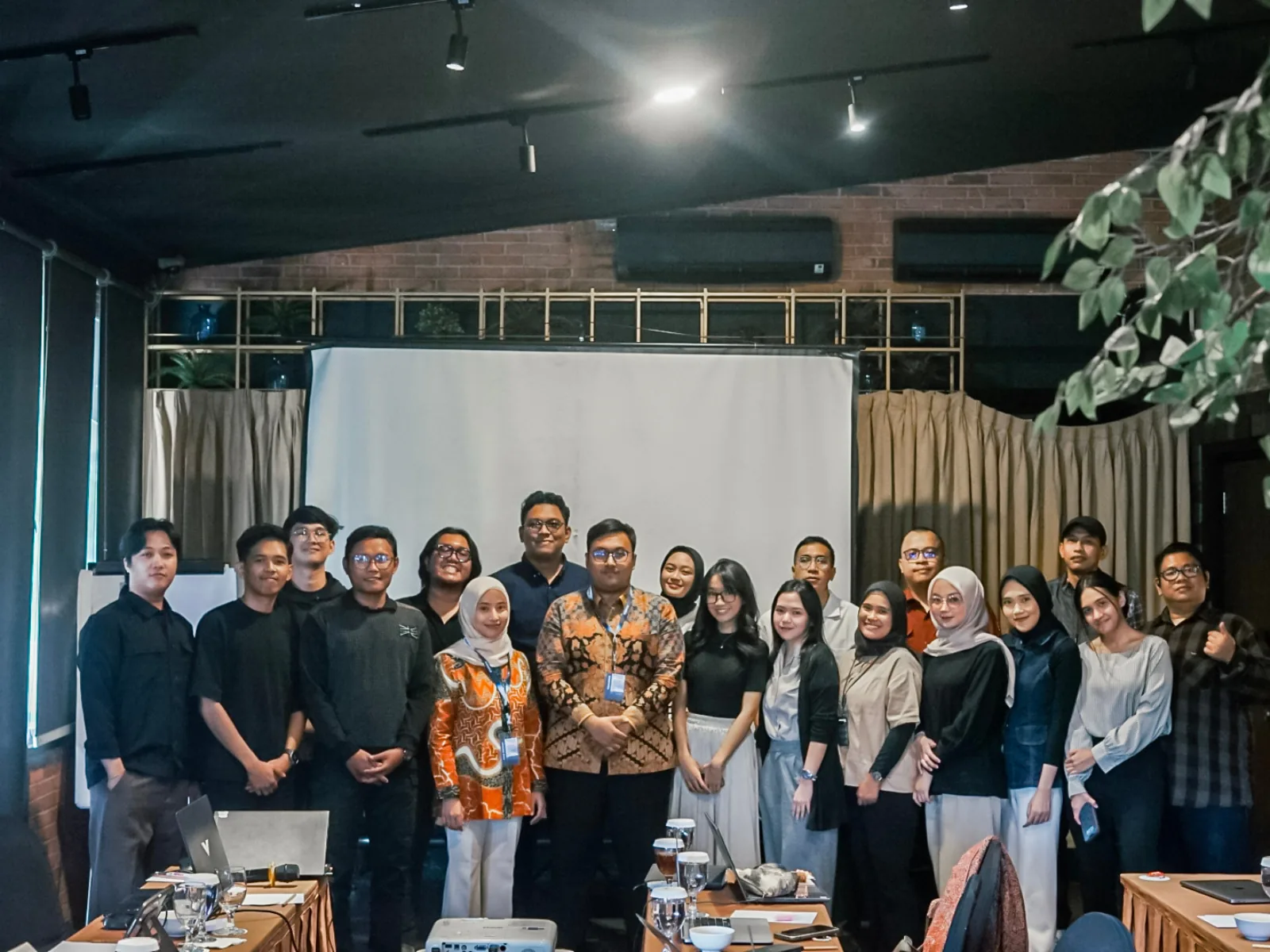
MPR RI
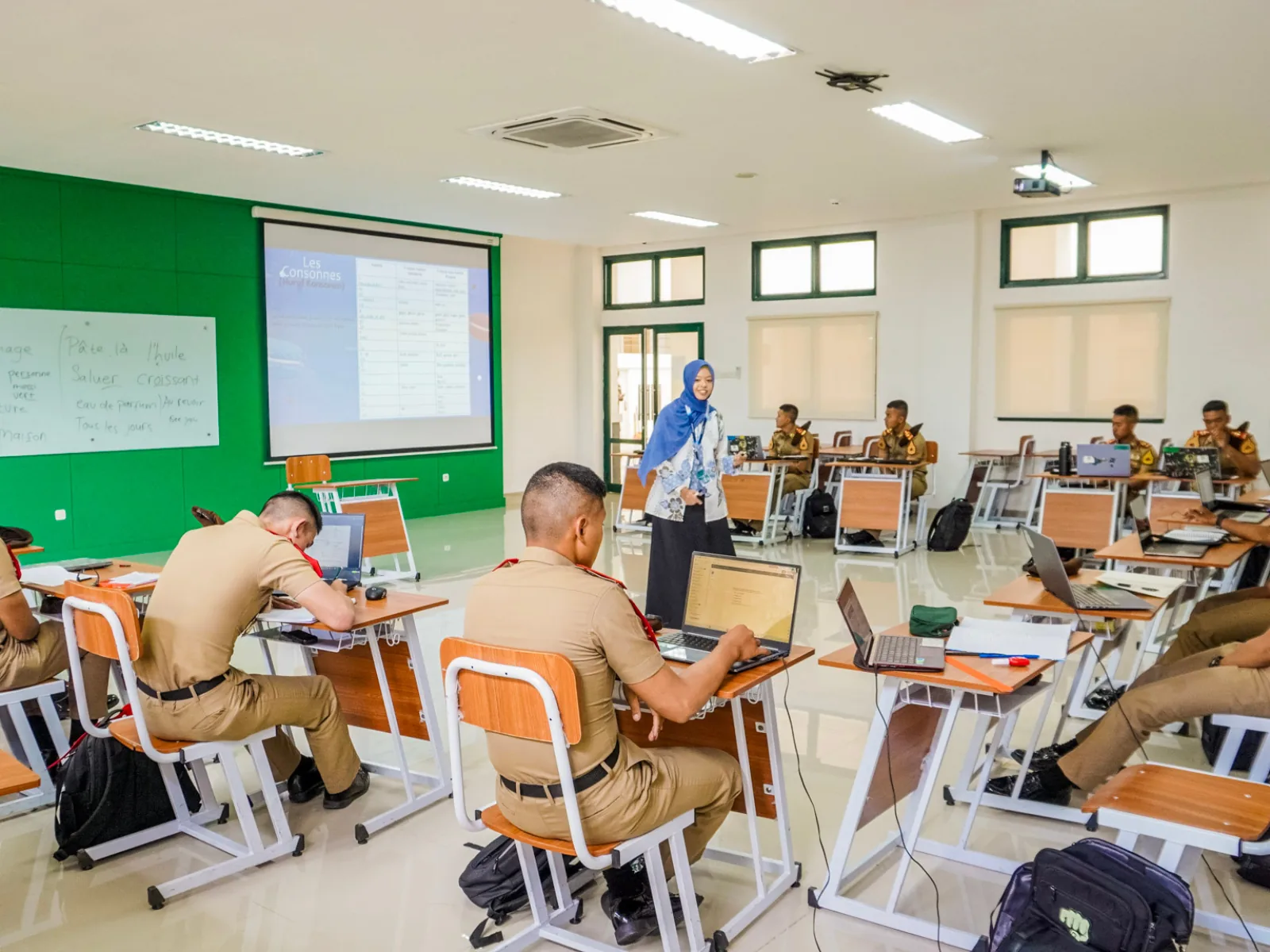
Akademi Militer Magelang
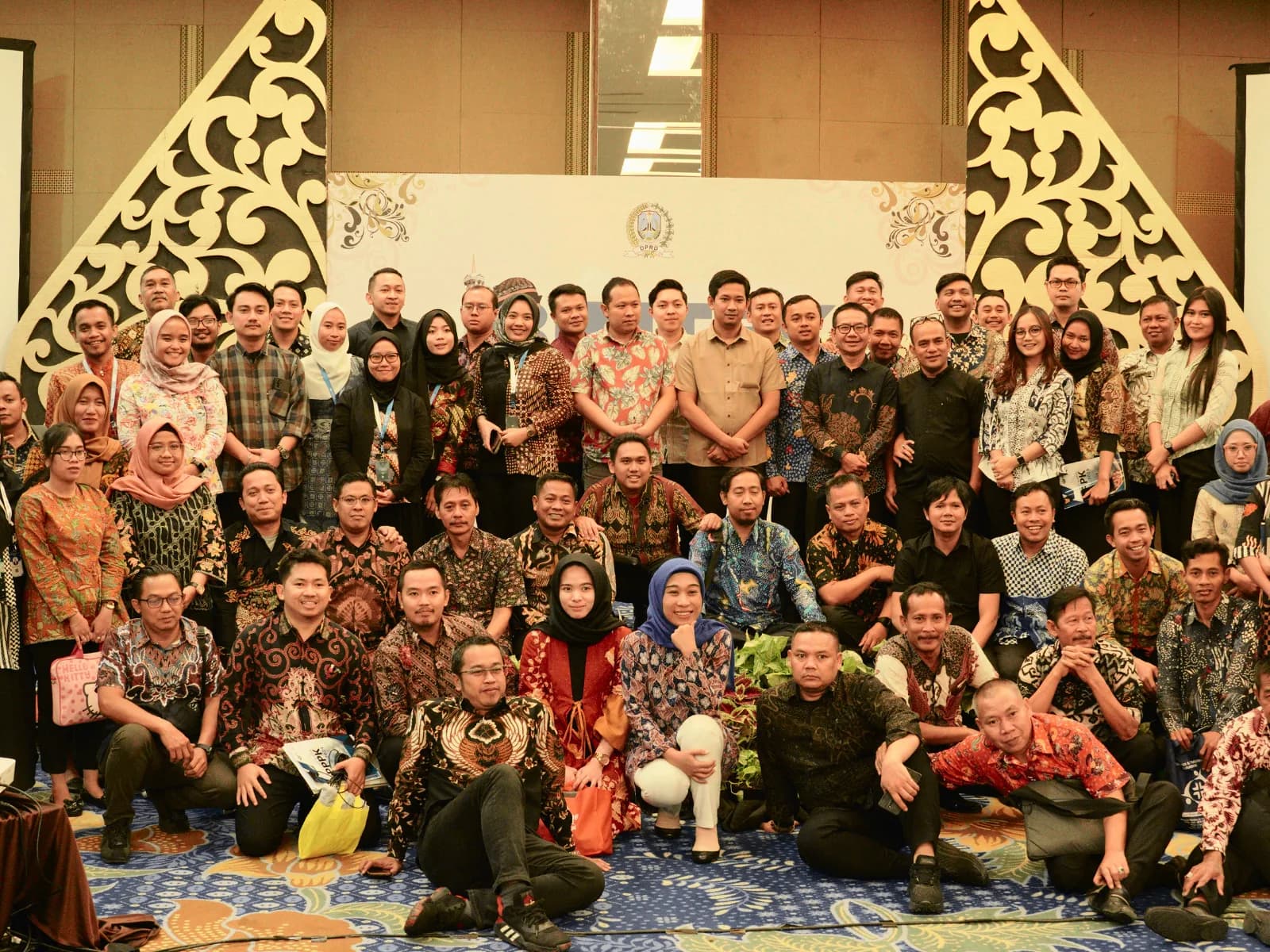
DPRD Provinsi Jawa Timur
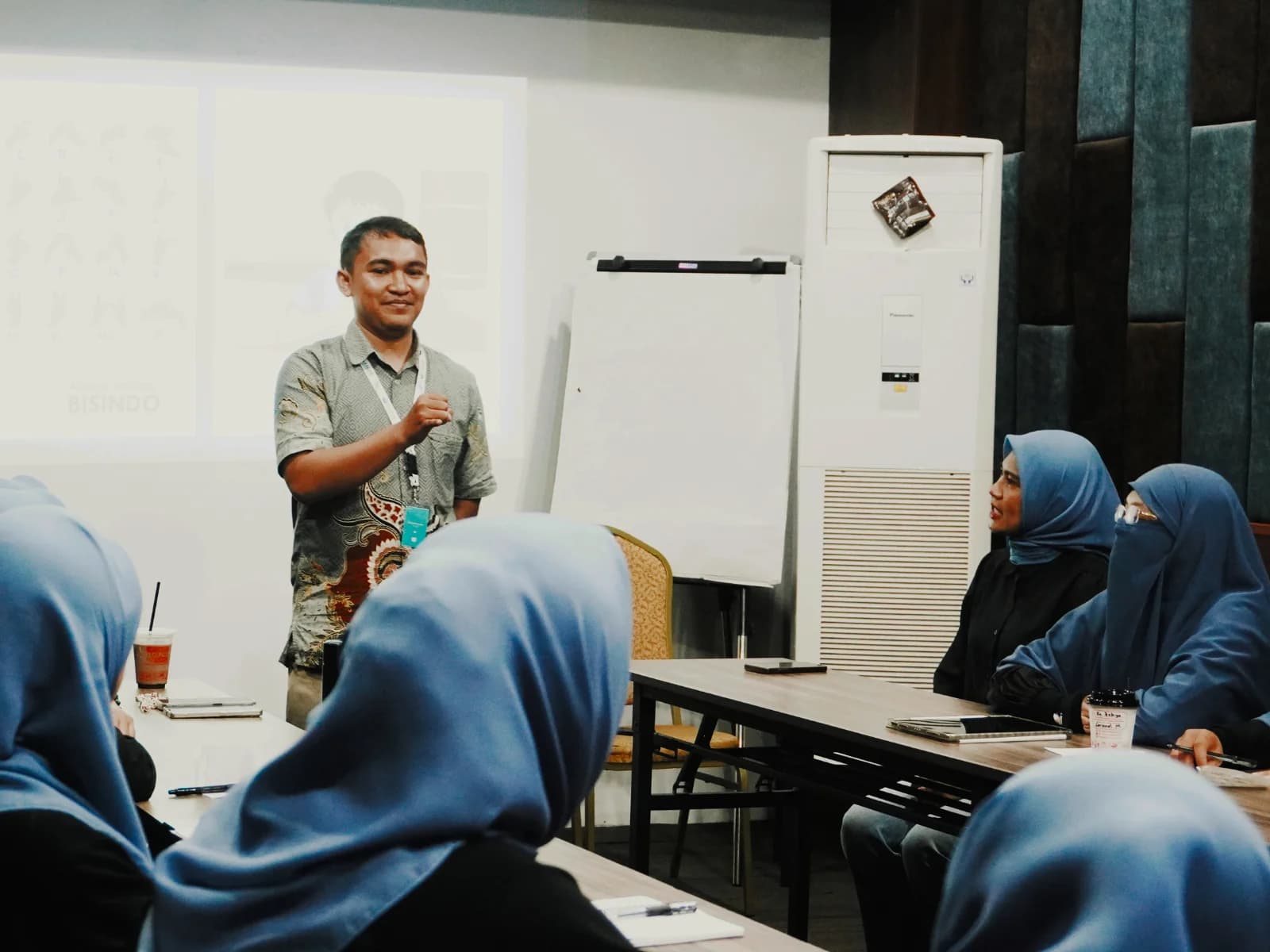
DPMPTSP Pemprov Maluku Utara
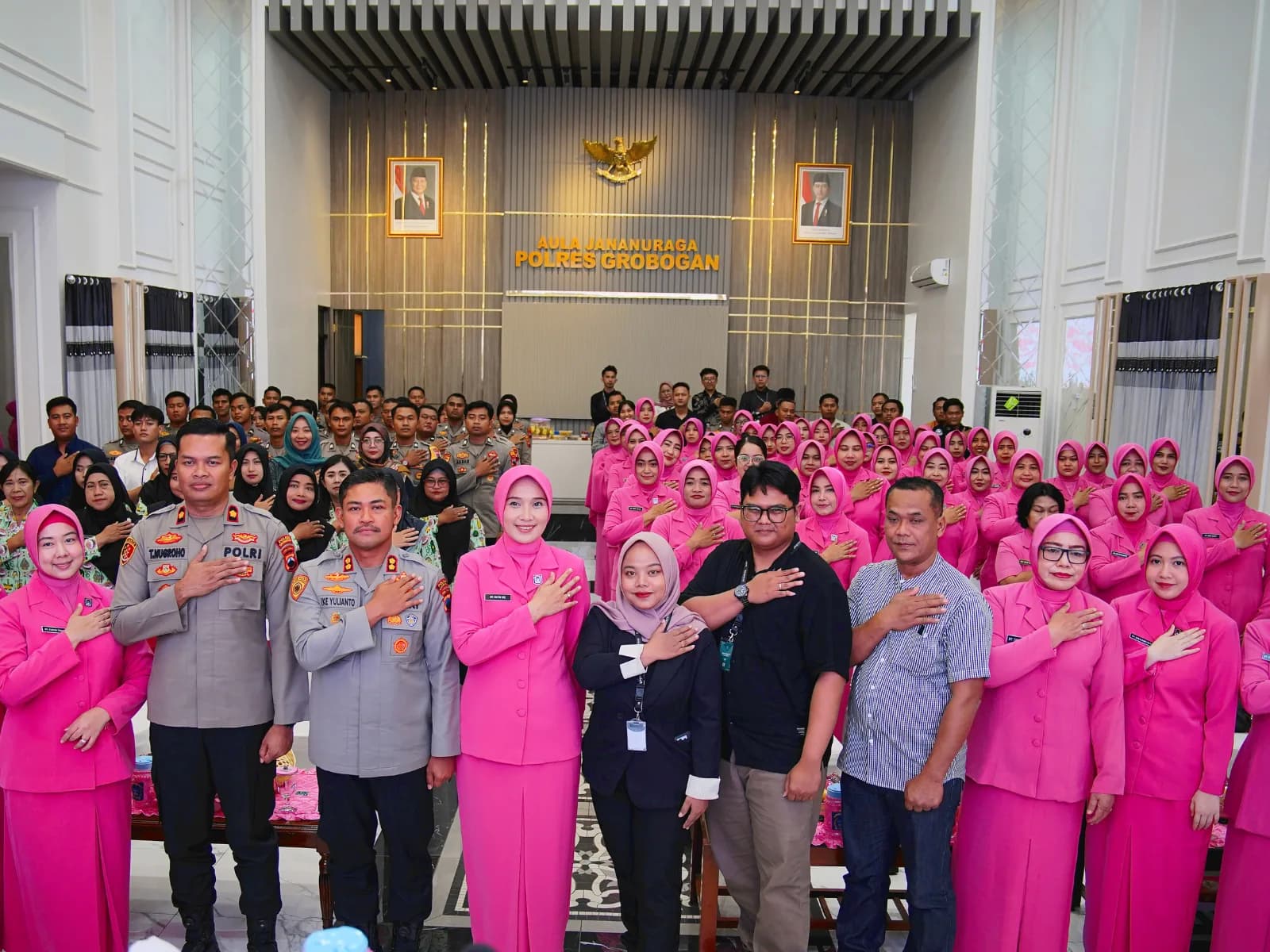
Polres Grobogan
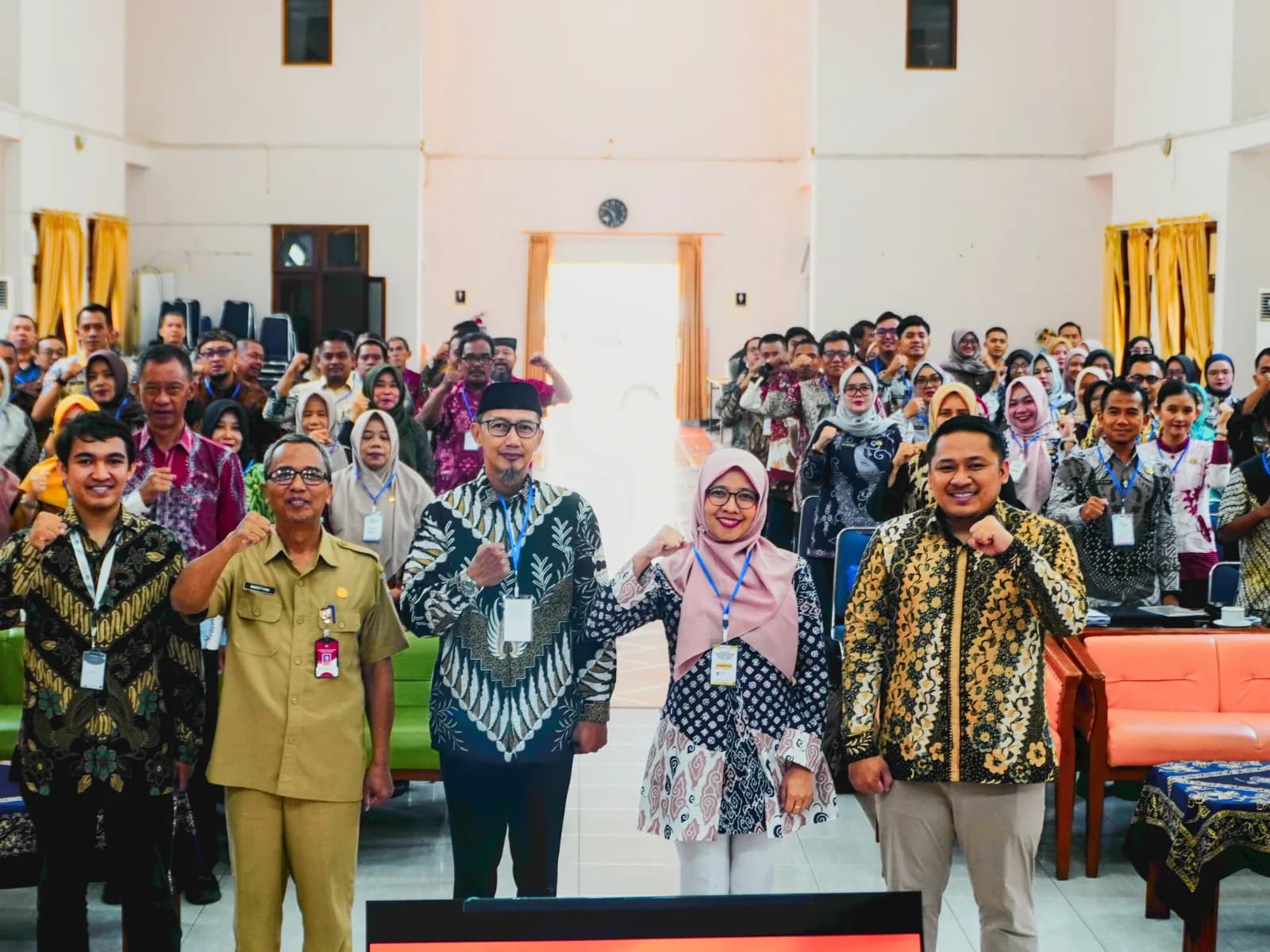
BKPSDM Cirebon
Project Management
Project management training on PMBOK 7th Ed & Agile Hybrid is a leadership-execution program equipping project managers, sponsors, and project teams to run corporate projects across delivery modes: predictive (classical waterfall), adaptive (Scrum/Kanban), and hybrid, grounded in PMI PMBOK Guide 7th Edition (12 principles + 8 performance domains + 35+ tailoring considerations), Disciplined Agile (PMI-DA) as way-of-working selection toolkit, SAFe elements for multi-team context, PRINCE2 contrast as a staged method, and Earned Value Management (EIA-748) discipline for measurable cost & schedule control.
Measurable Outcomes
Expected Outcomes
Indicators mapped to Kirkpatrick L1-L4; qualitative targets set at TNA.
- The project management frameworks are understood
- Participants pass assessment on PMBOK 7's 12 principles + 8 performance domains and DA way-of-working selection criteria. Judged through an assessment of principles and performance domains closing the class (Kirkpatrick L2).
- Core tools get used on real projects
- Participants consistently use project charter, risk register, RACI, RAID log, and kanban/EVM. Seen in the charter and risk register used on a live project (Kirkpatrick L3).
- The way of working is tailored per project
- Participants can articulate tailoring per context (predictive/adaptive/hybrid) with DA criteria. Visible in the written reasoning when a participant picks a delivery mode (Kirkpatrick L2 to L3).
- Cost and schedule come under control
- Cost & schedule variance on pilot projects tracked with EVM (CPI/SPI) and reported to sponsor. Read through the cost and schedule indicators of Earned Value Management (Kirkpatrick L4).
- The project portfolio is in order
- PMO/sponsor has a portfolio dashboard with consistent health ratings across projects. Read from how projects get reported into the leadership forum (Kirkpatrick L3 to L4).
- Monetary value of the project savings (optional)
- Net benefit calculation from pilot project, isolated from other effects, when finance requests. Project savings are priced in rupiah with Phillips L5 for the PMO.
Program Format
Program Format Options
Selected by PM population, portfolio complexity, and maturity ambition, finalised after TNA. One cohort of project managers leaves those four days with a solid grounding. Organizations wanting project delivery handled the same way across the portfolio keep going with a three to six month maturity programme of PMO clinics and peer project reviews.
PM Tailoring Workshop (2 days)
Focused workshop for active PMs: per-project tailoring based on DA + PMBOK 7 tailoring considerations, charter, and initial risk register.
PM Hybrid Intensive (4-5 days)
Full deep dive: 12 principles + 8 performance domains, DA way of working, EVM, risk management, hybrid governance, stakeholder & communication.
Modular PM Bootcamp (8-10 sessions)
Weekly sessions with practice in between, participants apply to real projects and are corrected before the next session. Best for PMOs building even capability.
PM Maturity Program (3-6 months)
Continuous program with PMO clinic, project peer review, best-practice competition, and quarterly maturity checkpoints, running until the PMO has a living playbook.
Free Consultation
Build accountable PM discipline
We map the PM population, project portfolio, and initial team maturity, then build a proposal & budget estimate grounded in real need.
Curriculum
Curriculum Framework
Designed with ADDIE; final modules curated based on TNA. The coverage below is the full menu, activated partially based on participant population.
- Philosophy shift from process (PMBOK 6) to principle (PMBOK 7)
- 12 principles: stewardship, team, stakeholders, value, systems thinking, leadership, tailoring, quality, complexity, risk, adaptability, change
- 8 performance domains: stakeholders, team, development approach, planning, project work, delivery, measurement, uncertainty
- Tailoring: 35+ considerations in PMBOK 7 for adapting approach
- Mapping to business value & sponsor expectations
- Predictive (classical waterfall): when it still wins (construction, regulation, fixed-scope contracts)
- Adaptive: Scrum (ScrumGuide 2020), Kanban (Anderson), XP; when iteration beats plan
- Hybrid: delivery mode per work-package; when one project uses two modes
- Disciplined Agile (PMI-DA) as way-of-working selection toolkit, process-goal driven
- Real examples: core banking migration, ERP implementation, product launch
- Work breakdown structure (WBS), schedule (critical path / critical chain), baseline
- Estimation: analogous, parametric, three-point (PERT), Planning Poker for adaptive
- Risk management: register, qualitative (probability×impact), quantitative (Monte Carlo, EMV)
- Earned Value Management (EIA-748): PV, EV, AC, SV, CV, SPI, CPI, EAC, ETC, TCPI
- Reporting to sponsor: dashboard understood by directors without over-engineering
- Stakeholder mapping (power×interest), engagement strategy
- RACI and DACI: when to use which
- Project communication: status report, escalation path, decision log
- Gate review & change control board: PRINCE2-style stage governance
- Sponsor management: how to manage absent / over-active sponsors
- Product owner & backlog management: INVEST criteria, slicing, MoSCoW
- Sprint mechanics: planning, daily, review, retrospective; anti-cargo-cult
- Kanban: WIP limits, cumulative flow diagram, lead/cycle time
- SAFe 6.0 elements for multi-team context: PI planning, ART, value stream
- Disciplined Agile delivery lifecycles: agile, lean, exploratory, continuous delivery
- PMO operating model: PMO support, PMO control, PMO direct
- Project portfolio management: prioritisation, resource leveling, portfolio canvas
- Lesson learned & knowledge transfer (aligned with ISO 21500 / ISO 21502)
- Certification readiness (if needed): PMP, PMI-ACP, PMI-DASM/DASSM, PRINCE2 Foundation
- 12-24 month PMO maturity roadmap post-program
Comparison
Choosing the PM Program Format
Concise decision matrix, finalised after training needs analysis.
| Aspect | PM Tailoring Workshop (2 days) | PM Hybrid Intensive (4-5 days) | Modular PM Bootcamp (8-10 sessions) | PM Maturity Program (3-6 mo) |
|---|---|---|---|---|
| Primary goal | Per-project tailoring discipline | Full framework mastery | PM standard across teams | PMO maturity institutionalisation |
| Ideal participants | Active PMs | Senior PMs + tech leads | Many PMs across teams | PMO + PM champions across org |
| EVM depth | Introduction | Full EVM + lab | Staged EVM per session | Operational EVM + dashboard |
| Training evaluation level | Kirkpatrick L1-L2 | Kirkpatrick L1-L3 | Kirkpatrick L1-L3 | Kirkpatrick L1-L4 (+Phillips L5) |
| Best for | Active PM quick win | Strategic PMs | PMO building standards | Org with maturity target |
For Whom
Who This Program Is For
Active PMs, prospective PMs, sponsors, and strategic project teams. TNA maps population & initial maturity.
Active Project Managers (1-5 years)
Lead cross-functional projects and need tailoring discipline + EVM that is accountable to sponsors.
Common challenges
- Use old project templates without per-context tailoring
- No consistent way to report project health to sponsors
- Hard to decide when to use Scrum vs waterfall vs hybrid
Prospective PMs & Tech Leads
Lead technical work and want to grow into a PM role with recognised framework foundations.
Common challenges
- Rely on instinct, no formal framework
- Backlog & risk register not maintained consistently
- Stakeholder management limited to one direct manager
Sponsors, Steering Committee & PMO
Responsible for portfolio and need governance + reliable reporting discipline.
Common challenges
- Project status reports not comparable across PMs
- Decision delay because governance is not standardised
- Hard to assess portfolio maturity & PM investment
Multi-disciplinary Project Teams
Engineers, analysts, and SMEs working on projects who need basic PM literacy for effective execution.
Common challenges
- Do not understand roles & RACI in project
- Backlog items keep changing without control
- Estimation underweighted, breeding systematic delay
Industry Context
Industry Applications
Each industry has dominant delivery modes & sector-specific regulations. PM tailoring follows.
Hybrid PM for product launches & platform migration: adaptive iteration for features, predictive governance for business milestones & third-party integration, with light EVM and SAFe elements for multi-team context.
See in Technology & Startups context →Hybrid PM for large projects (EPC, FEED, plant maintenance turnaround): strict predictive governance for contract & HSE regulation commitments, plus adaptive elements for engineering & pre-commissioning, with full EVM.
See in Energy & Resources context →Hybrid PM for strategic initiatives across subsidiaries: predictive governance for director / RUPS / BPK accountability, adaptive for execution work, with EVM, AKHLAK compliance, and holding PMO consistent across subsidiaries.
PM for plant capex, new production line launches, and continuous improvement: predictive governance for capex & QHSE, adaptive for lean improvement, with EVM and integration to ISO 9001:2015 & ISO 45001.
See in Manufacturing context →Hybrid PM for bank strategic projects (core banking, digital channel, compliance program): predictive governance for OJK & investor commitments, adaptive for engineering work, with EVM and POJK 11 IT governance.
See in Banking & Financial Services context →PM for logistics & supply chain projects: WMS/TMS implementation, DC expansion, cross-docking integration. Hybrid governance with EVM for DC capex and adaptive for supply chain system integration.
See in Logistics & Supply Chain context →Delivery Method
Delivery
Practice with case studies from participants' real portfolio: case-based, steering committee role-play, mock EVM, and gate review simulation. Hands-on throughout.
In-house onsite
Facilitator comes to the office; labs run with participant project cases + steering committee simulation. Best for 3-5 day intensives.
Live online
Interactive class via Zoom/Teams with case-study breakouts, screen-share charter / risk register reviews, and session recordings. Best for modular bootcamps.
Hybrid
Onsite for gate review & EVM lab simulation; online for PMO clinic and ongoing project peer review.
Engagement Flow
Engagement Path
From need to measurable PM: qualitative duration, scaled to size.
Training Needs Analysis & Portfolio Discovery
Map PM population, active project portfolio, dominant delivery mode, and initial PMO maturity. Output: needs profile + baseline.
Initial phaseProgram Design (ADDIE)
Draft learning objectives, per-role syllabus, case studies from participant portfolio, and charter/risk/EVM templates adapted to governance.
Before deliveryDelivery: Intensive Lab
Hands-on lab: charter, risk register, RACI, kanban, EVM, steering committee simulation, gate review. Participants apply to real projects.
Program corePMO Clinic & Peer Review
PMO clinic sessions to review participants' real projects, peer review of charter / risk register / EVM, and governance calibration across teams.
Post-intensiveAdoption & Best Practice Competition
Internal PM best practice competition (best charter, best EVM dashboard), office hours, and PMO system integration.
OngoingKirkpatrick Evaluation & Maturity Roadmap
L1-L4 measurement (reaction, learning, behaviour/adoption, results). Phillips ROI L5 on finance request. 12-24 month PMO maturity roadmap.
Post-programCase Studies
Typical Outcome Patterns
Illustration of impact patterns from similar program structures; no named clients or promised numbers.
SOE holding PMO wanting PM standardisation across subsidiaries
Intervention
6-month continuous program + PM champions per subsidiary + standard playbook
Result
Standard status report format adopted by majority of subsidiaries; holding PMO has a comparable portfolio dashboard
Tech-company PM team with immature hybrid governance
Intervention
5-day intensive + 3-month PMO clinic + light PI planning simulation
Result
Hybrid becomes default with conscious per-project tailoring; business milestone variance down
Manufacturing capex PMs across multi-plant
Intervention
Modular bootcamp + EVM lab + change control board
Result
Capex project CPI improved vs baseline; 'while we're at it' scope creep controlled
Procurement Info
Information for Procurement & Vendor Management
Materials for procurement, finance, legal, and PMO teams.
Structured proposal: measurable learning objectives, syllabus, framework mapping (PMBOK 7/DA/SAFe/PRINCE2/EVM), senior facilitator profile, schedule, TNA-based cost breakdown.
TNA-based: flat per program, per session, per participant, tiered, or custom. Estimate provided after TNA.
Flexible terms (down payment + balance / per-batch terms); PPN tax invoice and PO document support available.
Experienced with SOE/government procurement: vendor documents, e-procurement, HPS/bidding, compliance clauses.
Kirkpatrick Level 1-3 evaluation report (attendance, assessment, practice results); Phillips ROI Level 5 on finance request.
Materials aligned with PMP, PMI-ACP, PMI-DASM/DASSM, PRINCE2 Foundation syllabus: exam readiness preparation. Official certification is issued by PMI/Axelos.
Charter, risk register, RACI templates, and PM playbook built for the company become the company's property; training-material usage rights agreed in contract.
FAQ
Frequently Asked Questions
Next Step
Build accountable PM discipline
We map the PM population, project portfolio, and initial team maturity, then build a proposal & budget estimate grounded in real need.
- Proposal, syllabus, and framework mapping
- Procurement-ready documents (company profile, NPWP, NDA, PPN invoice)
- Kirkpatrick impact measurement (Phillips ROI on request)
Project Management training for your State-Owned Enterprises (BUMN) team
We map the PM population, project portfolio, and initial team maturity, then build a proposal & budget estimate grounded in real need.
- Proposal, syllabus, and framework mapping
- Procurement-ready documents (company profile, NPWP, NDA, PPN invoice)
- Kirkpatrick impact measurement (Phillips ROI on request)