Prompt Engineering Training for the Banking & Financial Services Sector
Banks have analyst work that is repetitive and high-risk: credit document summarisation, initial risk classification, committee memo drafting, compliance complaint response. AI accelerates this, but weak prompts inject hallucination into committee memos or leak customer data into public channels. Banks need a prompt library owned by the institution, schema-bound, and subject to SEOJK cybersecurity standards.
- 4.9/5 · 287 reviews
- 300+ clients nationwide
- 2,000+ trainers
- 1 to hundreds of participants
- Standard · Premium · Private 1-on-1
- format
- In-house / online / hybrid
- duration
- 3 intensive days per cohort
- participants
- 10-30 per batch
- language
- Indonesian / English
2,000+ trainers and experts
Our group's teaching network, matched to what your team needs.
See class documentationYou see your trainer first
The trainer's profile, track record and field come with the proposal, before you decide.
4.9 out of 5
287 participant reviews.
300+ clients nationwide and 180,000+ private training sessions completed. Among them: MPR RI, Akademi Militer Magelang, DPRD Provinsi Jawa Timur.
One person to hundreds
Private coaching for one participant, a class for one team, or several cohorts at once.
Three budget levels
- Standard: core class, material fitted to the participants’ work
- Premium: senior trainer, deeper material design
- Private 1-on-1: one participant, one trainer, schedule set by the participant
Why Writing AI Prompts That Deliver is different in Banking & Financial Services
Banks have analyst work that is repetitive and high-risk: credit document summarisation, initial risk classification, committee memo drafting, compliance complaint response. AI accelerates this, but weak prompts inject hallucination into committee memos or leak customer data into public channels. Banks need a prompt library owned by the institution, schema-bound, and subject to SEOJK cybersecurity standards.
- Coverage of analyst & compliance users of the prompt libraryApproaching the entire population after roll-out
- Incidents of output without citation / outside guardrailsApproaching zero after prompt hardening
- Cycle time of credit-document summarisationMaterially down with compliance review quality maintained
- POJK 11/POJK.03/2022 IT Risk Management
- SEOJK 29/SEOJK.03/2022 Bank Cyber Resilience & Security
- UU PDP No. 27/2022 — customer data
- OWASP Top 10 for LLM Applications 2025 — LLM01 prompt injection, LLM06 sensitive information disclosure
- Head of Credit Analyst Pool
- Head of Compliance & DPO
- Branch Operations Manager
- Head of Customer Experience
- Head of Learning & Development Bank
- Head of IT Risk & Cybersecurity
- Credit analysts & compliance use the team prompt library in place of undocumented personal prompts
- AI output is schema-bound so it can be tested & ingested into LOS / compliance case systems
- Data checklist: customer names/numbers may not be pasted into public models
- Prompt-usage trails recorded, ready to show SKAI / OJK examiners
- Frontline & customer service have safe prompts for common complaint-response types
Quick Answer
Deep prompt engineering training builds knowledge-worker prompt discipline using research patterns (Chain-of-Thought, Tree-of-Thoughts, ReAct, Self-Consistency), JSON-Schema structured output, an eval harness, and NIST AI RMF GenAI Profile (NIST AI 600-1) + UU PDP governance, so AI becomes an auditable work tool, not 'feels right' output.
Without an eval harness, 'feels good' prompts differ from 'proven good' prompts
Many teams trust one successful demo example. A golden eval set + quality rubric + A/B prompt is the only way to prove a prompt change truly improves quality and avoids regression. This program places the eval harness as a foundation from day one.
Prompt patterns = academic literature + official guides
We reference official OpenAI Prompt Engineering & Anthropic Prompt Engineering guides, plus academic papers: Chain-of-Thought (Wei et al. 2022), Self-Consistency (Wang 2022), Tree-of-Thoughts (Yao 2023), ReAct (Yao 2022). Each pattern is applied with real criteria for when it helps and when it is noise.
Reasoning models change the rules
Reasoning models (OpenAI o-series, Claude extended thinking, Gemini Deep Think) often return better results with LESS explicit reasoning in the prompt. Manual CoT is often counter-productive here. A dedicated module covers when to choose reasoning models considering cost & latency.
Clients & Documentation
Some of the institutions we have trained
Photos from sessions we have delivered, each one named after the institution it belongs to.
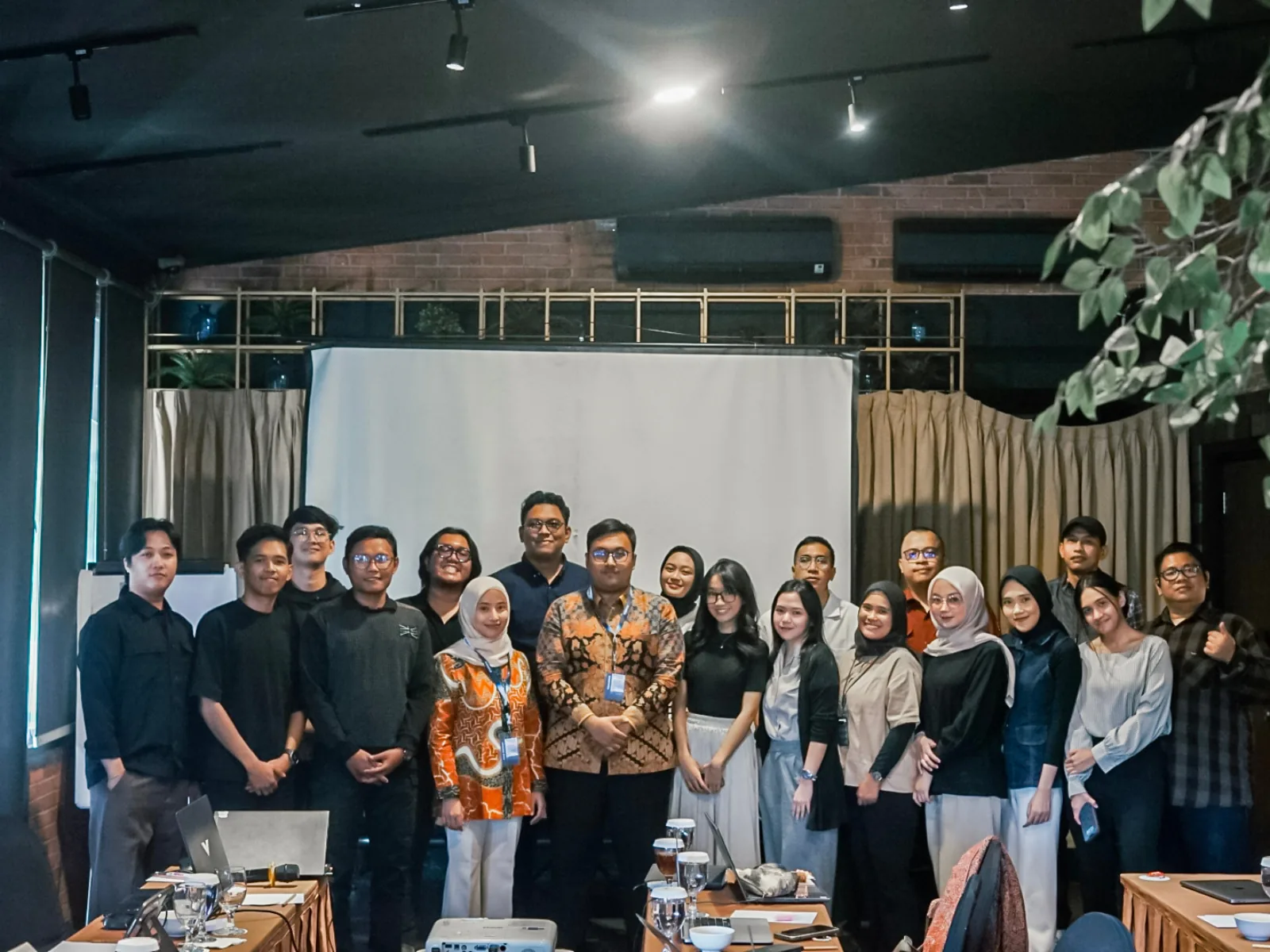
MPR RI
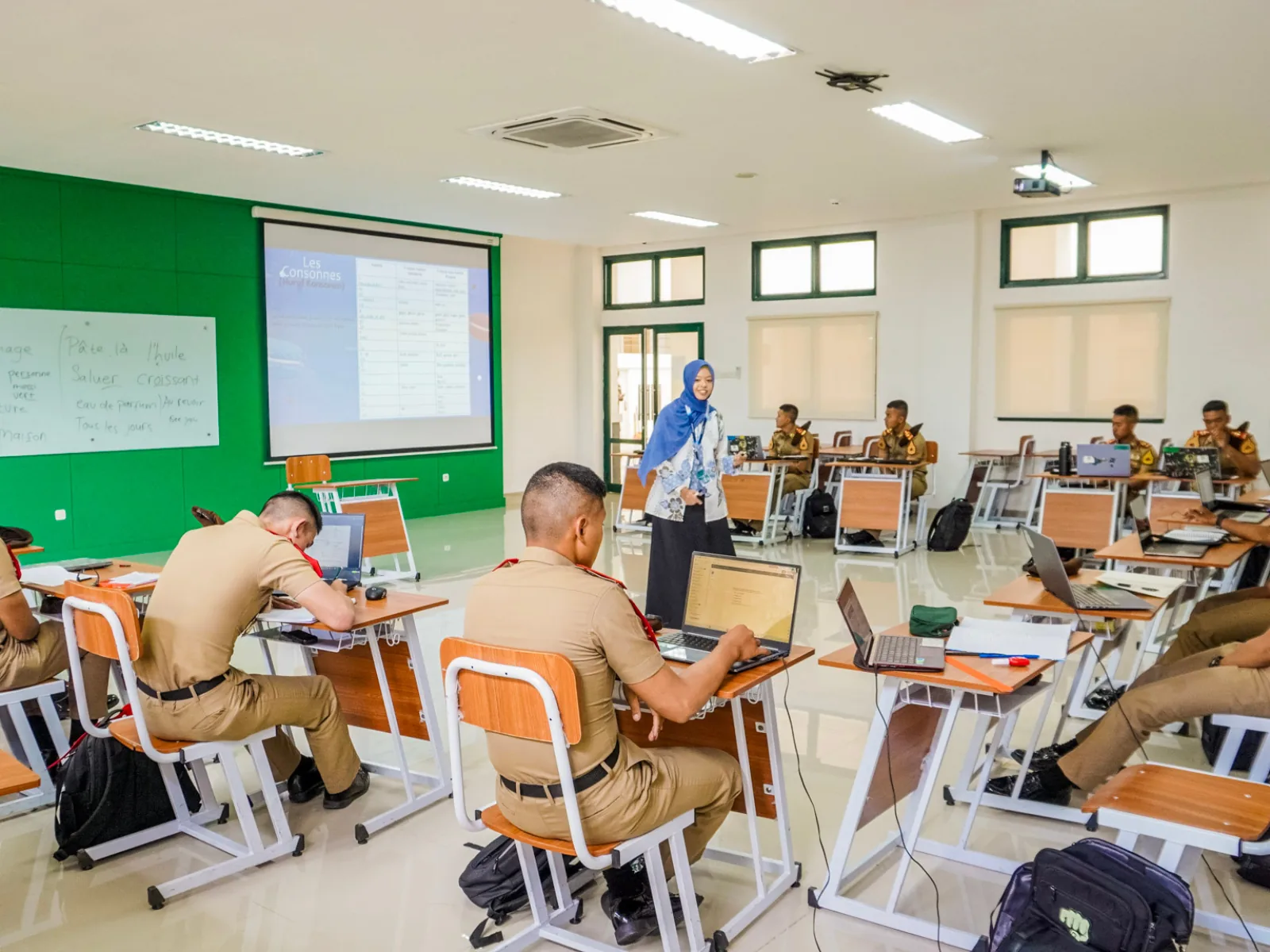
Akademi Militer Magelang
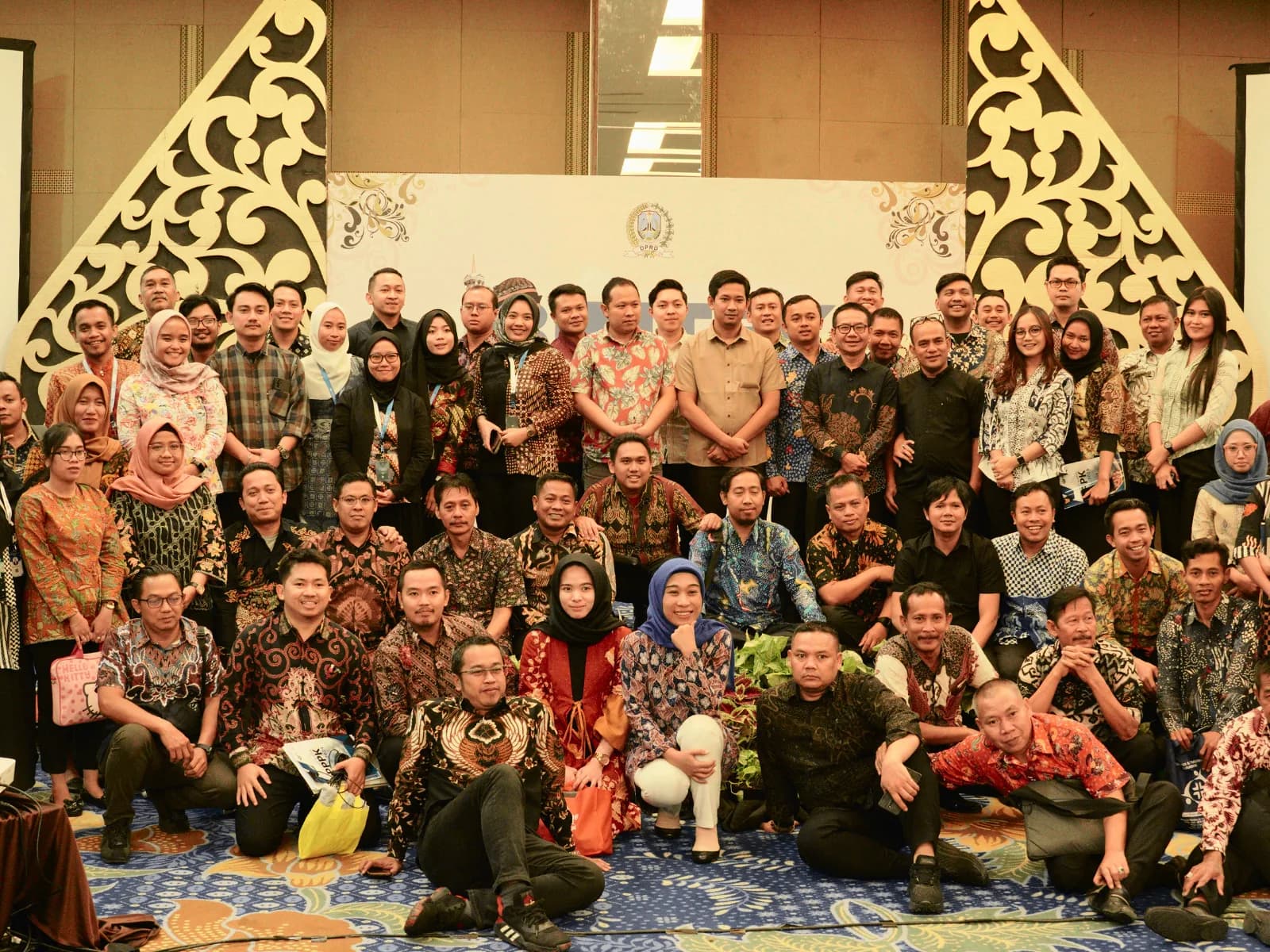
DPRD Provinsi Jawa Timur
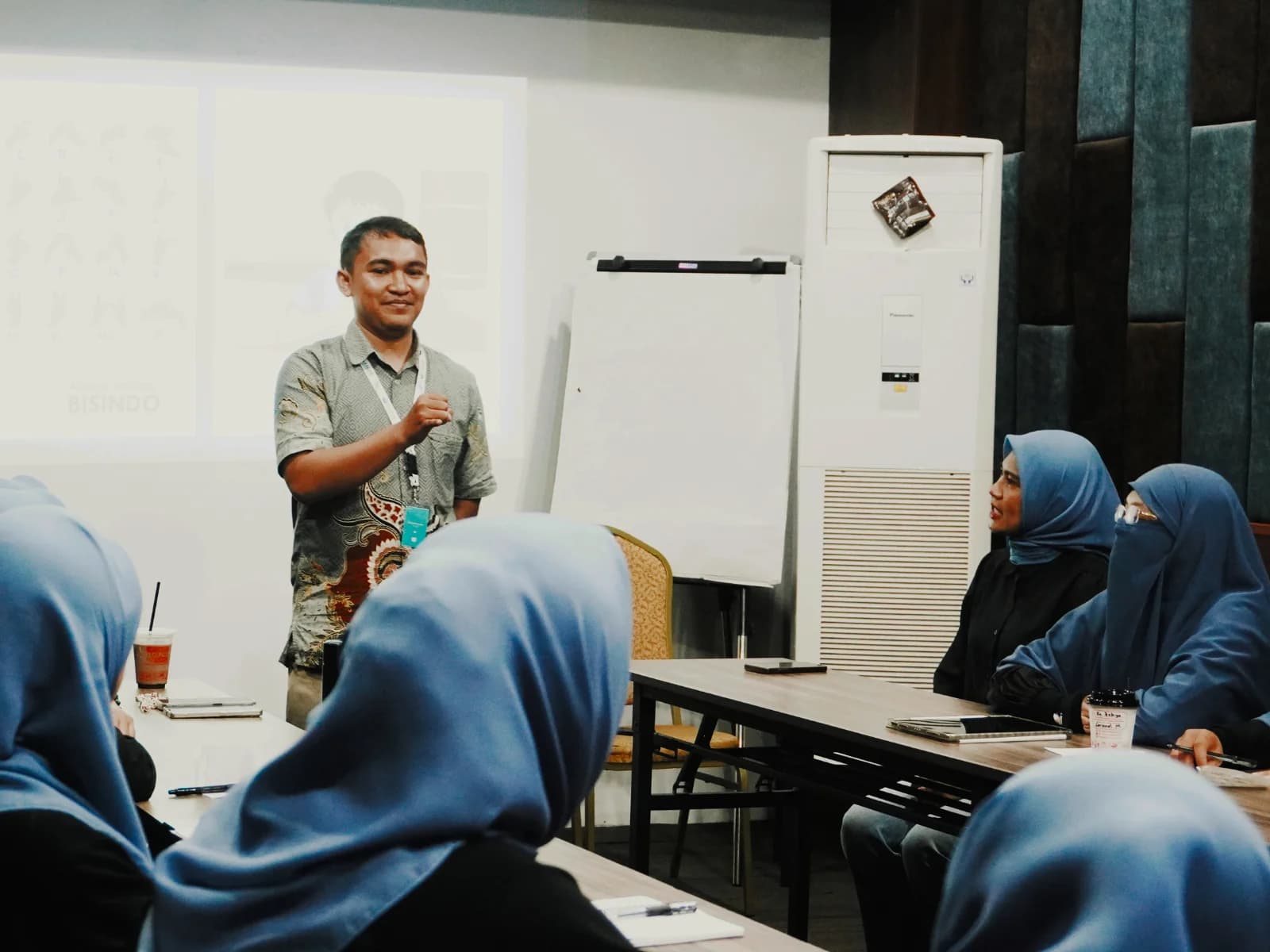
DPMPTSP Pemprov Maluku Utara
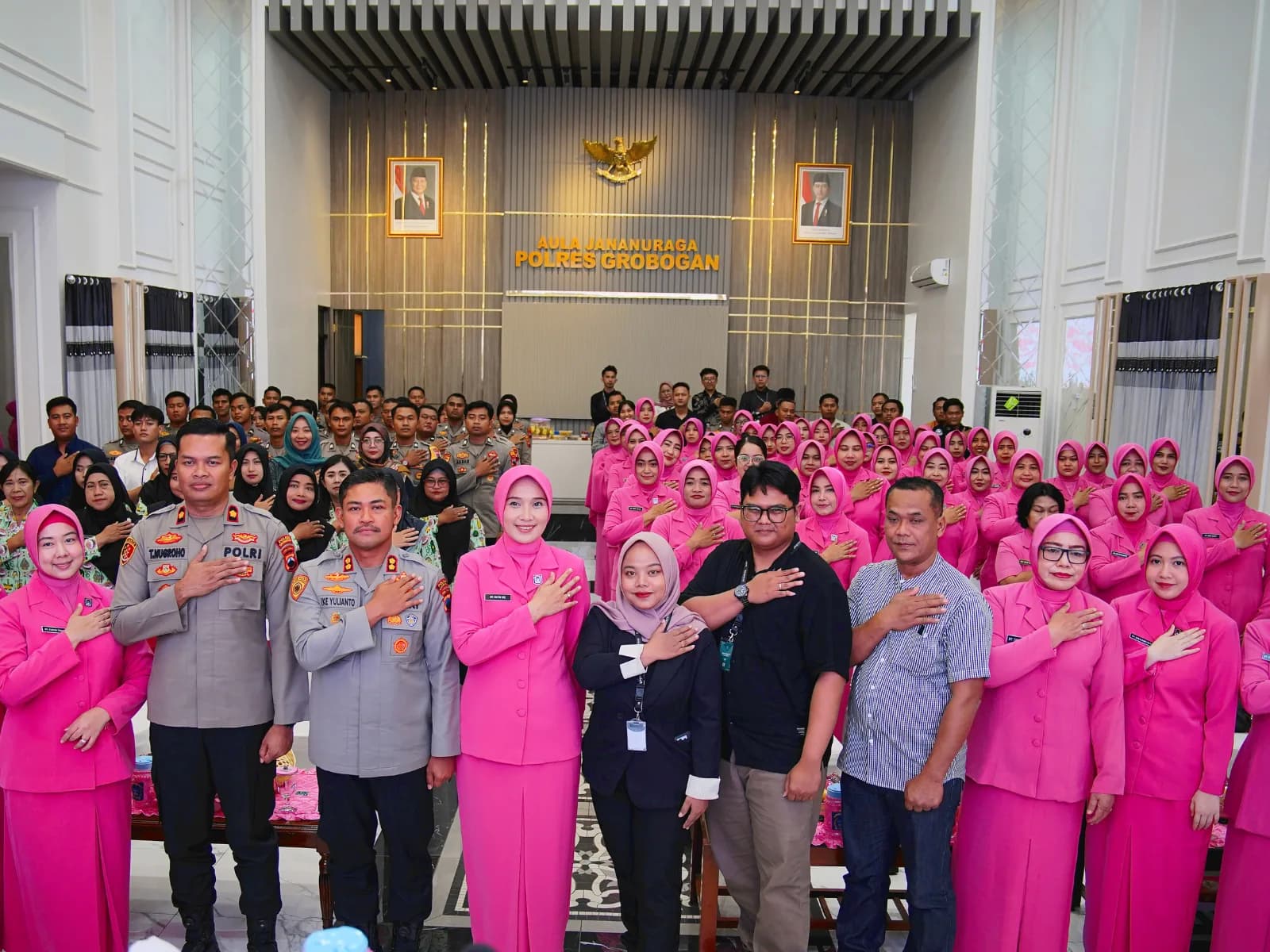
Polres Grobogan
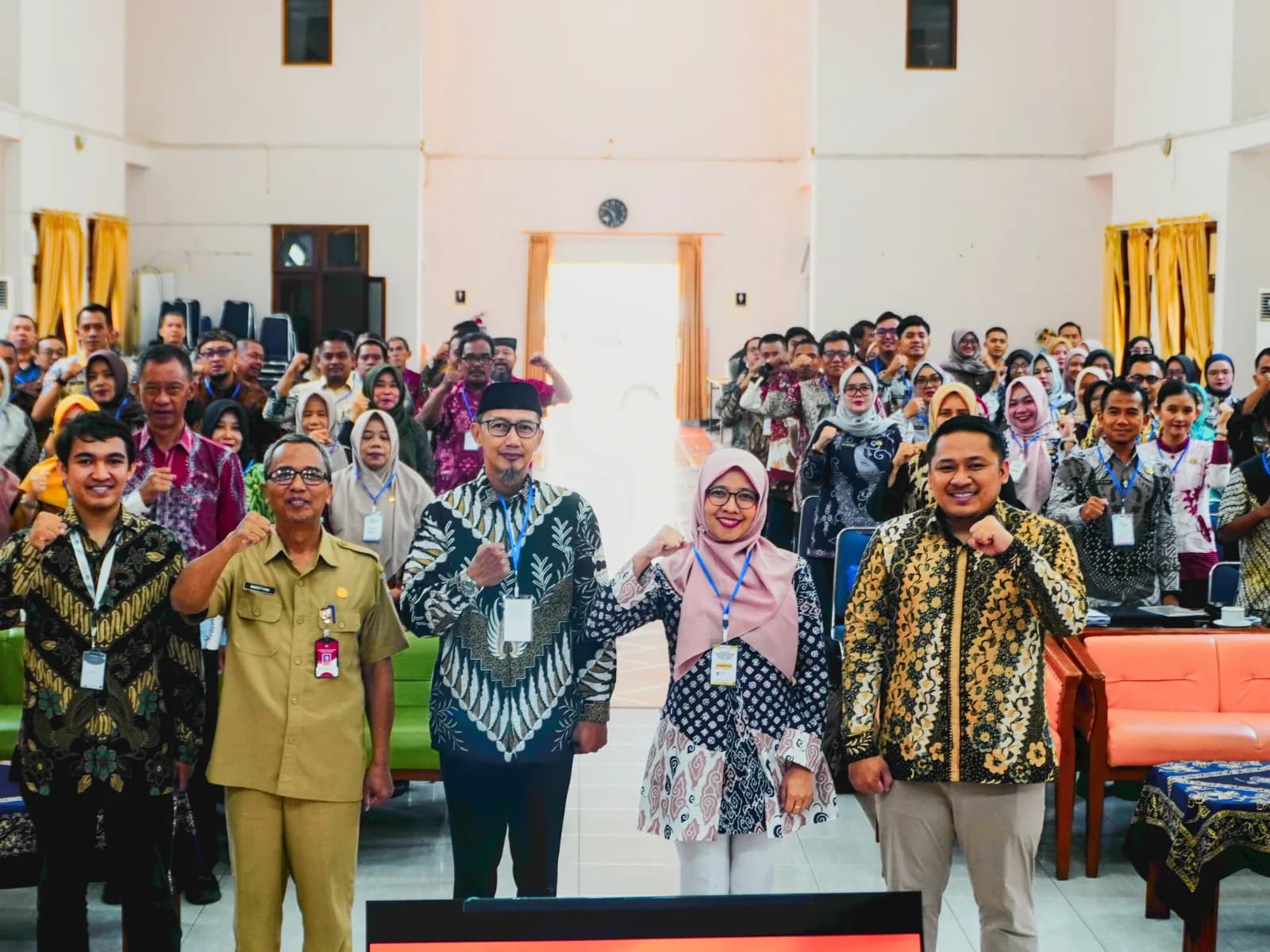
BKPSDM Cirebon
Writing AI Prompts That Deliver
Deep prompt engineering training equips knowledge workers (analysts, planners, writers, researchers, legal, compliance) to turn LLM queries into reliable, structured, evaluable instructions, using current research patterns (Chain-of-Thought Wei et al. 2022, Tree-of-Thoughts Yao 2023, ReAct Yao 2022, Self-Consistency Wang 2022) and production practice from official OpenAI/Anthropic guides, with JSON-Schema structured output, evaluation harness, and governance mapped to NIST AI RMF GenAI Profile (NIST AI 600-1) and UU PDP No. 27/2022.
Measurable Outcomes
Expected Outcomes
Indicators mapped to Kirkpatrick L1-L4; qualitative targets set at TNA.
- The prompting patterns are mastered
- Participants pass assessment on when to use CoT, ToT, ReAct, Self-Consistency, and structured output. Judged through schema-bound prompting exercises in class (Kirkpatrick L2).
- The prompt collection gets used
- Majority of participants use the team prompt library in weekly workflow within 30 days. Seen in shared prompts the team reaches for repeatedly (Kirkpatrick L3).
- Output quality rises and can be measured
- Quality score on the team's golden eval set rises vs free-prompting baseline. Read from test set scores before and after the class (Kirkpatrick L4).
- The AI usage rules are followed
- All participants pass the anti-prompt-injection (OWASP LLM01) checklist and UU PDP data SOP. Judged through a quiz on data usage limits closing the class (Kirkpatrick L2).
- A prompt library and test set owned by the company
- Validated prompt library + golden eval set + quality dashboard owned by the team. The evidence is a prompt library and test set the team maintains (Kirkpatrick L3 transfer).
- Monetary value of the working hours returned (optional)
- Per-task-category time-saving calculation, isolated from other factors, when finance requests it. Hours returned become rupiah via Phillips L5 where required.
Program Format
Program Format Options
Selected by participant population, task complexity, and institutionalisation ambition, finalised after TNA. The prompting patterns are mastered by one cohort inside those three days. Organizations wanting their prompt collection to become a shared asset carry on through a three month programme to build, test, and maintain a prompt library for each division.
Per-Role Prompt Workshop (1 day)
Workshop focused on one role (credit analyst, planner, customer service, etc). Build 8-15 main prompts for the participants' daily work with quick eval.
Deep Prompt Engineering Intensive (3-4 days)
Complete deep dive into advanced prompt patterns (CoT/ToT/ReAct/Self-Consistency), structured output, eval harness, security (prompt injection), and governance.
Modular Prompt Bootcamp (6-8 sessions)
Weekly sessions with experimentation gaps: participants practice on the job, return with results, get reviewed, then move to more advanced patterns.
Prompt Library Program (3 months)
Continuous program with office hours, prompt review club, and internal competition, until the team prompt library lives with owners and refresh SOP.
Free Consultation
Build auditable prompt discipline
We map your team's roles, tasks, and AI stack, then build a proposal & budget estimate grounded in real need.
Curriculum
Curriculum Framework
Designed with ADDIE; final modules curated based on TNA. Topics below are full coverage, activated partially based on participant population.
- Tokenisation, context window, attention (without jargon)
- Determinism, temperature, top-p, seed (effect on output)
- Knowledge cutoff, hallucination, and when models 'invent confidently'
- Model differences: GPT-5/4o, Claude Sonnet/Opus, Gemini Pro/Flash, Llama 3.x (effect on prompt style)
- Reasoning models (o-series, Claude extended thinking): what changes in prompting
- Four core blocks: role, context, instruction, output format
- Few-shot prompting: when, how many examples, order, anti-bias examples
- Role/system prompting per OpenAI and Anthropic guides
- Providing explicit quality criteria (rubric) in the prompt
- Handling long instructions: concise vs complete vs structured
- Chain-of-Thought (Wei et al. 2022): when effective, when it becomes noise
- Self-Consistency (Wang 2022): answer voting for mathematical/logical tasks
- Tree-of-Thoughts (Yao 2023): multi-path solution search
- Least-to-Most prompting for complex task decomposition
- ReAct (Yao 2022): interleaving reasoning + tool use
- Step-back prompting & meta-prompting for self-correction
- Schema-bound JSON output (JSON Schema): a testable contract
- Function calling & tool use (OpenAI, Anthropic, Gemini)
- Constrained decoding & guided generation (Outlines, BAML)
- Anti-parsing: extracting fields with regex vs structured output
- Post-LLM validation: pydantic, zod, JSON Schema validator
- Building a golden eval set with team subject matter experts
- Quality rubrics: factuality, completeness, style, format adherence
- LLM-as-judge: safe use (judge bias, calibration), when not to use
- A/B prompt testing: how to test prompt changes before production
- Prompt regression testing: CI/CD for the team prompt library
- Prompt quality dashboard: Langfuse / PromptLayer / simple spreadsheet
- OWASP LLM Top 10 2025, LLM01 prompt injection (direct & indirect)
- Data forbidden from public models (UU PDP): per-role checklist
- NIST AI RMF + GenAI Profile (NIST AI 600-1): Govern/Map/Measure/Manage
- Prompt library governance: owner, versioning, deprecation, audit trail
- 70-20-10 pattern: formal class + office hours + on-the-job adoption
- Internal prompt committee: periodic review, taxonomy, retirement
Comparison
Choosing the Prompt Engineering Program Format
Concise decision matrix, finalised after training needs analysis.
| Aspect | Per-Role Prompt Workshop (1 day) | Deep Prompt Intensive (3-4 days) | Modular Prompt Bootcamp (6-8 sessions) | Prompt Library Program (3 mo) |
|---|---|---|---|---|
| Primary goal | Quick win 1 role | Mastery of current patterns | Learn alongside operations | Institutionalise prompt library |
| Ideal participants | One focused role | Power users & champions | Operationally-loaded KW | Cross-role across the org |
| Eval depth | Concise rubric | Golden set + A/B prompt | Staged eval per session | Full eval + prompt CI/CD |
| Training evaluation level | Kirkpatrick L1-L2 | Kirkpatrick L1-L3 | Kirkpatrick L1-L3 | Kirkpatrick L1-L4 (+Phillips L5) |
| Best for | Quick validation per role | Build champion capability | Operationally-loaded teams | Org-wide adoption & impact target |
For Whom
Who This Program Is For
Knowledge workers who want AI as a serious work tool beyond a demo toy. No coding prerequisite.
Business analysts, research, and planning
Build prompts that produce structured analyses, reliable summaries, and consistent classification.
Common challenges
- Prompt results vary between people & between days
- Hallucination on numbers & names goes undetected
- No objective way to judge which prompt is better
Legal, compliance, and policy teams
Prepare prompts for drafting, regulation summarisation, risk classification, with accountable trails.
Common challenges
- Concern about sensitive data leakage via prompts
- No SOP restricting what can be typed into public AI
- AI output hard to audit because it is not schema-bound
Marketing, communications, and service teams
Produce content variants, summaries, and customer responses with consistent brand voice.
Common challenges
- Brand voice drifts between writers
- Output is unstructured, hard to use in CMS / CRM
- Product claims risk consumer regulation / BPOM violations without controls
L&D, HR, and AI champion teams
Build team prompt libraries & lead institutionalisation of measurable AI use.
Common challenges
- AI training stops at 'what is ChatGPT', does not enter work
- No way to measure adoption progress & use quality
- Prompt library becomes a dead spreadsheet after the event ends
Industry Context
Industry Applications
Each industry has typical knowledge-work tasks. Prompt patterns are designed to follow them.
Credit-analyst & compliance prompt library: credit document summarisation, initial risk classification, committee memo drafts with structured output ingestible by the LOS system, all with anti-prompt-injection checklist and customer-data guardrails.
Engineer & PM prompt library: PRD drafting, post-mortem summarisation, unit-test generation, ticket classification, with JSON Schema structured output directly usable by internal systems and defense against prompt injection in new tools.
See in Technology & Startups context →Marketing & CX prompt library: multi-channel copy variant production, customer-review classification, complaint-response drafting, with structured output, brand-voice guard, and UU PK / BPOM product-claim checklist.
See in Retail & FMCG context →Corporate-secretary & planning prompt library: official memo drafting, policy summarisation, RUPS materials, disposition classification, with structured output, audit trails, and AKHLAK + UU PDP compliance.
See in State-Owned Enterprises (BUMN) context →ASN prompt library: official letter drafts, policy summaries, disposition classification, public-service assistant, with structured output, information classification, and inspectorate audit trails per SPBE.
See in Government & Public Sector context →Non-clinical prompt library for hospital & pharma teams: policy drafting, internal-literature summarisation, service-complaint classification, administration assistant, with strict boundaries: no direct clinical decisions and no medical records pasted to public models.
See in Healthcare & Pharmaceuticals context →Delivery Method
Delivery
Hands-on practice using participants' work context. Every session produces real prompts usable the next day.
In-house onsite
Facilitator comes to the office; participants practice with team documents / data (in a safe environment). Best for 2-4 day intensives.
Live online
Interactive class via Zoom/Teams with per-role breakouts, screen-share prompt reviews, and session recordings. Best for modular bootcamps.
Hybrid
Onsite for intensive labs & prompt committee; online for office hours and ongoing prompt review club.
Engagement Flow
Engagement Path
From need to live, measurable prompt library: qualitative duration, scaled to organisation size.
Training Needs Analysis (TNA)
Map roles, knowledge-work tasks, AI stack, data policy, and business targets. Output: needs profile + measurement baseline + initial prompt library scoping.
Initial phaseProgram Design (ADDIE)
Draft learning objectives, per-role syllabus, initial golden eval set, and prompt library template participants will develop.
Before deliveryDelivery: Intensive Lab
Hands-on lab: prompt patterns, structured output, eval harness, security. Participants write real prompts for their own work and test against the golden set.
Program corePrompt Committee & Governance
Form internal prompt committee, charter, per-prompt owners, versioning policy, and integration with team document / git system.
Post-intensiveOffice Hours & Prompt Review Club
Coaching prompt usage in real work, weekly/biweekly prompt review club, and internal prompt competition for momentum.
OngoingKirkpatrick Evaluation & Roadmap
L1-L4 measurement (reaction, learning, behaviour/adoption, results). Phillips ROI L5 on finance request. Prompt library maturity roadmap.
Post-programCase Studies
Typical Outcome Patterns
Illustration of impact patterns from similar program structures; no named clients or promised numbers.
Analyst team at a financial institution with AI already used sporadically
Intervention
3-day intensive + initial 30-prompt library + 60-example golden eval set
Result
Output consistency improved; team has a live prompt library with owners; usage trails can be shown to SKAI
Marketing and CX team at a large retail organisation
Intervention
3-month continuous program + prompt review club + UU PK claim checklist
Result
Content variant throughput up, consumer-regulation risk incidents not rising; prompt library becomes the standard across regions
Secretariat & planning unit at SOE/ministry
Intervention
Guided workshop + internal prompt committee + UU PDP governance
Result
Document drafting faster with consistent quality; usage trails prepared for SPI / inspectorate examination
Procurement Info
Information for Procurement & Vendor Management
Materials for procurement, finance, legal, and information security teams.
Structured proposal: measurable learning objectives, syllabus, governance mapping (NIST AI RMF/UU PDP/OWASP LLM), facilitator profile, schedule, TNA-based cost breakdown.
TNA-based: flat per program, per session, per participant, tiered, or custom. Estimate provided after TNA.
Flexible terms (down payment + balance / per-batch terms); PPN tax invoice and PO document support available.
Experienced with SOE/government procurement: vendor documents, e-procurement, HPS/bidding, compliance clauses.
Kirkpatrick Level 1-3 evaluation report (attendance, assessment, practice results); Phillips ROI Level 5 on finance request.
NDA, confidentiality clauses, and practice that does not force confidential data into public models (aligned with UU PDP & OWASP LLM).
Prompt library & golden eval set built for the company become the company's property; training-material usage rights agreed in contract.
FAQ
Frequently Asked Questions
Next Step
Build auditable prompt discipline
We map your team's roles, tasks, and AI stack, then build a proposal & budget estimate grounded in real need.
- Proposal, syllabus, and governance mapping
- Procurement-ready documents (company profile, NPWP, NDA, PPN invoice)
- Kirkpatrick impact measurement (Phillips ROI on request)
Writing AI Prompts That Deliver training for your Banking & Financial Services team
We map your team's roles, tasks, and AI stack, then build a proposal & budget estimate grounded in real need.
- Proposal, syllabus, and governance mapping
- Procurement-ready documents (company profile, NPWP, NDA, PPN invoice)
- Kirkpatrick impact measurement (Phillips ROI on request)