Coaching for Managers Training: Healthcare & Pharmaceuticals Sector
Hospitals have complex unit structures (medical, nursing, support, administration) with unit heads and supervisors often serving as the link between DPJP, staff, and management. Coaching skill develops unit leadership amid tight shifts, SNARS regulations, and accreditation pressure. Challenge: strict boundary between managerial coaching vs clinical supervision (the latter is Medical Committee domain).
- 4.9/5 · 287 reviews
- 300+ clients nationwide
- 2,000+ trainers
- 1 to hundreds of participants
- Standard · Premium · Private 1-on-1
- format
- In-house / online / hybrid
- duration
- 4 intensive days per batch
- participants
- 10-16 per batch (intensive practice)
- language
- Indonesian / English
2,000+ trainers and experts
Our group's teaching network, matched to what your team needs.
See class documentationYou see your trainer first
The trainer's profile, track record and field come with the proposal, before you decide.
4.9 out of 5
287 participant reviews.
300+ clients nationwide and 180,000+ private training sessions completed. Among them: MPR RI, Akademi Militer Magelang, DPRD Provinsi Jawa Timur.
One person to hundreds
Private coaching for one participant, a class for one team, or several cohorts at once.
Three budget levels
- Standard: core class, material fitted to the participants’ work
- Premium: senior trainer, deeper material design
- Private 1-on-1: one participant, one trainer, schedule set by the participant
Why Coaching for Managers is different in Healthcare & Pharmaceuticals
Hospitals have complex unit structures (medical, nursing, support, administration) with unit heads and supervisors often serving as the link between DPJP, staff, and management. Coaching skill develops unit leadership amid tight shifts, SNARS regulations, and accreditation pressure. Challenge: strict boundary between managerial coaching vs clinical supervision (the latter is Medical Committee domain).
- Average unit head-staff 1:1 frequencyReaches hospital management-approved rhythm
- Hospital staff retention in coached-unit-head unitsBetter vs baseline / control units
- Patient safety culture survey results on unit leadershipUp in subsequent survey (qualitative target)
- ICF Core Competencies (Updated Model)
- ICF Code of Ethics 2020
- Hospital Accreditation Standard (SNARS / KARS) — hospital HR management
- UU 17/2023 on Health
- Ministry of Health regulations on hospital operations
- Director of HR Hospital
- Head of Nursing Affairs
- Unit Head / Supervisor
- Head of Ward
- HR Business Partner Hospital
- Head of Talent Development
- Unit heads & supervisors run regular 1:1s with staff at shift-friendly times
- Coaching helps head nurses grow team leaders and prepare succession
- Strict boundary: managerial coaching does not touch clinical decisions (DPJP & Medical Committee domain)
- Top hospital staff retention increases in coached-unit-head units
- Internal hospital coach pool supports cross-unit supervision
Quick Answer
ICF-aligned coaching for managers training is a leadership program equipping managers to conduct coaching conversations guided by 8 ICF Core Competencies and Code of Ethics, with GROW (Whitmore) & CLEAR (Hawkins) models, STAR practice, and strict boundaries between coaching, mentoring, training, and performance management, so managers build team capability measurably.
Coaching without boundary = manipulative sandwich feedback
Coaching done without the ICF Code of Ethics framework and practice models (GROW/CLEAR) often becomes a disguised criticism channel. Team members quickly read this pattern and lose trust. This program installs strict boundary and ethical rubric from the first module.
Coaching guided by ICF framework, the most globally recognised
8 ICF Core Competencies (Updated Model) + ICF Code of Ethics is the most globally recognised coaching framework. Our module trains it explicitly with observable behaviour rubrics. Material is aligned with syllabus toward ACC/PCC credentialing for those wishing to continue.
Manager-as-coach = dual role, needs practice
Gallup research places the direct manager as the leading factor in engagement & retention. But dual role (boss + coach) demands clear boundary practice. A specific module teaches when you act with authority and when as coach, so team members are not confused about which role is in play.
Clients & Documentation
Some of the institutions we have trained
Photos from sessions we have delivered, each one named after the institution it belongs to.
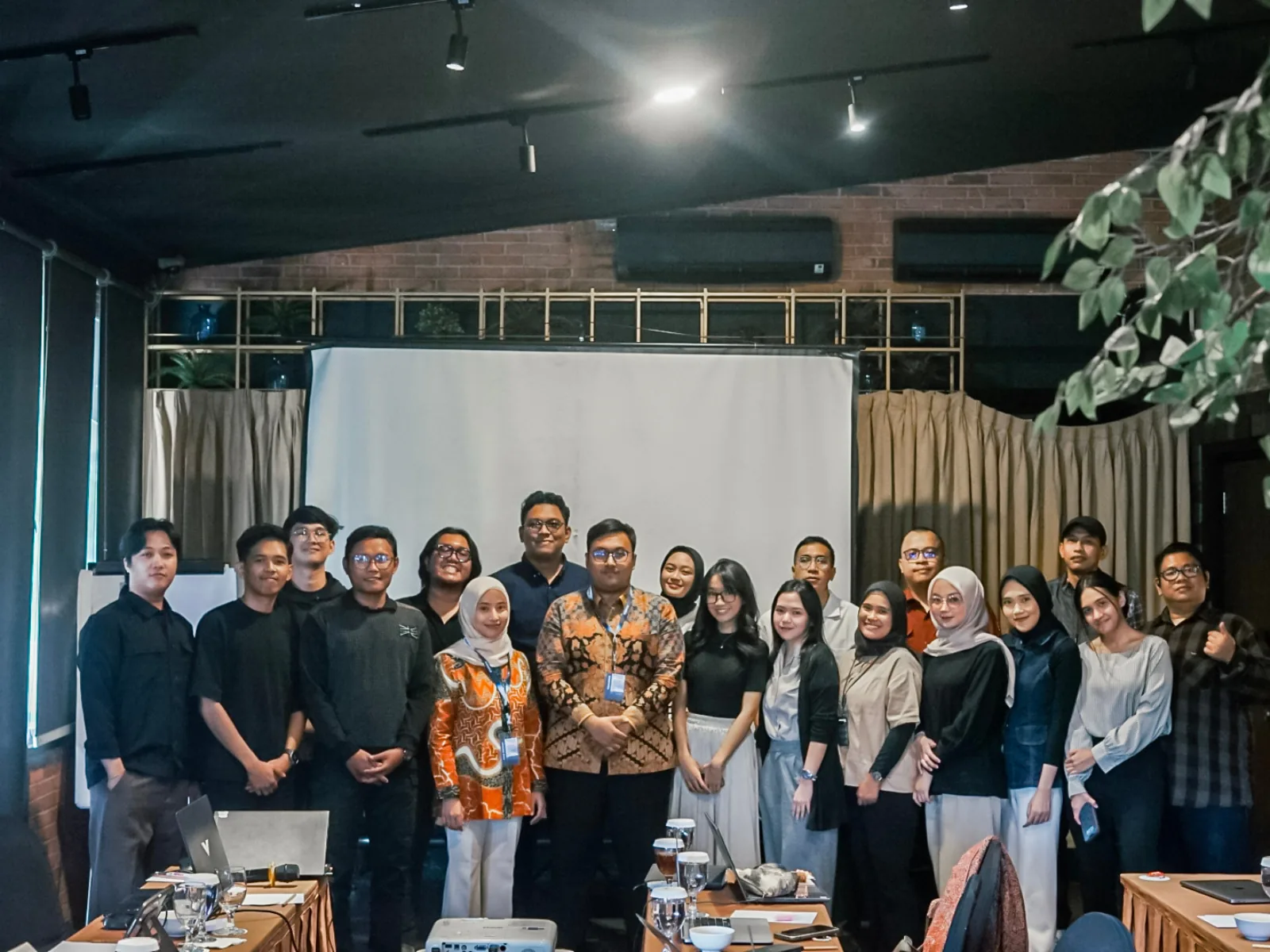
MPR RI
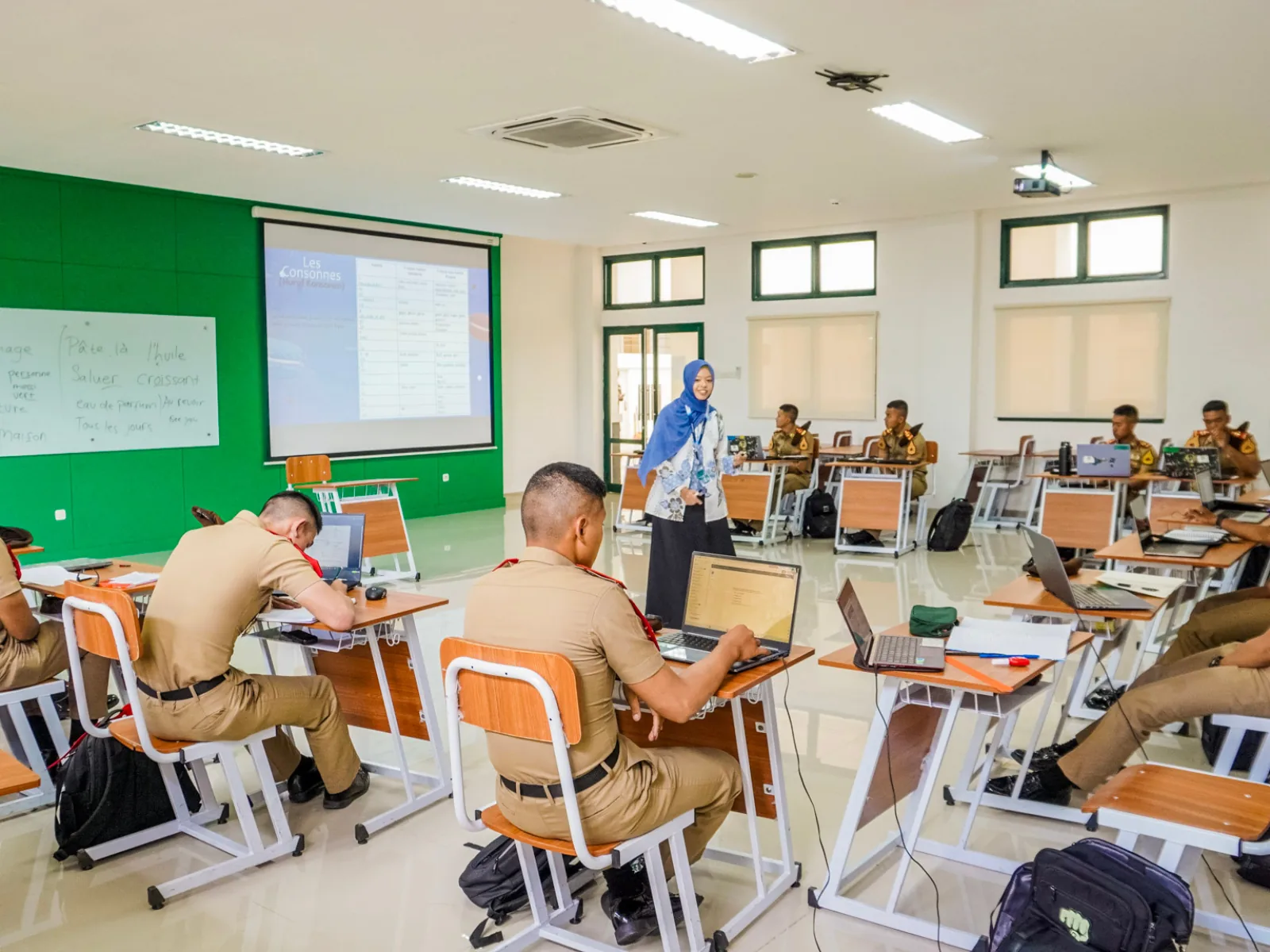
Akademi Militer Magelang
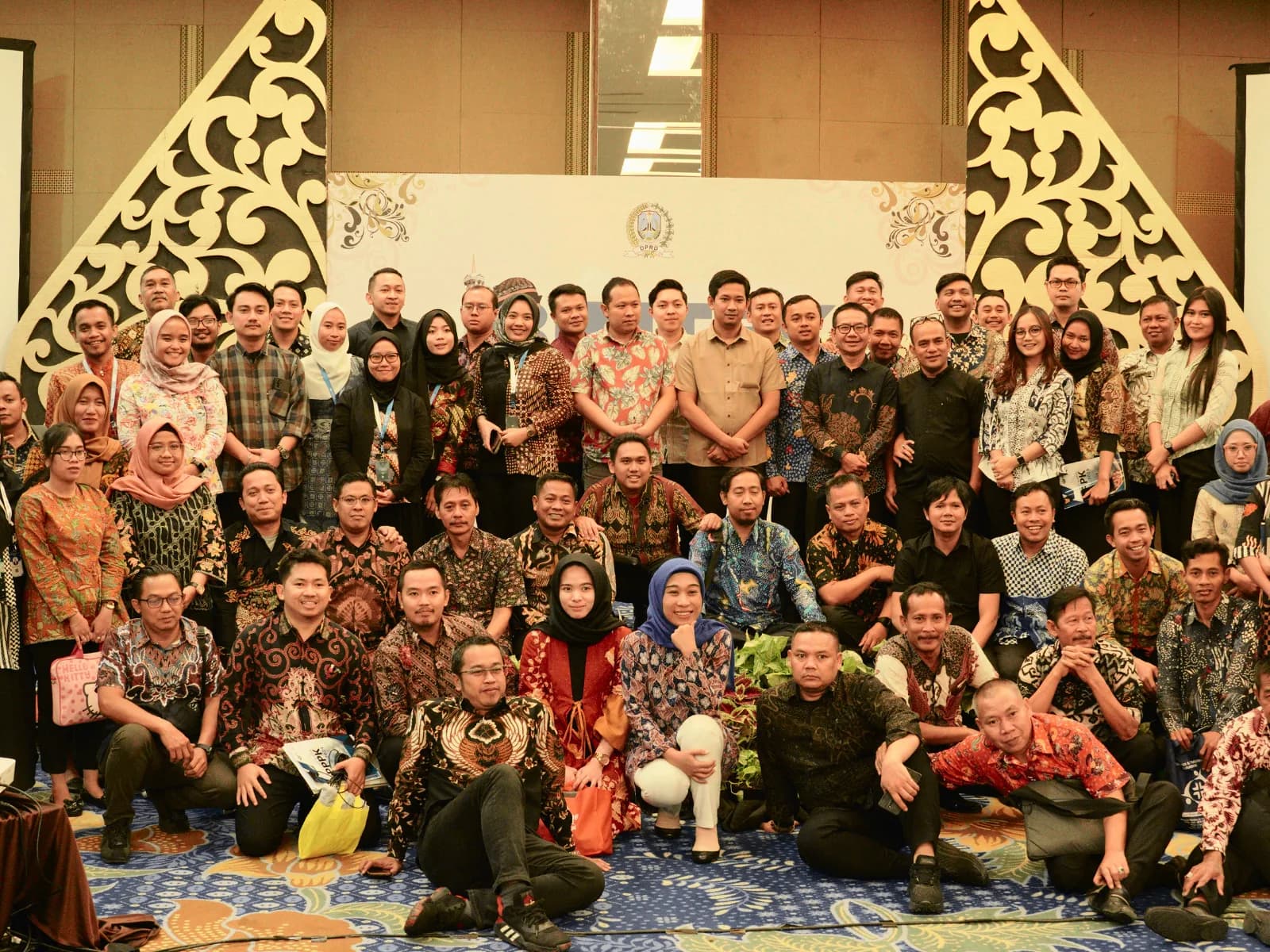
DPRD Provinsi Jawa Timur
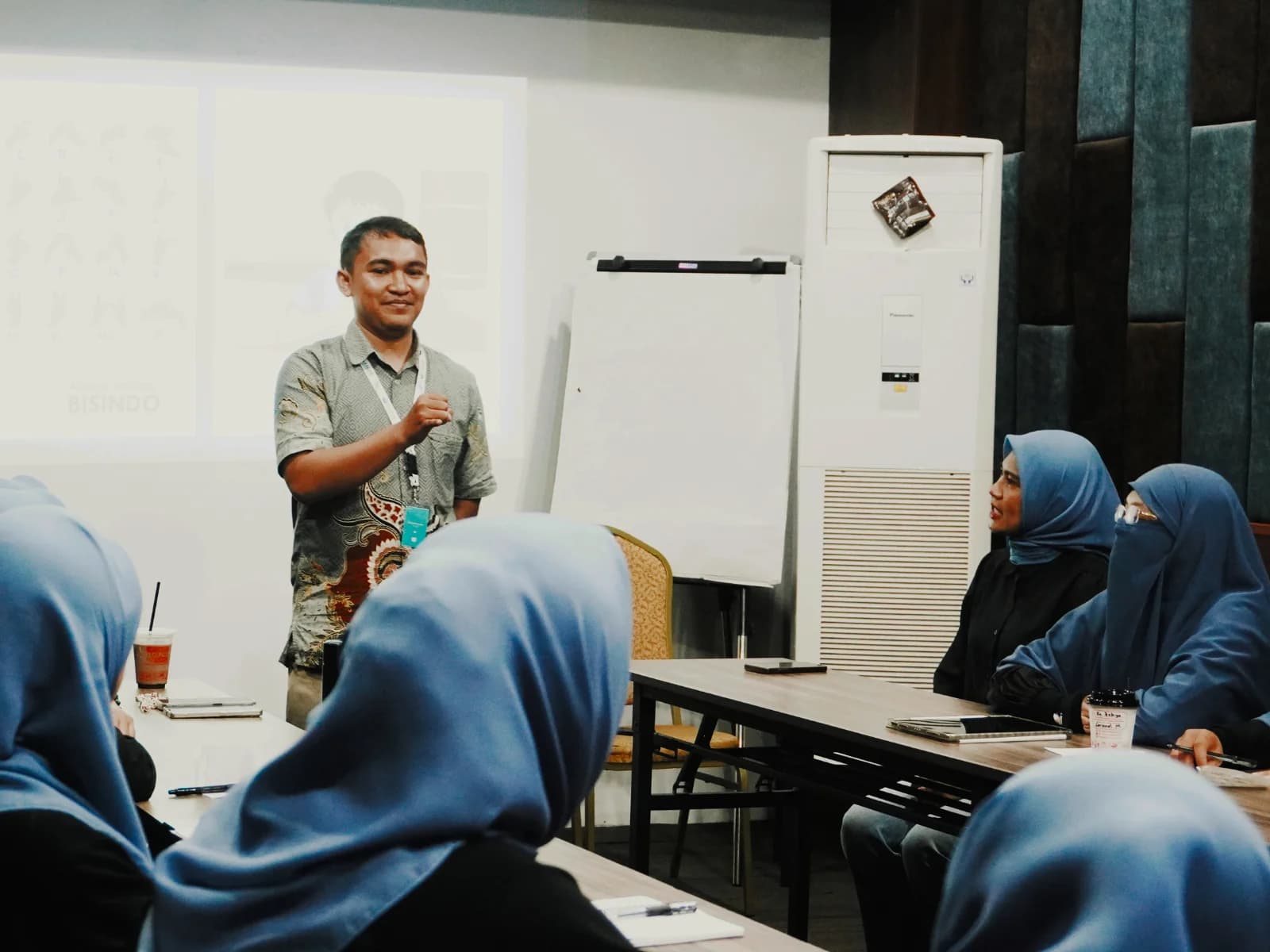
DPMPTSP Pemprov Maluku Utara
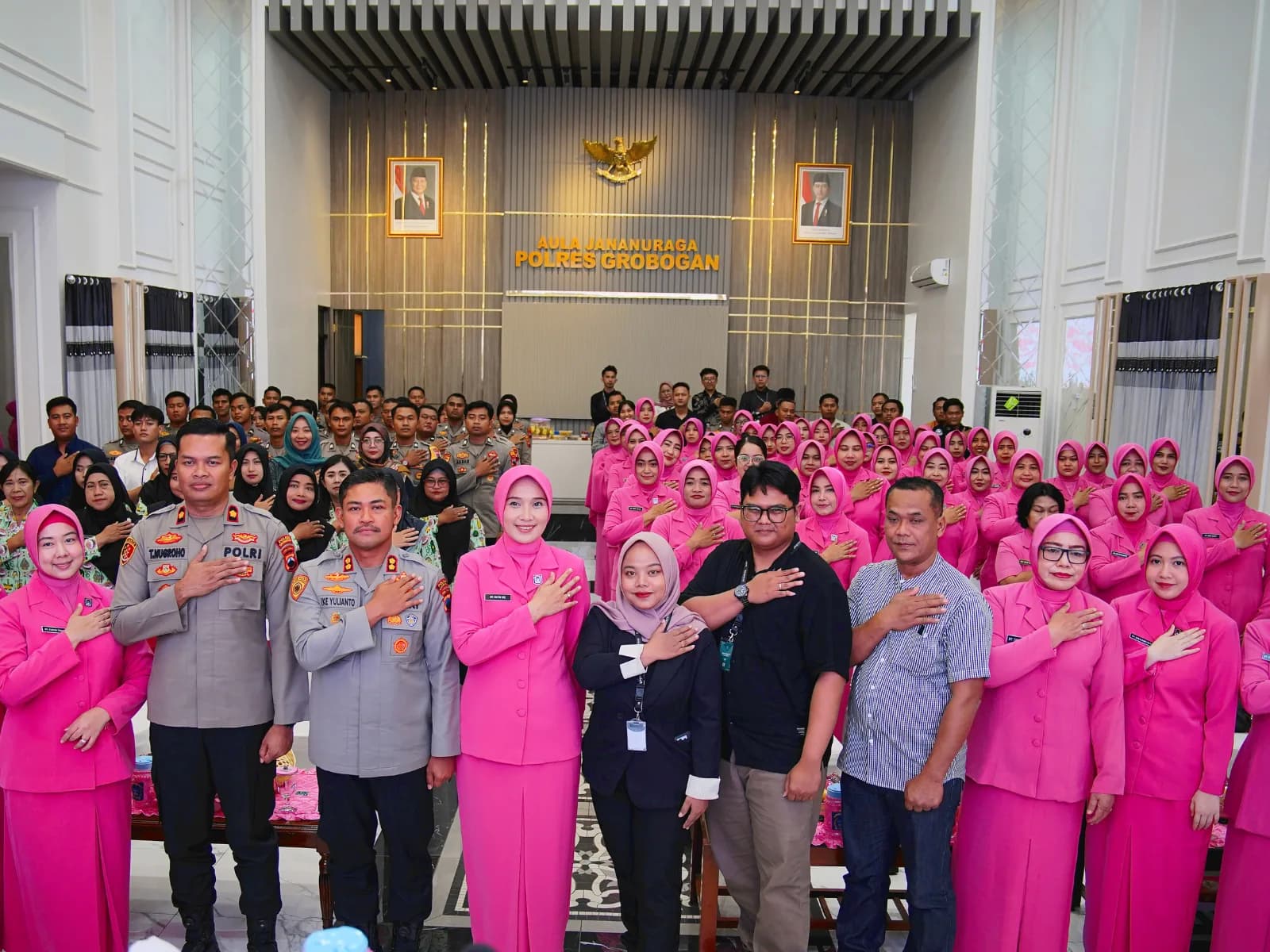
Polres Grobogan
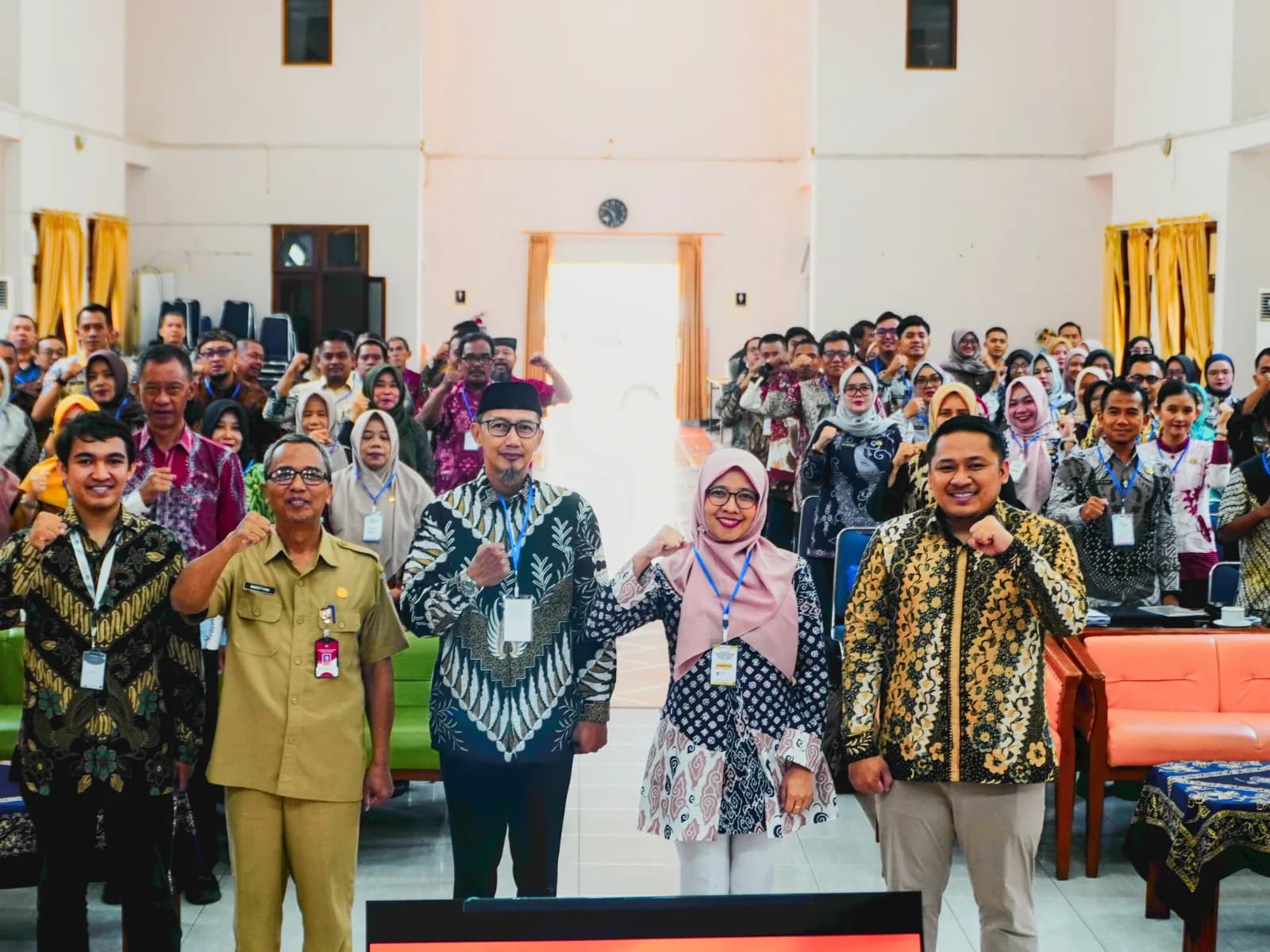
BKPSDM Cirebon
Coaching for Managers
ICF-aligned coaching for managers training is a leadership program equipping line and middle managers to conduct coaching conversations with team members, guided by 8 ICF Core Competencies (Demonstrates Ethical Practice, Embodies a Coaching Mindset, Establishes & Maintains Agreements, Cultivates Trust & Safety, Maintains Presence, Listens Actively, Evokes Awareness, Facilitates Client Growth) and the ICF Code of Ethics, with practice models GROW (Whitmore 1992), CLEAR (Hawkins), STAR, and strict boundaries between coaching, mentoring, training, and performance management, so managers build team capability instead of adding decision bottlenecks.
Measurable Outcomes
Expected Outcomes
Indicators mapped to Kirkpatrick L1-L4; qualitative targets set at TNA.
- Coaching competencies are mastered
- Participants pass assessment on 8 core competencies & Code of Ethics with ICF rubric. Assessed against the eight ICF core competencies (Kirkpatrick L2).
- Managers can run a coaching session
- Participants conduct minimum 8 real coaching sessions with team members within 60 days post-training. Seen when a manager leads a coaching session under assessor observation (Kirkpatrick L3).
- Conversation quality improves
- Listening-to-speaking ratio manager-to-team materially improves vs baseline. Gauged from conversation recordings reviewed together (Kirkpatrick L2 to L3).
- Team members visibly grow
- Coached team members show progress against development targets agreed in IDP. Read from progress against the personal goals of team members (Kirkpatrick L4).
- Teams are more engaged and stay longer
- Coached-team engagement score rises in subsequent survey (qualitative target, TNA baseline). Read from engagement surveys and how many members stay (Kirkpatrick L4).
- Monetary value of coaching (optional)
- Net benefit calculation from coached-team retention & productivity, isolated, when finance requests. Coaching value in rupiah is framed by Phillips L5 where needed.
Program Format
Program Format Options
Selected by manager population, practice depth, and institutionalisation ambition. Finalised after TNA. A cohort of managers receives adequate practice hours inside those four days. Organizations wanting coaching to become a habit across units attach a four to six month coaching culture programme with periodic supervision sessions.
Coaching Conversation Workshop (2 days)
Focused workshop: ICF mindset, GROW model, basic coaching conversation practice with intensive role-play and peer feedback.
Manager-as-Coach Intensive (4-5 days)
Deep dive into 8 ICF Core Competencies, GROW + CLEAR, integration with IDP & performance review, plus boundaries coaching vs mentoring vs counselling.
Modular Coaching Bootcamp (8-10 sessions)
Weekly/biweekly sessions with practice gaps between: participants run real coaching sessions and bring recordings / reflections for peer review.
Coaching Culture Program (4-6 months)
Continuous program with coaching supervision, peer coaching circles, and internal certificate, until coaching culture is alive across teams with sustainable rhythm.
Free Consultation
Build managers who grow people instead of blocking them
We map the manager population, conversation baseline, and coaching culture ambition, then build a proposal & budget estimate grounded in real need.
Curriculum
Curriculum Framework
Designed with ADDIE; final modules curated based on TNA. The coverage below is the full menu, activated partially based on participant population.
- What coaching means per ICF: professional definition that supersedes the pop term
- ICF Code of Ethics 2020: four domains (responsibility to clients, practice & performance, professionalism, society)
- Coaching mindset: curiosity, presence, client-centered, judgement-aware
- Strict boundary: coaching vs mentoring vs training vs performance management vs counselling
- Manager-as-coach challenge: role conflict (boss vs coach), confidentiality, power dynamic
- A. Foundation: Demonstrates Ethical Practice; Embodies a Coaching Mindset
- B. Co-creating the Relationship: Establishes & Maintains Agreements; Cultivates Trust & Safety; Maintains Presence
- C. Communicating Effectively: Listens Actively; Evokes Awareness
- D. Cultivating Learning & Growth: Facilitates Client Growth
- Each competency: ICF definition, observable behaviours, anti-patterns, and practice rubric
- GROW (Whitmore 1992): Goal, Reality, Options, Will/Way forward (most used by managers)
- CLEAR (Hawkins): Contracting, Listening, Exploring, Action, Review (deeper sessions)
- STAR coaching for performance conversation: Situation, Task, Action, Result
- Solution-focused coaching (de Shazer): scale questions, miracle question
- Cognitive coaching & GIVE (Goal, Information, Vision, Engagement) for technical context
- Active listening: level 1-2-3, paraphrase, summary, silence
- Powerful questioning: open vs closed, double-loop, possibility questions
- Reflective feedback: SBI (Situation-Behavior-Impact), pivot from evaluative
- Acknowledging and championing: differs from shallow praise
- Managing emotions in session: manager trigger awareness, regulating presence
- Individual Development Plan (IDP) kept alive through coaching as a living instrument
- Coaching in performance management cycle: when formal, when informal
- 9-box grid & succession planning: when coaching supports mobility
- Coaching at performance issue: when coaching is appropriate, when PIP
- Engagement & retention: Gallup & Hayes (2018) research on manager impact
- Coaching supervision: 7-eyed model (Hawkins), meta-context of organisational coaching
- Peer coaching circle: protocol, rubric, and governance
- Internal coaching cadre: selection criteria, practice hours, internal certification
- Ethical boundary: when to refer to professional counsellor / EAP
- Measurement: ICF rubric, coaching effectiveness survey, and review rhythm
Comparison
Choosing the Coaching Program Format
Concise decision matrix, finalised after training needs analysis.
| Aspect | Coaching Workshop (2 days) | Manager-as-Coach Intensive (4-5 days) | Modular Coaching Bootcamp (8-10 sessions) | Coaching Culture Program (4-6 mo) |
|---|---|---|---|---|
| Primary goal | Basic GROW discipline | Mastery of 8 ICF Competencies | Practice alongside operations | Institutionalise coaching culture |
| Ideal participants | Active managers | Senior managers & champions | Operationally-loaded managers | Cross-role across org |
| Supervision depth | Basic peer feedback | Brief supervision | Staged supervision | Full supervision + certificate |
| Training evaluation level | Kirkpatrick L1-L2 | Kirkpatrick L1-L3 | Kirkpatrick L1-L3 | Kirkpatrick L1-L4 (+Phillips L5) |
| Best for | Quick win new discipline | Build champion coach | Operationally-loaded managers | Org with culture target |
For Whom
Who This Program Is For
Active managers who want their teams to grow independently. TNA maps baseline & target.
First-line managers
Lead individual contributor teams directly and need coaching skill so as not to become a decision bottleneck.
Common challenges
- Team members come with problems, always waiting for manager's answer
- No language to grow, only to assign
- Performance conversation becomes confrontation without coaching frame
Middle managers & people leaders
Lead other managers and need coaching skill to develop direct and indirect reports.
Common challenges
- Hard to separate directive vs developmental role
- Teams lose motivation because growth is stagnant
- Talent development depends on central HR program alone
HR Business Partner & L&D
Support coaching culture institutionalisation and need coaching literacy for credible advice to leaders.
Common challenges
- One-off coaching programs do not continue into culture
- No way to measure manager coaching quality
- Coaching is often run with training mindset instead of coaching presence
Internal coach champions & senior people leaders
Prospective internal coaches who will become pillars of coaching culture institutionalisation.
Common challenges
- No documented practice hours for internal credibility
- Not familiar with coaching supervision
- No clear boundary when coaching employees from other units
Industry Context
Industry Applications
Each industry has different hierarchy, rhythm, and cultural challenges. Coaching for managers is designed to follow them.
Branch manager & relationship manager coaching: development conversations for frontliners amid tight productivity targets, with clear boundary between coaching and sales targets, aligned with relevant OJK SDM regulations.
See in Banking & Financial Services context →Engineering manager & tech lead coaching: technical & career development conversations amid product complexity and remote/hybrid work, with strict boundary against technical mentoring.
See in Technology & Startups context →Coaching for SOE officials & managers: integrating coaching with AKHLAK behaviour development, knowledge management, and succession planning amid the director-division-section hierarchy, aligned with Ministry of SOE regulations.
See in State-Owned Enterprises (BUMN) context →Coaching for hospital / pharma unit heads & supervisors: clinical (head nurse, coordinator) and non-clinical team development amid shift schedules and SNARS / KARS compliance, with strict boundary against clinical mentoring.
Coaching for retail store managers & area managers: store team development with high turnover and seasonal sales targets. Concise structured coaching fitting daily/weekly store rhythm.
See in Retail & FMCG context →Coaching for plant supervisors & production section heads: shift team development under production target pressure and HSE discipline. Short coaching sessions at shift start/end, integrated with daily briefing.
See in Manufacturing context →Delivery Method
Delivery
Intensive practice: role-play, recording self-review, peer feedback with ICF rubric, fishbowl coaching. Not theoretical lectures.
In-house onsite
Facilitator comes to the office; intensive role-play practice, fishbowl coaching, and peer feedback with ICF rubric. Best for 3-5 day intensives.
Live online
Interactive class via Zoom/Teams with role-play breakouts, practice recording (with consent) for self-review, and virtual supervision.
Hybrid
Onsite for champion cohorts & supervision; online for peer coaching circles and ongoing office hours.
Engagement Flow
Engagement Path
From need to live coaching culture: qualitative duration, scaled to size.
Training Needs Analysis (TNA)
Map manager population, conversation baseline (listening:speaking ratio, 1:1 frequency), engagement & turnover, organisational culture. Output: needs profile + baseline.
Initial phaseProgram Design (ADDIE)
Draft ICF-aligned learning objectives, syllabus, practice rubrics, IDP template, and integration with performance management system.
Before deliveryDelivery: Intensive Practice
Role-play, fishbowl coaching, recording self-review (with consent), peer feedback with ICF rubric. Participants run real coaching practice between sessions.
Program coreSupervision & Peer Circle
Supervision sessions by senior facilitator, ongoing peer coaching circle, and ethics calibration across participants.
Post-intensiveInternal Coach Pool & Champion Network
Form internal coach pool for champion cohorts, internal coach certificate, and ongoing supervision plan.
OngoingKirkpatrick Evaluation & Culture Roadmap
L1-L4 measurement (reaction, learning, behaviour/adoption, results on engagement & retention). Phillips ROI L5 on finance request. 12-18 month coaching culture roadmap.
Post-programCase Studies
Typical Outcome Patterns
Illustration of impact patterns from similar program structures; no named clients or promised numbers.
Bank branch manager & relationship manager with high productivity targets
Intervention
4-day intensive + 3-month supervision + integration with frontliner IDP
Result
Weekly 1:1 frequency reached in majority of branches; frontliner engagement increased in subsequent survey
Newly-promoted engineering managers in tech organisation
Intervention
6-month continuous program + peer coaching circle + senior EM supervision
Result
Mid-level engineer retention in coached-manager teams better vs control teams; active IDP consistency achieved
SOE mid-level officers & managers with active succession pipeline
Intervention
Modular bootcamp + internal coach pool + AKHLAK integration + cross-subsidiary supervision
Result
Mid-level officer IDPs alive; succession pipeline candidate ratio with progress recorded materially up
Procurement Info
Information for Procurement & Vendor Management
Materials for procurement, finance, legal, and HR/L&D teams.
Structured proposal: learning objectives aligned with 8 ICF Core Competencies, syllabus, senior facilitator profile (an experienced coaching practitioner), schedule, TNA-based cost breakdown.
TNA-based: flat per program, per session, per participant, tiered, or custom. Estimate provided after TNA.
Flexible terms (down payment + balance / per-batch terms); PPN tax invoice and PO document support available.
Experienced with SOE/government procurement: vendor documents, e-procurement, HPS/bidding, compliance clauses.
Kirkpatrick Level 1-3 evaluation report (attendance, assessment, practice results); engagement & retention as L4 indicator; Phillips ROI L5 on finance request.
This training is aligned with ICF Core Competencies & Code of Ethics. ICF ACC/PCC certification is issued separately by ICF and requires documented coaching hours. Internal coach champion certificate issued by Neksus.
IDP templates, internal coaching rubrics, and coaching playbooks built for the company become the company's property; training-material usage rights agreed in contract.
FAQ
Frequently Asked Questions
Next Step
Build managers who grow people instead of blocking them
We map the manager population, conversation baseline, and coaching culture ambition, then build a proposal & budget estimate grounded in real need.
- Proposal, syllabus, and ICF rubric
- Procurement-ready documents (company profile, NPWP, NDA, PPN invoice)
- Kirkpatrick impact measurement (Phillips ROI on request)
Coaching for Managers training for your Healthcare & Pharmaceuticals team
We map the manager population, conversation baseline, and coaching culture ambition, then build a proposal & budget estimate grounded in real need.
- Proposal, syllabus, and ICF rubric
- Procurement-ready documents (company profile, NPWP, NDA, PPN invoice)
- Kirkpatrick impact measurement (Phillips ROI on request)